
Highlights
- AI resume screening boosts efficiency but can unintentionally perpetuate bias.
- Overreliance on keywords and opaque algorithms risks excluding qualified candidates.
- A hybrid model with human oversight and skills-based assessments ensures fairer outcomes.
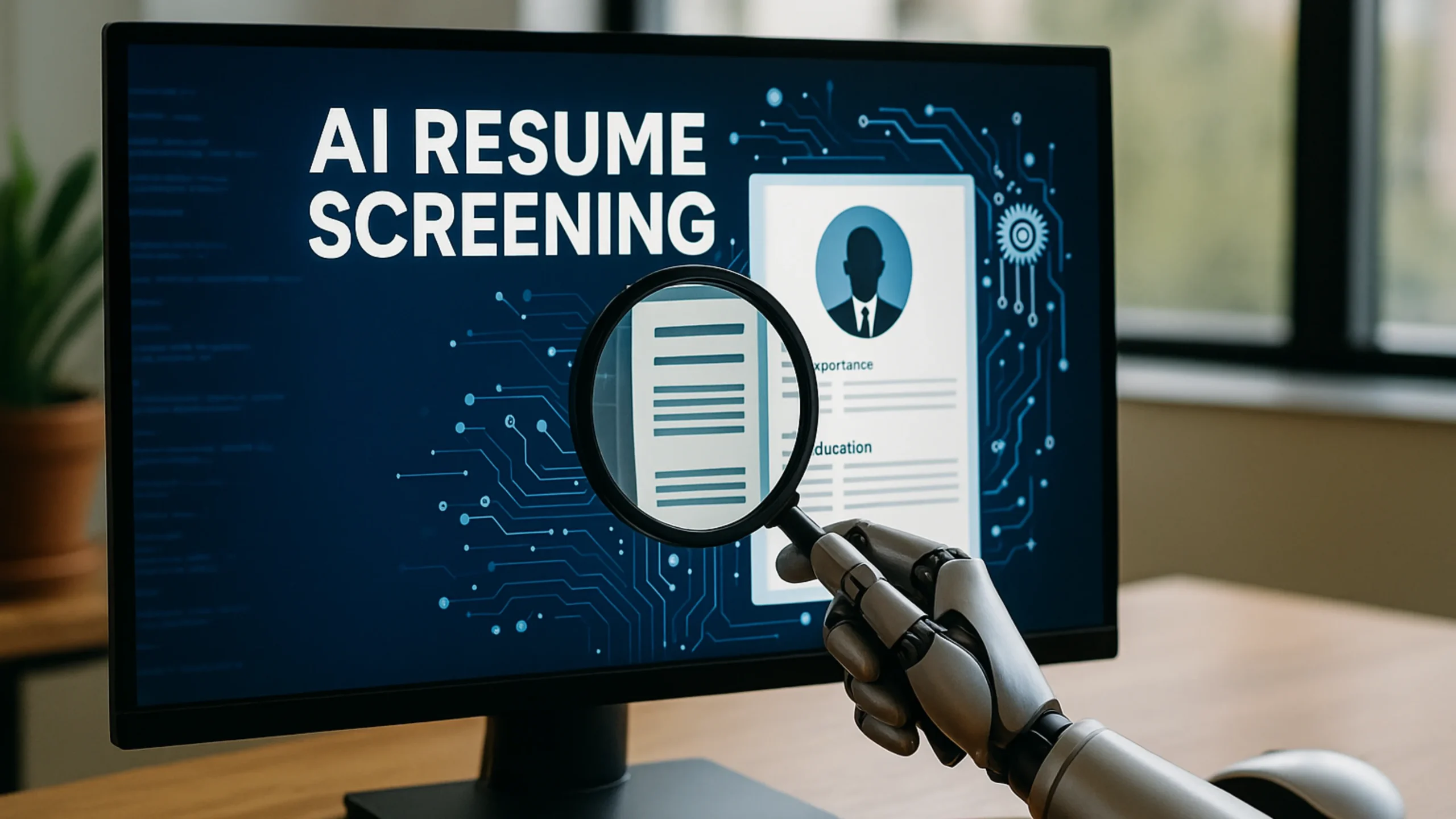
The subject of AI resume screening has become one of the most discussed technologies in talent acquisition, often touted as a “game changer” for potentially saving time and eliminating bias from high-volume hiring practices. However, the real burning question is: Are these tools removing bias, or are they prey to misapplication and, hence, amplification? Admittedly, while there are significant advantages, a thorough consideration unveils nuanced issues embedded within the implementation concerning fairness and accuracy.
The Promise: AI as a Tool for Bias Reduction and Efficiency
Considered one of the most significant advantages of AI resume screening is speed and efficiency. Manual resume review is time-consuming, considering that, for any given position, a recruiter must probably sift through.

The AI system scans through immense quantities of resumes in a short period of time, thus cutting initial screening from a duration of days to just a matter of hours for recruiters to spend time on more strategic matters such as talent acquisition strategies or candidate experience.
Another argument in favor of using AI is its ability to neutralize human bias. The human reviewer may be distracted by unconscious biases, fatigue, or emotional states that can lead to inconsistent decisions. However, the AI system, applying pre-set rules and criteria to every candidate identically, can ensure standardisation of rating based solely on qualification and experience.
For example, AI can detect skills relatively independently of the resume format and could also go a long way in addressing disparities that arise when applications are viewed with a name that sounds English versus one that does not. Some would even argue that the data-driven decisions of AI are less biased than human decisions and thus will ensure that candidates who might be overlooked because of non-traditional career paths or employment gaps will be brought back to the screen.

By this reasoning, AI was viewed as a tool to mitigate human biases. Human reviewers can subconsciously bias their decisions or become tired or moody, leading to inconsistent decisions. AI, meanwhile, applying the same set of rules and criteria to every candidate applying for a job, can help enforce a standard set of evaluations with a sole focus on qualifications and experience.
It could be argued that an AI would consistently identify skills correctly, regardless of how a resume is formatted, and that it could help prevent some of the disparities in applications between applicants with English-sounding names and those with non-English names. It is argued further that because AI makes data-driven decisions, it is less biased than human decision-making and can thus cast a spotlight on candidates who might otherwise be overlooked because of nontraditional career paths or Gaps in employment.
The Reality: The Risk of Automating Bias and Creating New Challenges
Despite these advantages, however, the AI resume screening process suffers from certain limitations and can at times reinforce or even create biases. The single biggest challenge is that the bias of an AI tool is precisely the bias inherent in the data it is fed. If historical data on hiring bears the marks of discriminatory patterns — i.e., a historical preference for men in technical roles—the AI algorithm will internalize these patterns and act accordingly to reinforce them.

Another thing worth mentioning is that AI tends to rely heavily on keywords, without a thorough understanding of nuanced contexts. The AI screening apparatuses would review the resumes, looking for specific keywords, and attempt to match the qualifications listed in the job descriptions.
They, however, would not understand nuances like a slight change in career or an unconventional skill set or country work a person might have, which would grant them relevant skills. Such a rigid filter can induce false negatives-that is, resumes of fully qualified candidates could be filtered out from the search because specific terms were missing.
Conversely, proxies would render themselves qualified by having optimized their résumés for specific keywords. These days, the job seekers have started gamifying the system by climbing on board, thus contradicting the entire purpose of these screenings. It might mean an impeccable candidate being edged out of selection slots for an employer simply because the candidate wanted to express their personality and skill set rather than using optimized CV language.
Besides that, bias can creep right into the conception of algorithmic designs. For example, an algorithm that privileges candidates from Ivy League universities might inadvertently discriminate against those with talent from less privileged backgrounds, thus perpetuating socioeconomic discrimination. Lack of transparency is another issue plaguing the inner workings of many AI systems; for recruiters and candidates alike, it is increasingly complex to gain an understanding of how decisions are made, creating a similar feeling of frustration and distrust.
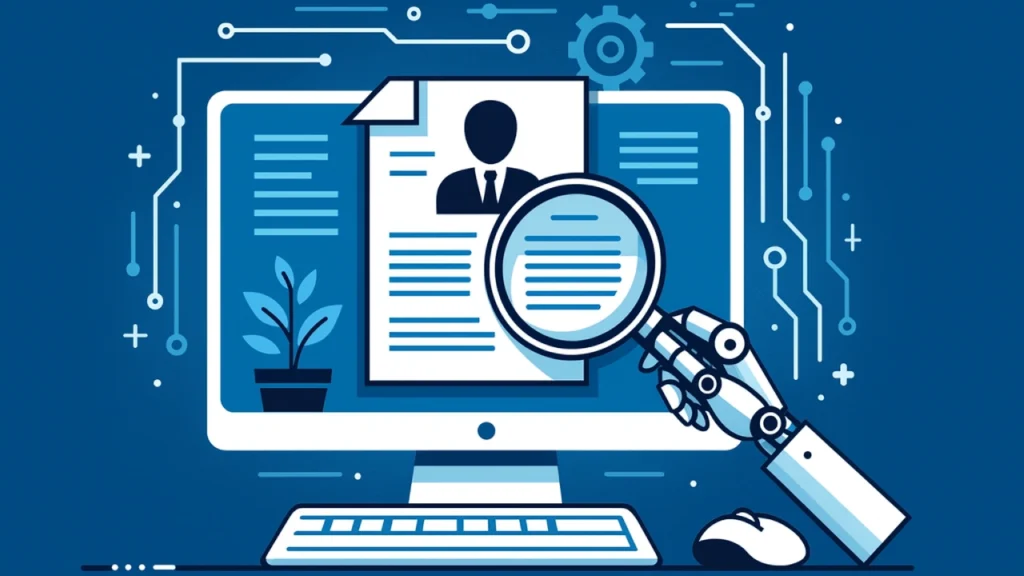
Perhaps the most basic limitation is the reliance of AI resume screening on self-reported information, which, like its traditional counterparts, is usually a poor estimate of actual job performance. Several studies have reported that a significant percentage of workers in the United States admit to lying on their resumes. AI inherits this flaw; it is simply incapable of predicting candidate performance in a role.
Striking a Balance: Mitigating Bias and Responsible AI Use
Transparency and explainability must therefore be at the top of the list, with organizations required to clearly state how their recruitment or hiring AI tools work, while also providing insight into the decision-making process to candidates. Anti-classification techniques, such as blind screening that removes protected characteristics from resumes, aim to limit bias; however, vigilance must be maintained to ensure that indirect proxies for identity are not inadvertently left behind.
One promising advancement is the growing emphasis on skills testing, where AI evaluates candidates’ answers to real-world challenges, analyzing fluency, relevance, and tone to create an objective score that is more highly correlated with job performance. Real-world results: a retailer sees a decrease in bad hires by 58% and a mighty 300% ROI on AI investment. Responsible A, therefore, requires a judicious blend of both technology and human judgment, embedded in fairness, accountability, and transparency throughout the process.

Conclusion
Resume screening through AI is a paradox in the sense that immense efficiency and scaling potential lie on one end, but any misapplication would blatantly exacerbate one’s existing biases. Resumes are any minimally limited predictors of job performance. AI, however, should be only one of the many steps toward enhancing human judgment in hiring.
Responsible AI use geared toward ethics must include heterogeneous datasets, transparent evaluation processes, and options for continuous human oversight and auditing. On the plus side, companies can also utilize AI to ensure they build diverse, equitable, and highly talented workforces; in addition, the candidate experience will benefit from both approaches.