





Table of Contents
Highlights
• Self-trained robots are emerging through rapid advances in reinforcement learning
• Simulation engines now train robots millions of hours faster than real-world labs
• Autonomous machines are gaining real-time adaptive cognition for unpredictable environments
• Global industries, from logistics to healthcare, prepare for self-evolving robotic systems
In the last ten years, robotics has progressed from basic programming to creating robots that operate without human input and can learn from their surroundings.
Robots today can investigate unknown locations using sensors and subsequently improve their ability to make choices by gathering data from previous experiences, much as human children and animals do.
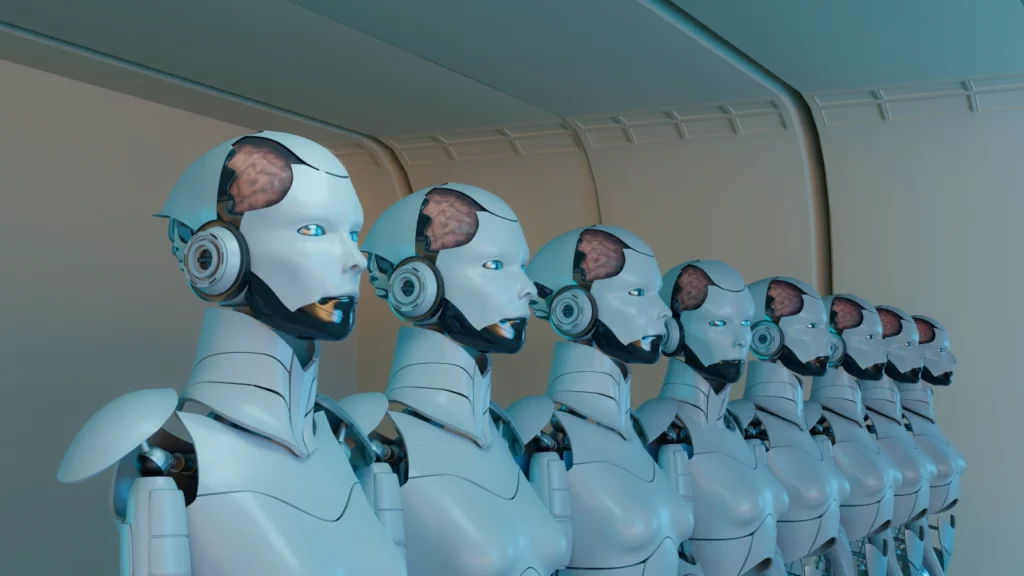
Other major cities around the world, like Boston, London, Toronto, and Tokyo, are also establishing themselves as global leaders in developing reinforcement learning (RL) technology, which raises an important question:
Is it possible for a robot to become fully autonomous and teach itself how to operate by the year 2030?
Reinforcement Learning: The Core Component of Self-Learning Robots
How Reinforcement Learning Is Transforming Robotic Intelligence
Reinforcement Learning (RL) provides a framework for robots to learn to be more effective by providing them with rewards or consequences for their actions -instead of giving them specific instructions as to what they need to do in order to achieve a particular outcome, robots using RL learn to identify the best possible approach for completing tasks by themselves through experience and experimentation.
Globally, RL is driving breakthroughs in:
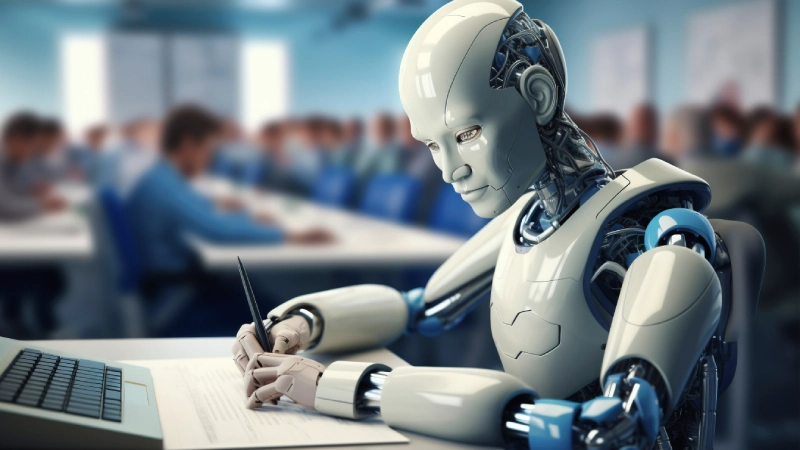
- Autonomous warehouse robots (U.S., Germany, Singapore) that learn optimal routes independently
- Humanoid manipulators (Japan, South Korea) that adjust grips based on object feedback
- Agricultural bots (Netherlands, Australia) that adapt to crop variability
- Medical robots (U.S., U.K.) learning precision tasks under safe simulation settings
The evolution of RL now includes hybrid models, by combining deep learning, imitation learning, and curriculum training, to build more flexible robotic minds.
A growing trend is self-play, where robots learn by competing or cooperating with themselves, generating millions of training scenarios without human involvement. Costs for RL cloud simulation clusters average USD $4-$15 per hour, making experimentation accessible for both large labs and emerging startups.
But is training in the physical world enough for robots to learn at scale? How do robots acquire millions of learning hours without real-world risk?
Simulation: The Secret Accelerator Behind Robotic Self-Teaching
Why High-Fidelity Simulators Are Replacing Real-World Physical Labs
To teach a robot through trial and error, researchers need the equivalent of thousands of lifetimes of experience. That’s impossible in physical labs, but simulation changes the rules.
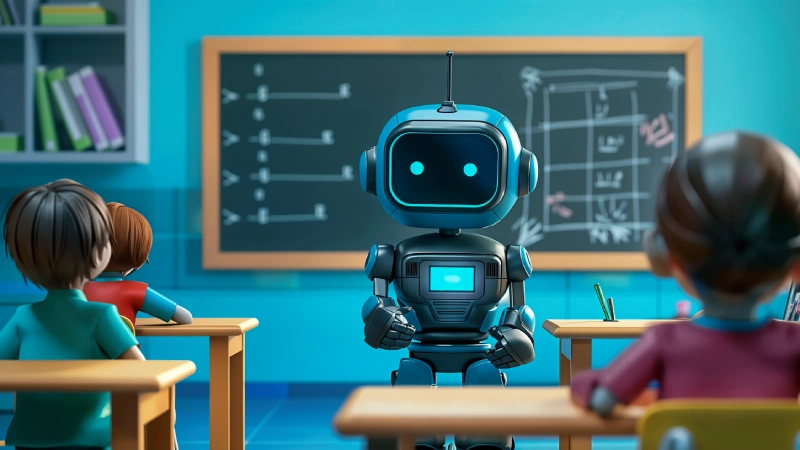
Advanced engines such as NVIDIA Isaac Sim, Google DeepMind MuJoCo, OpenAI Gym, and Unity Robotics Hub now train robots in:
- Physics-accurate environments
- Weather-dependent outdoor conditions
- Human-robot interaction scenarios
- Zero-risk failure loops
Simulations compress time. A robot can experience 10 years of practice in 10 hours, achieving mastery levels unreachable through standard testing.
Global manufacturing leaders report that simulation-trained robots reduce development costs by 30–50%, while increasing performance accuracy dramatically once deployed in the real world.
But can simulated knowledge translate reliably to real-world unpredictability? What allows robots to adapt instantly and intelligently when confronted with real-world complexity?
Real-Time Adaptive Learning: When Robots Think on Their Feet
Why Adaptive Cognition Is the Missing Link for Self-Reliant Robots
The inability of simulations (even state-of-the-art) to fully account for all possible irregularities, including fallen objects, unexpected behaviours of humans, varying degrees of stability of the ground surface, and/or errors occurring in sensor readings, is why adaptive learning in real time is necessary.
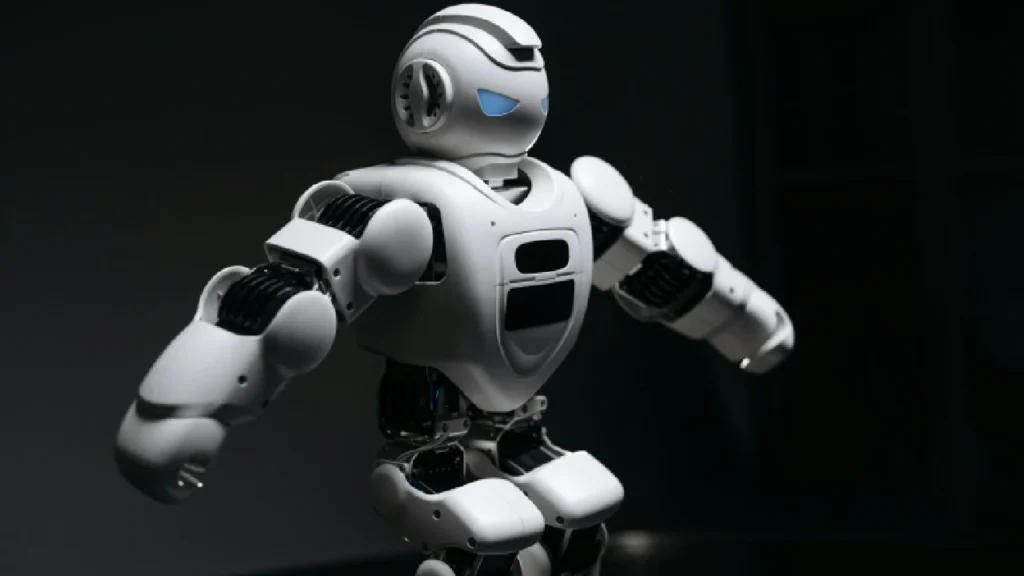
Modern robots are being equipped with:
- On-board neural networks that recalculate decisions in milliseconds
- Meta-learning frameworks that allow robots to “learn how to learn.”
- Edge computing chips (e.g., NVIDIA Jetson Orin, Qualcomm RB5) that support live retraining
- Lifelong learning architectures that update models without forgetting previous skills
Together, these innovations allow a robot to:
- Adjust grip strength for new materials
- Reroute navigation when sensors detect an obstruction
- Improve efficiency after observing human co-workers
- Refine behaviors automatically after mistakes
This level of adaptive cognition turns robots into autonomous problem solvers, not just automated machines.
So, if robots can learn in real time, simulate millions of hours, and optimize through RL, what does this mean for global industries? How soon will self-taught robots reshape global economies and job markets?
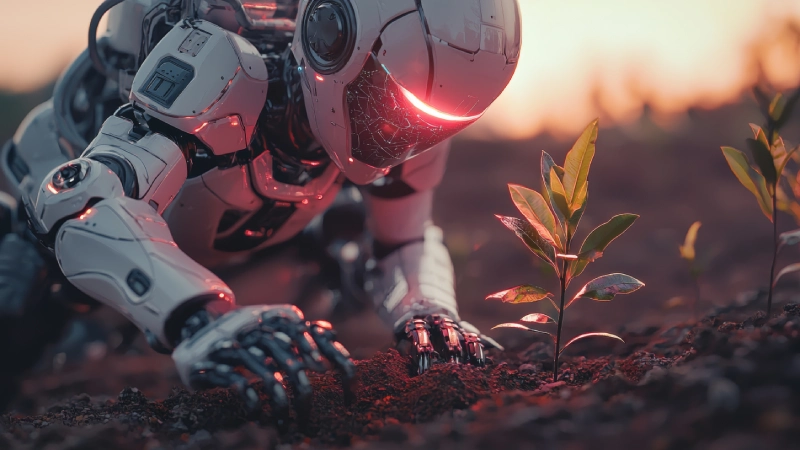
Global Industries Preparing for Self-Taught Robotics
Where Autonomous Learning Will Transform the World Economy
In the next decade, numerous sectors throughout North America, Europe, and the Asia Pacific will utilize large-scale self-learning robotic technologies:
1. Robotics in Manufacturing and Assembly
Manufacturing robots equipped with self-correcting assembly characteristics will no longer require extensive programming when moving to different production lines or cooperating with human workers. Flexible reinforcement-learning-based robotic arms are already being utilized in global automobile production plants to successfully decrease equipment downtime by up to 40%.
2. Logistics or Warehousing
Through the use of proprietary installed navigation methods, last-mile delivery, routing around obstacles, and optimizing load placement have been maximized across nations, including the United States, Germany, and China.
3. Agriculture
Robots that can produce their own adaptations will monitor shifts in agricultural soil health, crop disease patterns, and changing climate-based growing conditions, thus helping growers achieve greater yield outputs with lower input requirements.
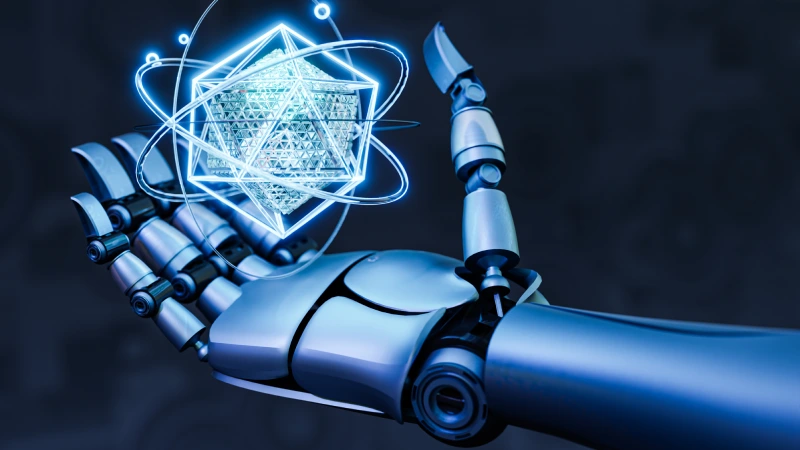
4. Healthcare or Rehabilitation
Robots will increasingly support:
- Surgical assistance
- Elderly care
- Adaptive rehabilitation programs
This shift opens new roles in:
- AI evaluation
- Robot ethics
- Autonomous system auditing
- Human-robot collaboration
But if industries are accelerating, what does the future look like for home robots and personal assistants?
What breakthroughs will bring self-learning robots into everyday households by 2030?
Consumer Robotics: When Self-Teaching Enters the Home by 2030
How Smart Home Robots Will Learn From Their Owners
By 2030, home robots are estimated to adapt to:
- Individual user habits
- Household routines
- Daily feedback and learning loops

Examples include:
- Household assistants that reorganize based on user habits
- Cleaning robots that learn room layouts after furniture changes
- Personal caregiving robots that adjust support levels based on daily feedback
Affordability
Early adaptive home robots (launching in 2026) will cost $1000–$3000, with pricing varying based on autonomy level.
With this much autonomy comes new risks, data privacy, ethical oversight, and system transparency.
How do you create best practices for developing ethically secure self-teaching robots? How do you establish a set of global regulatory standards for the development of self-teaching robots?
Ethics, Safety, and Governance: Building Trust in Self-Teaching AI
Why Global Standards Must Evolve Before Robots Do
The development of self-teaching robots has created a need for global regulatory frameworks to govern them.
The regulatory focus areas are
- Transparent learning
- Explainable Decisions
- Safe Failure Modes
- Human override
- Privacy Protection of Data
- Cross-border Compliance
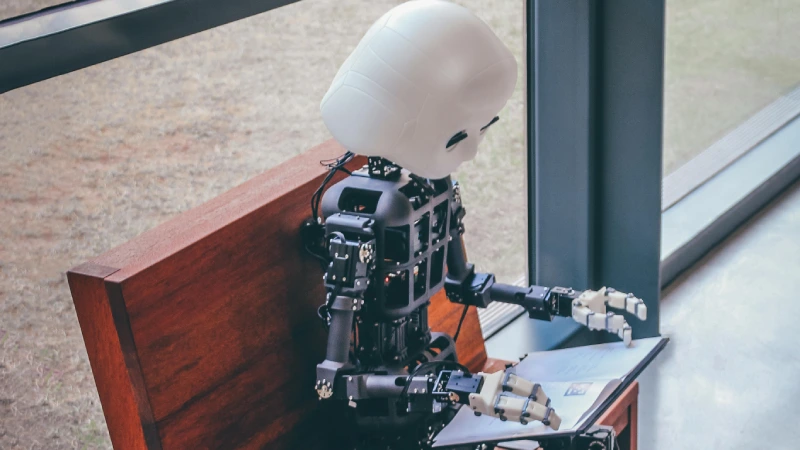
All countries will be establishing the initial set of robotics regulations very soon; therefore, it will be critical to standardize those regulations across all countries if we want to have self-learning robots worldwide by 2030.
Considering that robots will have all of the following technology, economy, and ethical considerations during these next five years, what will robots be capable of by 2030?
Conclusion
Given the rate of technological advancement, we will have robots capable of learning through hands-on experience and virtual learning (simulations/iterations). Unfortunately, these robots will not be able to independently develop independent thoughts.
Although humans will be involved in the engineering process, the robot will perform the majority of its own training.
Robots that have developed via experience rather than programming start the next phase of the reinforcement learning process. The future of robotics is arriving faster than we imagined, and we’re all part of it. Are you ready to be part of a world where robots teach themselves?
