

Highlights
- Wi-Fi 6E reduces congestion with cleaner 6 GHz spectrum for smoother everyday performance.
- Wi-Fi 7 unlocks ultra-low latency and multi-link speed for demanding homes.
- Smart mesh design improves the home Wi-Fi experience more than raw speed numbers.
The Home Wi-Fi system has developed into a foundational element that supports present-day technological needs. The system supports various activities, which include remote work, online education, streaming, gaming, smart appliance functions, and the increasing number of connected devices. The majority of households lack a proper understanding of Wi-Fi because they only upgrade their system when their current equipment fails.
In 2026, that confusion had deepened. Consumers now need to choose between two advanced standards, which are Wi-Fi 6E and Wi-Fi 7. The two systems both provide improved performance, but they achieve this through two different methods. The first system helps to decrease network congestion, while the second system develops a completely new wireless transmission technology that will enhance both speed and responsiveness.

The most important question for most households is not which device delivers the highest speed but which device will benefit their daily activities the most.
Understanding Wi-Fi 6E: Capacity, Not Speed
The introduction of Wi-Fi 6E technology created a significant improvement to Wi-Fi systems because it reduced network usage rather than increasing wireless transmission speeds.
Most people have used home Wi-Fi systems, which operate on both 2.4 GHz and 5 GHz frequency bands, for more than 20 years. The introduction of phones, TVs, laptops, speakers, and cameras into households caused the frequency bands to become overcrowded. The solution to this problem exists in Wi-Fi 6E, which establishes wide channels that operate without interference through the 6 GHz spectrum.
The situation impacts actual residential settings. Wireless connections experience three kinds of problems, which include latency spikes, dropped connections, and inconsistent speeds, yet people assume these issues stem from their internet service providers when the real cause originates from local wireless interference.
Wi-Fi 6E operates optimally in locations where multiple devices establish simultaneous connections. The wireless connection system in these environments experiences disruption because multiple devices operate on the same frequency channels. Wi-Fi 6E functions effectively in situations where consistent performance needs to supersede maximum speed capabilities.
The Wi-Fi 6E system operates according to its established network functions. Technology makes network systems better.
What Wi-Fi 7 Actually Changes
Wi-Fi 7 brings an advanced technology upgrade, which allows users to access more network capacity while receiving improved data transfer speeds, reduced network delays, and increased system dependability for all users who work in demanding situations.
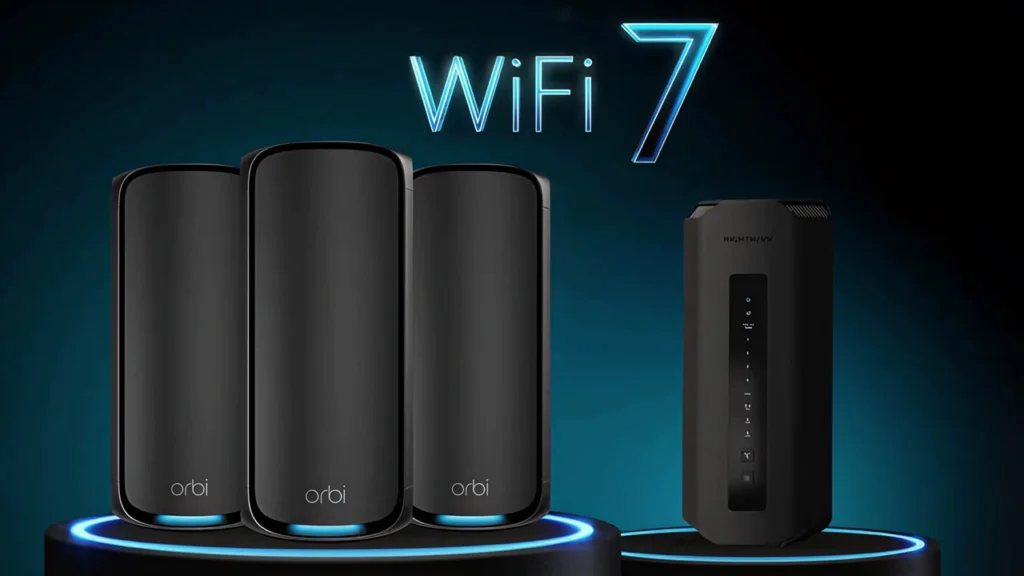
The core aspect of Wi-Fi 7 systems allows users to connect through multiple wireless links. Users can operate devices through several frequency bands, which they can switch between or combine according to their needs. The system achieves two benefits through its approach because it decreases latency while maintaining strong performance during band interruptions or network strain.
Wi-Fi 7 provides extended channel dimensions together with enhanced data transmission capabilities, which enable users to reach maximum theoretical performance speeds. The numbers that manufacturers present as tens of gigabits per second do not represent the main interest for most customers.
The main benefits of Wi-Fi 7 for users include:
- Real-time applications receive improved performance through reduced latency.
- When the system operates under load conditions, users will experience better performance stability.
- The system offers improved capacity for managing upcoming technological advancements.
Wi-Fi 7 is designed for homes that behave more like small offices because people in these spaces create ongoing, simultaneous work patterns.
Speed vs Experience: Why Numbers Mislead
Marketing around Wi-Fi often focuses on maximum speed. Raw wireless throughput only restricts access for a small number of home users. All three activities, which include streaming video, video calls, and web browsing, need only small amounts of network capacity. Modern Wi-Fi systems get fully utilized only when users watch 4K content. Users identify “slow Wi-Fi” problems because of network congestion and interference, and inadequate network coverage.
The two systems, Wi-Fi 6E and Wi-Fi 7, represent different approaches to network design, which they use to deliver their services.
Wi-Fi 6E enhances user experience through its ability to lower user competition for network resources. Wi-Fi 7 enhances the system through its ability to handle multiple complicated network elements. The former solution provides better results for most families who live in contemporary homes.
Device Compatibility: The Hidden Bottleneck
The performance of a Wi-Fi network depends on the quality of its connected devices. The current situation makes it hard to choose between different upgrade options.
The 6 GHz band of Wi-Fi 6E requires users to have devices that meet the standard. The requirement is not met by many mid-range and older devices. The adoption and cost factors create additional difficulties for Wi-Fi 7 implementation.
In 2026, most households have:
- A mix of new and old devices
- Devices that support Wi-Fi 6 but not 6E or 7
- Smart home devices that operate exclusively on 2.4 GHz networks
The use of Wi-Fi 7 brings minimal advantages until clients who can use it become available. Wi-Fi 6E already provides support for a wider range of current smartphones and laptops.
Latency: The Underrated Advantage
Gaming, video calls, and cloud-based work require more reliable connections than they do. The user experience becomes more negative when people use a fast connection that has unstable performance instead of a slower connection that maintains a steady speed.
Wi-Fi 6E reduces latency indirectly by moving devices into less crowded spectrum. Wi-Fi 7 tackles latency directly through smarter scheduling and multi-link transmission.
The following points demonstrate practical outcomes:
- Wi-Fi 6E improves average latency
- Wi-Fi 7 improves worst-case latency
The Wi-Fi 7 system provides a real advantage for you when your main issue comes from random lag spikes instead of slow download speeds, but this advantage works only with matching devices.
Mesh Networks: Generation Matters Less Than Design
The design of mesh networks matters more than their network generation. The network layout determines user experience because people give more attention to router generation. Mesh systems extend Wi-Fi across larger homes by distributing access points intelligently. The best standard becomes ineffective through improper access point distribution. A well-designed Wi-Fi 6E mesh will outperform a poorly placed Wi-Fi 7 router every time. The effective mesh planning process requires three specific elements.
The first element requires nodes to be positioned according to floor layout details instead of aesthetic considerations. The second element requires the team to eliminate all signal overlap, which creates self-interference. The third element requires the team to use wired backhaul connections whenever it becomes feasible. The wireless backhaul performance of Wi-Fi 7 shows improvement, but Ethernet connections still provide better stability.
Who Should Choose Wi-Fi 6E in 2026?
The majority of households should choose Wi-Fi 6E as their most suitable option.

The solution meets the needs of:
- Apartment and urban home residents who experience interference problems
- Households that require multiple devices to stream content at the same time
- Users who want to upgrade their current Wi-Fi 5 and Wi-Fi 6 routers to newer technology
- Customers who want to see real product upgrades at affordable prices
The advantages of Wi-Fi 6E technology become available to users from the start and continue to function as expected.
Who Should Consider Wi-Fi 7?
Wi-Fi 7 provides sufficient capabilities for current needs while it delivers future technology support.
The following users should use the product:
- Power users with high-end laptops and phones
- Gamers who experience delays during gaming
- Creators who handle extensive local data files
- Smart homes with almost 100 active devices
Wi-Fi 7 is less about today’s problems and more about preventing tomorrow’s.
Cost and Power Considerations
Wi-Fi 7 routers need higher processing power, which increases their expenses and power consumption. The system generates rising operational costs and heat emission throughout its lifespan.
Wi-Fi 6E provides better performance for global markets because energy expenses and product prices are essential to market operations.
The product markets will become more accessible to customers when Wi-Fi 7 prices decrease, but the technology remains available only to high-end customers throughout 2026.
The Global Context: Infrastructure Shapes Value
The advanced capabilities of contemporary Wi-Fi systems fail to benefit many areas because their broadband speeds and building designs create practical usage limitations.
Theoretical performance does not match actual results because thick walls, older wiring systems, and shared infrastructure create barriers.
The process of upgrading Wi-Fi standards becomes ineffective when organizations proceed with upgrades without fixing problems related to wireless access points, signal interference, and backhaul systems.

Conclusion: Upgrade Thoughtfully, Not Reflexively
The choice between Wi-Fi 6E and Wi-Fi 7 is not about chasing the newest label. The solution requires people to recognize actual technological capabilities.
Wi-Fi 6E solves today’s congestion problems efficiently and affordably. The future wireless requirements for homes make a Wi-Fi 7 solution necessary for upcoming network demands.
The most effective home Wi-Fi upgrade in 2026 requires households to choose an upgrade that matches their actual internet usage patterns.