

Highlights
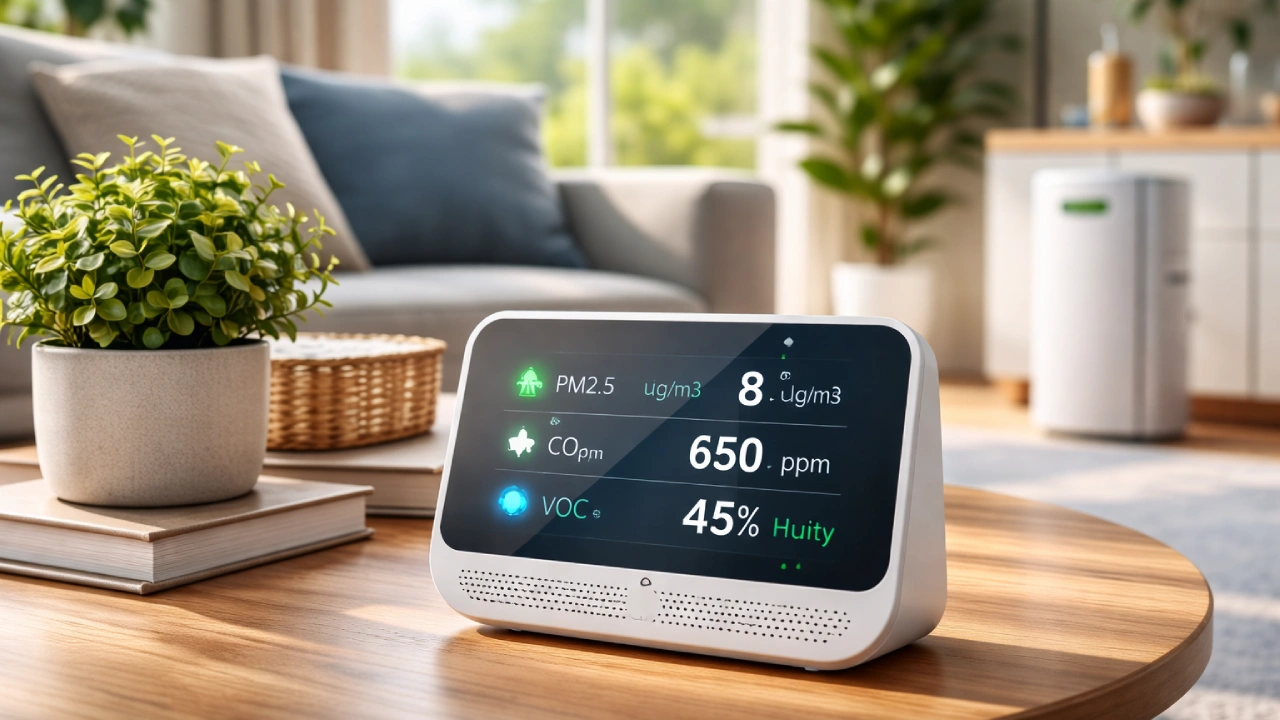
- Explains key IAQ sensors, including PM2.5, VOCs, CO₂, humidity, and CO.
- Details sensor accuracy, calibration methods, and real-world data interpretation.
- Provides clear ventilation and pollution threshold guidance for healthier homes.
- Recommends practical actions like ventilation, HEPA filtration, and source control.
Indoor air quality significantly affects health, comfort, and productivity, but it often remains overlooked. Since people spend nearly 90% of their time indoors, pollutants like particulate matter, volatile organic compounds, carbon dioxide, and excess humidity can quietly build up. Home air quality monitoring provides a data-driven way to grasp these hidden risks and take informed steps to enhance indoor environments. This guide shows how to choose the right sensors, calibrate and interpret readings, and implement practical measures that lead to cleaner, healthier air in homes.
Understanding Indoor Air Quality and Its Importance
Indoor air quality (IAQ) refers to the state of air inside buildings, influenced by pollutants, temperature, humidity, and ventilation. Poor IAQ has been connected to headaches, allergies, asthma, fatigue, and long-term breathing or heart problems. Common sources of indoor pollution include cooking fumes, cleaning products, incense, tobacco smoke, moisture, building materials, and outdoor pollution that seeps inside. Monitoring IAQ not only identifies problems but also empowers homeowners to prevent issues before they affect health.
Key Pollutants and Parameters to Monitor
Effective air quality monitoring starts with knowing what to measure. Particulate matter (PM2.5 and PM10) includes tiny particles that can reach deep into the lungs, often coming from traffic, cooking, or burning candles. Volatile organic compounds (VOCs) are gases that come from paints, solvents, furniture, and cleaning products. Carbon dioxide (CO₂) is not harmful in typical indoor amounts but signals poor ventilation. Carbon monoxide (CO), produced by malfunctioning combustion appliances, is dangerous at even low levels and needs immediate attention. Lastly, temperature and relative humidity affect comfort, mold growth, and pathogen survival.
Choosing the Right Air Quality Sensors
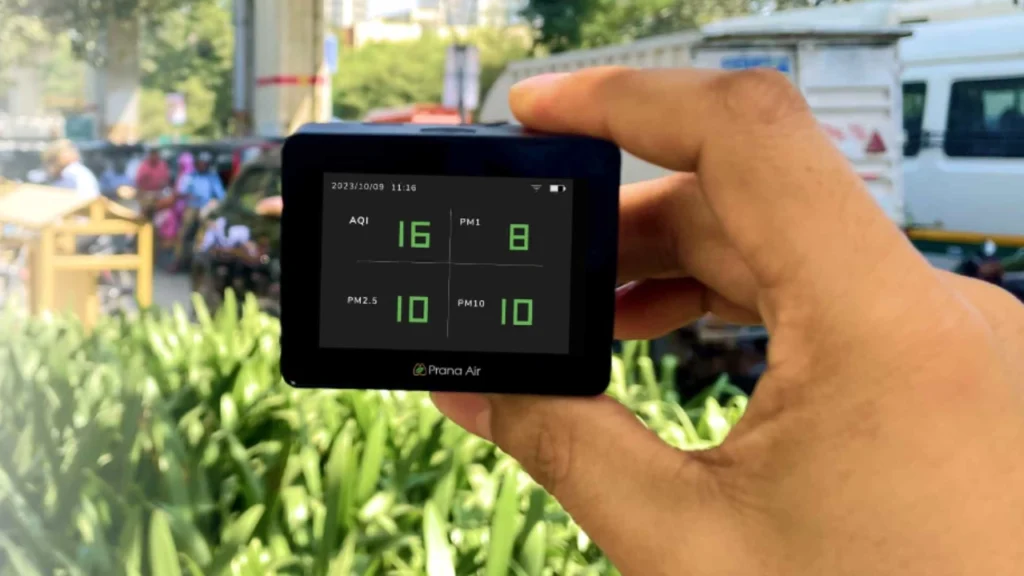
When selecting sensors, consider your budget, home size, and monitoring goals. Basic monitors usually measure PM2.5, temperature, and humidity, making them good for general awareness. Mid-range devices include VOC and CO₂ sensors, offering more insights into ventilation and chemical exposure. High-end monitors might add CO detection, formaldehyde sensors, and Wi-Fi connectivity with app-based dashboards and historical data.
Sensor placement is as crucial as sensor type. Monitors should be in commonly used rooms like bedrooms and living areas, away from direct airflow from windows, fans, or air conditioners. Kitchens might need specific PM monitoring because of cooking emissions, while bedrooms can benefit from CO₂ tracking to evaluate nighttime ventilation.
Understanding Sensor Technologies and Limitations
Most consumer PM sensors use optical laser scattering to estimate particle concentration by measuring light reflection from airborne particles. VOC sensors often use metal-oxide semiconductors that change electrical resistance when exposed to gases. CO₂ sensors may be true non-dispersive infrared (NDIR), which are more accurate, or estimated “eCO₂” sensors based on VOC data, which are less precise.
While modern sensors are reliable for tracking trends, they are not laboratory devices. Readings should be seen as indicators rather than absolute truths. Observing changes over time—such as spikes during cooking or drops after ventilation—tends to be more useful than focusing on exact numbers.
Calibrating and Validating Air Quality Readings
Calibration makes sure sensors provide useful data. Some high-end monitors come factory-calibrated, while others require periodic self-calibration. For PM sensors, cross-checking outdoors can help: briefly placing the monitor outside and comparing it with local air quality index data can reveal significant discrepancies. CO₂ sensors often need “fresh air calibration,” where the device is exposed to outdoor air, typically around 400 ppm.

Consistency is vital. Sensors should stay in one place for extended periods to establish baseline patterns. Sudden changes provide more information than isolated readings. Regular firmware updates, when available, also assist in maintaining accuracy.
Interpreting Data and Establishing Healthy Thresholds
Raw numbers only become useful when interpreted correctly. For PM2.5, levels below 12 µg/m³ are generally seen as good, while sustained levels above 35 µg/m³ may carry health risks. CO₂ levels below 800 ppm indicate good ventilation; readings consistently above 1,000 ppm suggest stale air. VOC readings differ by device, but rising trends typically signal the need for better ventilation or management of sources. Relative humidity should ideally stay between 40% and 60% to balance comfort and reduce mold or virus survival.
Dashboards and mobile apps can help visualize daily and weekly trends, making it easier to connect activities with changes in air quality.
Taking Action: Improving Indoor Air Quality
Monitoring is only effective when paired with action. Ventilation is the most immediate and impactful measure. Opening windows, using exhaust fans in kitchens and bathrooms, and ensuring cross-ventilation can quickly reduce CO₂ and VOC levels. During times of high outdoor pollution, ventilation should be timed carefully or combined with filtration.
Air purifiers with HEPA filters effectively remove particulate matter, while activated carbon filters help cut down on odors and VOCs. Source control is just as crucial: switching to low-VOC products, keeping gas appliances maintained, and minimizing indoor smoking or burning activities can significantly reduce pollution at its source.

Controlling humidity with dehumidifiers or humidifiers helps prevent mold and increases comfort. Regular cleaning, vacuuming with HEPA-filtered vacuums, and maintaining HVAC systems also contribute to better air quality.
Building a Sustainable Monitoring Routine
Home air quality monitoring works best as an ongoing habit instead of a one-time experiment. Periodic reviews of data help recognize seasonal patterns, like higher humidity during monsoons or more PM during winter. Over time, households can adjust their routines, modifying ventilation, purifier use, or cleaning practices, to keep air consistently healthy.
Sharing insights with family members encourages behavior changes, making air quality data a shared responsibility rather than just a technical curiosity.
Conclusion
Home air quality monitoring turns an invisible issue into actionable knowledge. By choosing the right sensors, understanding their limits, calibrating readings, and responding with targeted actions, households can greatly enhance indoor air quality. The outcome is not just cleaner air but also better sleep, improved health, and a more comfortable living space. In a time when wellness increasingly starts at home, monitoring indoor air is a practical and empowering first step.