

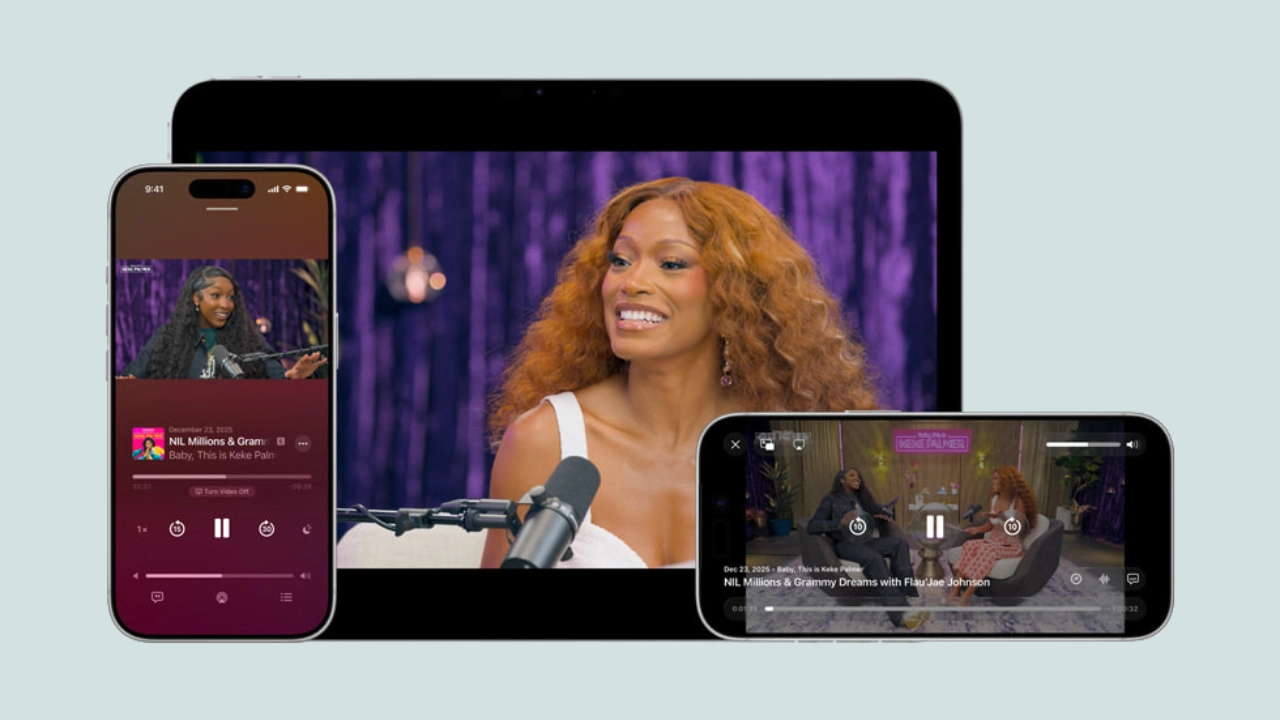
Apple has announced a significant update to Apple Podcasts that will introduce a fully integrated video podcasting experience this spring. The application, which has served as the main podcast platform since its launch, will now enable users to access video content through this update.
Apple has integrated video into the podcast stream using HTTP Live Streaming (HLS) technology instead of treating video versions of podcasts as separate static files. HLS technology enables users to experience videos in real time because it allows their quality to change according to the current network situation, which results in better viewing experiences across devices like iPhones and iPads, Apple Vision Pro, and web browsers.
The company has made HLS video available for testing to users in the early betas of iOS 26 and iPadOS 26.4 , and visionOS 26.4, while the complete version will launch within the next few months.
Seamless User Experience: Watch or Listen, Your Way
The updated Apple Podcasts lets users switch between listening and watching content throughout an episode without any interruptions. Apple states that users can shift their activities between audio content and video content without any interruption to their current task progress and understanding of their work. The following elements create better user experiences through their efficient performance:
The viewing experience becomes more immersive through horizontal full-screen video playback.
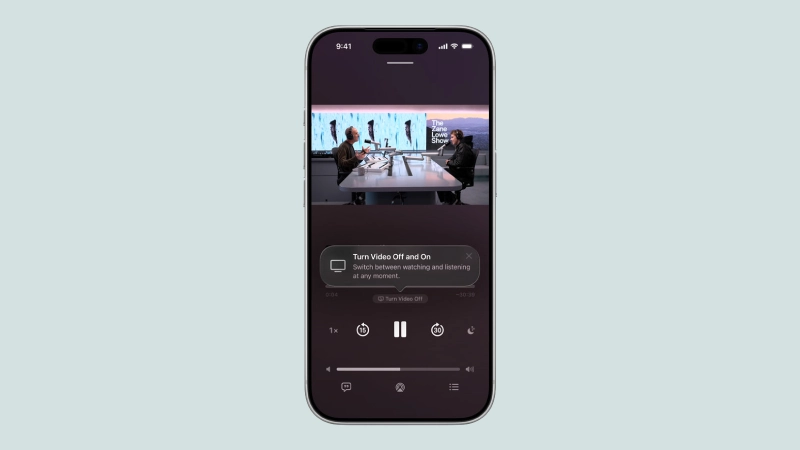
Users can download videos for offline watching, which allows them to watch episodes without needing an internet connection. The system automatically adjusts playback quality to ensure smooth streaming even during poor internet connections.
Apple Podcasts connects with its existing discovery features through its system, which includes personalized recommendations and curated content sections.
The dual-format system provides users with an uninterrupted experience that matches current consumer behavior, which shows through survey results that people want to watch video podcasts that combine visual material with audio content.
The content of creator monetisation and advertising innovation
The dynamic video ad insertion function marks the most exciting feature of Apple’s platform update because it creates new advertising possibilities. Static audio ads existed in podcasts before, but video content required more complex methods to achieve monetisation through dynamic advertisements.
HLS support enables creators to achieve the following functions:
Creators can now create multiple video ads, which they can insert into their episodes together with host-read content that they will update over time.
They can use all standard video advertising platforms that YouTube provides to advertisers.
Partners who host their content through the participating hosting partners retain complete authority over all aspects of their content and monetization methods.
Apple will distribute podcasts to creators and hosting providers without charging any fees for audio or video content distribution through its platform. The company plans to implement an impression-based fee system, which will charge ad networks that bring dynamic advertisements into video content during the upcoming year.
The major hosting and advertising partners include Acast, ART19, an Amazon company, and Triton’s Omny Studio. The major hosting and advertising partners, which include Acast and ART19, an Amazon company, and Triton’s Omny Studio, support the new video format through their current partnerships with SiriusXM and plans to establish additional partnerships in the future.
The company developed this strategic approach to establish itself as a competitor in the video podcasting market.
Apple expands its video capabilities at a moment when video podcasting shows substantial growth. YouTube reports very high user interaction with its video-based episodes, while Spotify and Netflix continue to develop their own video podcasting content.
Apple creates a dual media offering through its Apple Podcasts app, which combines video content with audio content. The app provides users with offline download capabilities, adaptive streaming features, and enhanced monetisation options. These features enable Apple to maintain its current user base while bringing in new creators who would choose other platforms.
This strategy not only expands Apple’s media ecosystem but also demonstrates the company’s commitment to maintaining its role as a leading force in the fast-changing digital content consumption industry.

Conclusion
The Apple Podcasts platform now supports video podcasts, which represent a significant advancement in long-form content delivery methods that audiences use to consume media. Apple provides creators with advanced tools through its HLS video technology, which allows for smooth playback, dynamic advertising, and comprehensive monetization capabilities.
Apple Podcasts will improve its competitive position against YouTube and Spotify through this development, which demonstrates that video content has become a vital element in the future of podcasting. The upcoming spring feature rollout will bring advantages to listeners, creators, and advertisers through its ambitious transformation of a fundamental media platform.