

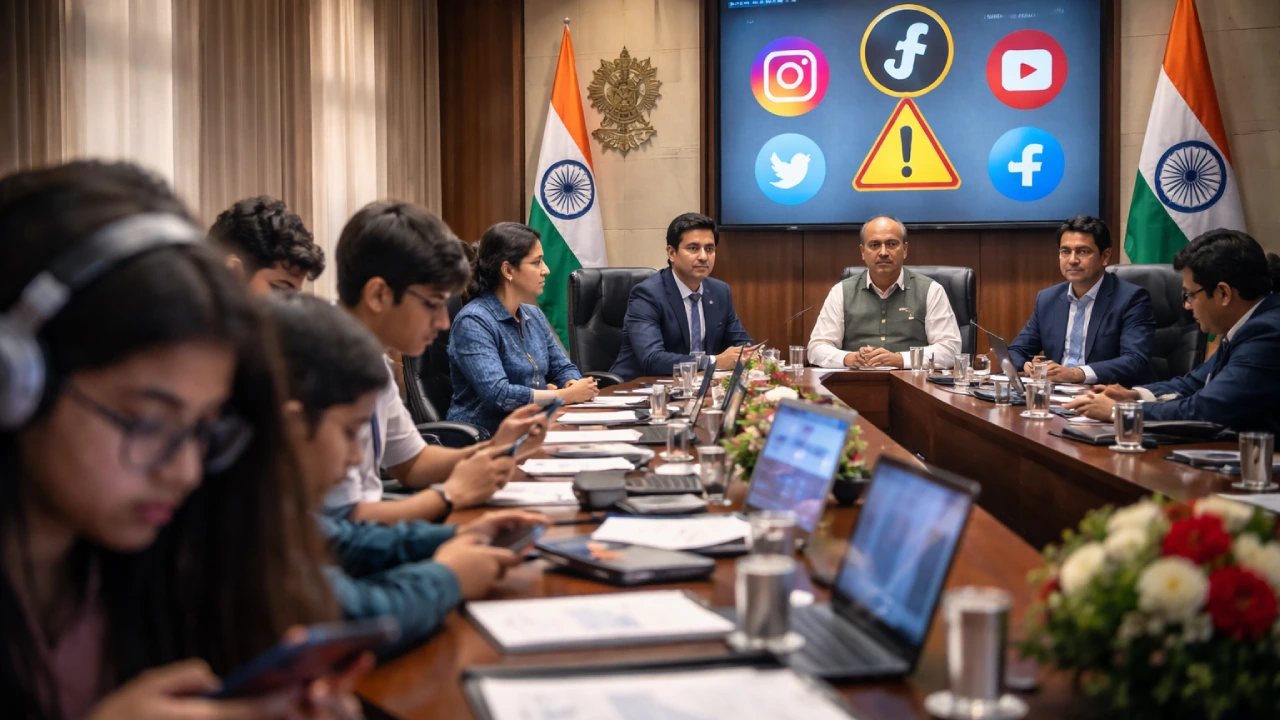
India is evaluating the possibility of restricting social media access for children under 16, drawing on recent global policy developments in countries such as Australia and France. The government has been holding ongoing conversations with social media companies to explore nationwide restrictions, while official bans have yet to be implemented.
India Social Media Restrictions for Minors: What Is Being Proposed
An official from the Ministry of Electronics and Information Technology has indicated that the government is considering age-based restrictions as part of a broader effort to enhance online safety for children. The Information Technology (Intermediary Guidelines and Digital Media Ethics Code) Rules, 2021, require amendments to implement any potential change.
Indian law currently permits children to use social media without age restrictions. Social media platforms must obtain verifiable parental consent under the Digital Personal Data Protection (DPDP) Act before processing the personal data of users under 18, thereby imposing an indirect restriction on certain types of social media use by minors.

Government officials announced that social media companies are currently participating in discussions to draft regulations establishing age-appropriate restrictions on online content. The talks also cover additional regulations regarding online security.
The research examines the effects of dangerous online material and deepfake technology.
International Context and Influences
The Indian government bases its decisions about social media access for minors on current worldwide trends for regulating this form of online content.
Australia became the first country to impose a ban on social media use for under-16s, requiring platforms to block access for this age group. France passed a law that prevents children under 15 from using social media platforms.
The United Kingdom, Spain, Denmark, and Greece are all investigating approaches similar to this one. Several Indian states, including Goa, Andhra Pradesh,h and Karnataka, are studying Australia-style social media bans, though how such rules would be implemented across diverse digital ecosystems remains unclear.
Arguments Supporting Age-Based Restrictions
The officials and child safety advocates who support age-based restrictions have presented multiple reasons for their position. Online safety risks involve users encountering content that is either unsuitable or dangerous.
Young users experience mental health issues because they engage in compulsive screen time. The system enables data collection, which advertisers use to target customers without verifying users’ ages.
The proponents of restrictions believe that digital access should be restricted by age limits, which they hope will keep minors safe from online threats while digital literacy programs continue to develop.

Concerns and Implementation Challenges
The implementation of age-based social media restrictions faces practical issues that critics and analysts have identified. The process of verifying a person’s age online poses significant technical challenges because minors use counterfeit birth dates and identities to bypass the system.
Some commentators argue that fixed age restrictions will prevent users from accessing various online content. Social platforms offer authentic educational opportunities that enable users to communicate with one another.
The legal system faces operational difficulties because it must create age-based protection rules that work together with current digital rights protocols and data security regulations. The ongoing debate over online safety measures to protect young people’s digital access remains unresolved among stakeholders.
Public Reaction on Social Media
Public discourse on social platforms reflects a range of opinions:
Some parents, together with digital safety advocates, back initiatives that protect children from online dangers and combat addictive website elements.
Young users have expressed doubt about social media, believing it serves as an essential tool for connecting with others, tracking trends, and learning new things.
The discussion about age verification systems has sparked differing opinions about their effectiveness, with some arguing that age restrictions will push young users toward unregulated websites.

The public response shows that people both support and oppose proposed age restrictions on social media access for underage users.
Conclusion
India is currently considering potential age-based restrictions on social media use for children under 16 by amending existing information technology laws. Government officials from the United States are currently evaluating multiple global social media policies, including the Australian and French models, although no official national ban exists. The proposal’s backers present child protection needs alongside mental health requirements and data security concerns as their main arguments. Public sentiment on social platforms mirrors this mixed outlook, reflecting a broader national conversation on how best to protect children online.