
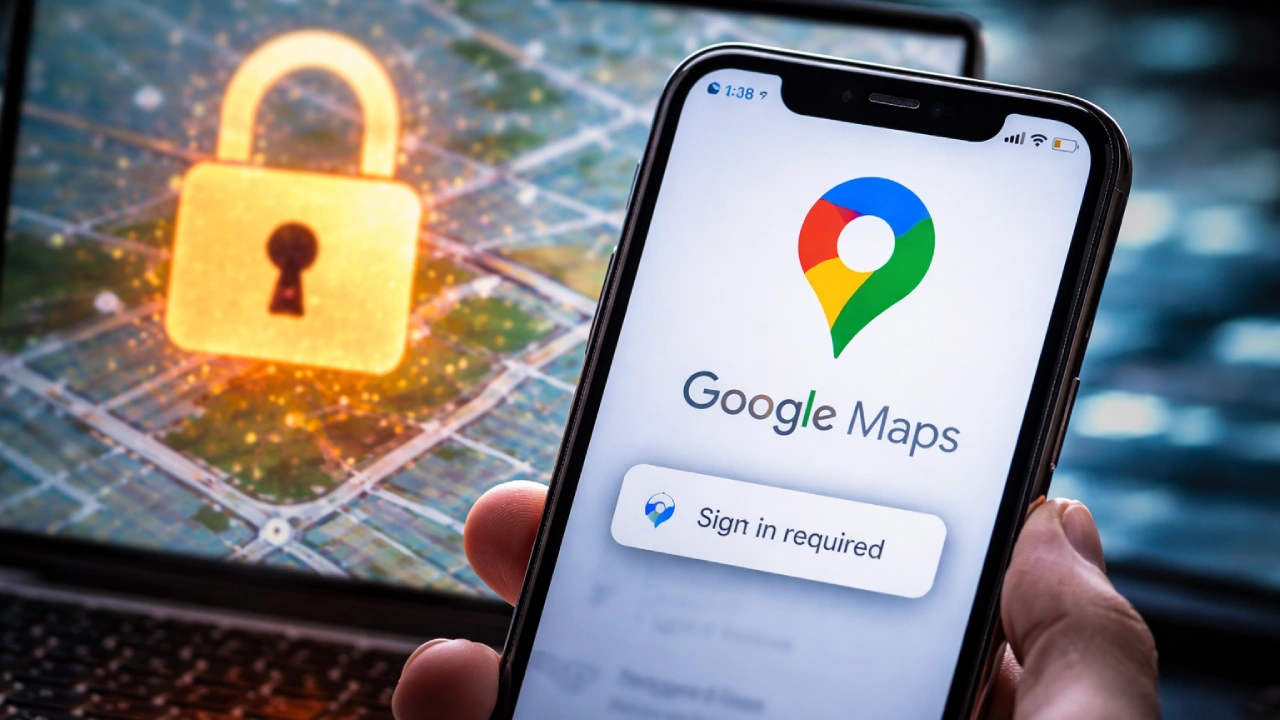
Last week, I pulled up Google Maps on my laptop to scout a route for a family trip from Kolkata to the hills. No account logged in, just a habit. The screen flickered, then dimmed, labels vanished, replaced by bare OpenStreetMap tiles with patchy satellite overlays.
A blunt prompt: “Sign in to continue.” Screenshots from users across browsers confirm it: Chrome, Firefox, Brave, Edge, all hit the same wall. This isn’t a glitch; it’s deliberate, rolling out quietly in early 2026.
For years, Maps hummed along anonymously. Now, it demands your Google ID for full access, citing “improved experience.” But does it deliver, or just harvest more data?
Core Tension
Is Google Maps, once the gold standard for navigation, truly worth the sign-in surrender?
Privacy hawks scream data grab, and they’re not wrong; Google tracks location history, searches, and even timeline data for ads.

Yet for students plotting campus routes, small business owners scouting deliveries, or families road-tripping, the precision mattered. Signing in restores it, but at what cost?
Recent Reddit threads echo this: users in India report OSM fallback lacks local detail, like accurate Kochi alleys or Kolkata traffic tweaks. The shift nudges you into their ecosystem, where “free” means your profile fuels their machine.
These aren’t hype; they’re daily lifelines, observed from field reports across Asia.
Who Benefits Most?
- Students get hyper-local campus paths and study-spot ratings, but the learning curve is that there is quick sign-in and low effort if privacy isn’t your hill to die on.
- Budget-conscious folks save on fuel by taking fuel-efficient routes; the free tier suffices, though data sharing stings less if you’re already in Google.
- Young creators thrive on list-sharing for shoots, but expect a 2-minute setup; accessibility is high on mobile.
- Small business owners in Kolkata rely on customer reviews for visibility—sign-ins unlock contributions, are worth it for leads, and have minimal cost.
- Families love trip timeline recaps; effort’s trivial, affordability nil, but discuss the data with kids first.
What Often Goes Unsaid

Friction builds quietly.
- Non-logged-in users get crippled OSM, with fuzzy labels, no traffic, and spotty satellite imagery.
- Hidden costs: Your data trains AI, flags “legit” reviews (users report 70% appeals fail), and erodes trust.
- Long-term, sustainability falters: Reddit’s r/degoogle buzzes with switchers to OsmAnd or Magic Earth, citing Maps’ declining accuracy in India.
- Casual users feel most disappointed, and power users tolerate it.
Pricing and Accessibility
Core Maps is free, sign-in or not. Premium? Timeline, lists, contributions, all gated behind a Google account (no cost, but privacy toll). Value stacks against Apple Maps (iOS-locked) or HERE WeGo (ad-light, offline-strong).
For budget audiences, it’s “affordable” until data paranoia kicks in; it aligns well for heavy users, but poorly for incognito use.
The Google Maps mandatory sign-in is part of a broader shift across major digital services. The trend is to limit anonymous usage in favor of account-based systems. Although this enhances personalization and functionality, it also promotes data centralization.
The worry for most users is not so much the sign-in requirement but the long-term implications of behavioral data accumulation. Location history, search queries, saved locations, and route data all add up to more comprehensive user profiles. Although the service is still “free,” the cost becomes more transparent.

On the other hand, Google asserts that account-based usage increases security, reduces spam contributions, and improves the quality of recommendations. Functions such as real-time traffic accuracy, saved lists, and cross-device functionality require user identity.
Ultimately, the question is one of control. Users face a choice between the benefits of integrated navigation and the loss of anonymity. As digital services become more integrated, data transparency will become as crucial as functionality.
Final Thoughts
Google Maps’ sign-in wall exposes the trade-off: unmatched utility versus creeping surveillance. It’s worth it for integrated lives, students, businesses, and families who value precision over purity. But for privacy-first folks, alternatives like OsmAnd beckon, free of the leash.
Your call, navigate logged, or reclaim the open road? Weigh friction against flow; the map unfolds as you choose.