

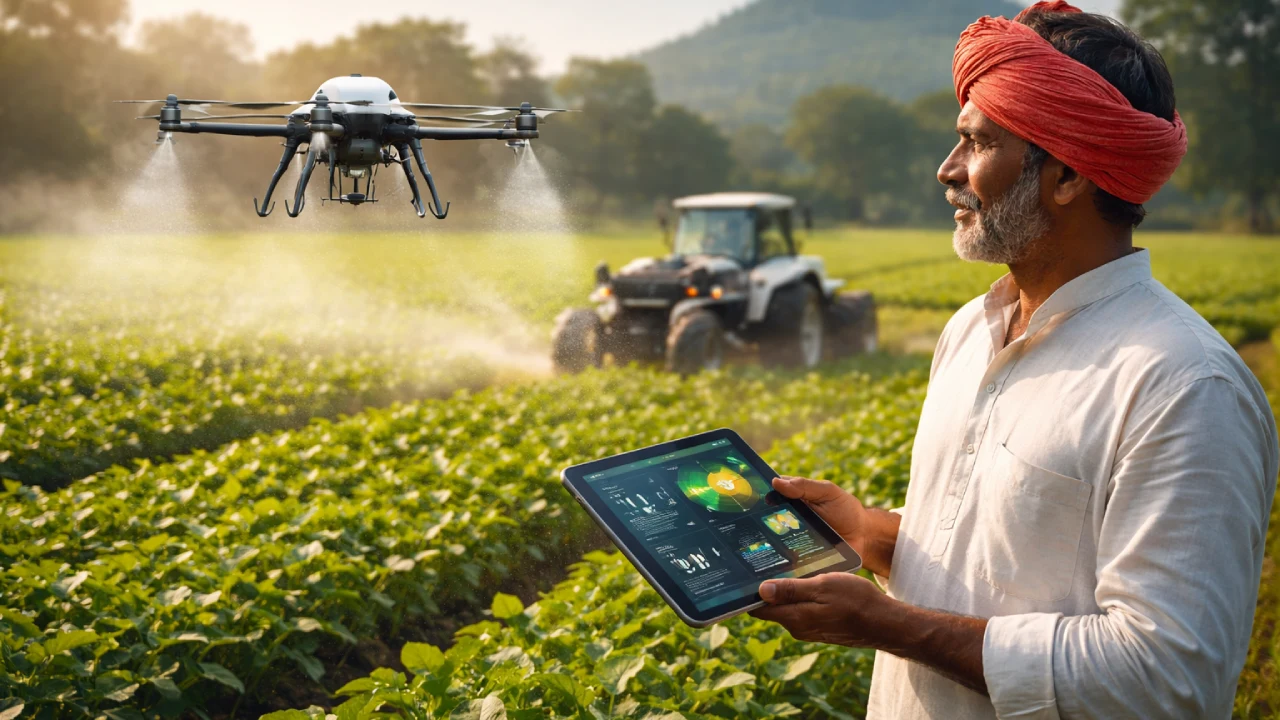
AI replace farmers in India! Terms such as “4th Agricultural Revolution,” “smart agriculture,” etc., may use some big terms, but what is happening at the farm level is much simpler.
Farmers now use apps to check the weather, while others are using drones to spray their crops. A few are testing tools that study soil and suggest how much water or fertilizer to use. Now the big question is being asked everywhere—will AI replace farmers?
Let’s understand what is actually going on.
What People Mean by the 4th Agricultural Revolution
Farming has changed many times before. First, it was all manual work. Then tractors and machines came. After that, chemical fertilizers and better seeds increased production.
Now people are calling this next phase the fourth change in farming. This time, it is about data, mobile apps, sensors, and artificial intelligence.
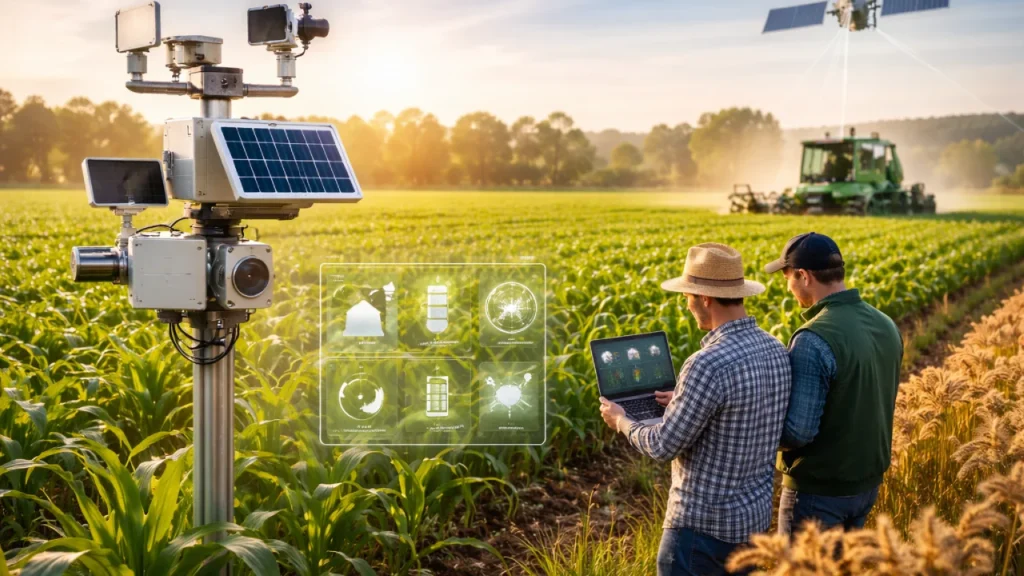
Instead of guessing, farmers can now look at numbers on a screen. Some tools study weather patterns. Some scan crops using satellite images. Some send alerts if a pest attack is likely. It sounds big. But in reality, it is just farming with better information.
What Is Already Happening on Indian Farms
Farmers are also now utilizing AI applications to improve their ability to know when to plant crops; these apps use historical weather data and forecasts to determine when it is best to apply herbicides or pesticides (especially when a drone is used), thereby saving time and reducing risk associated with direct contact with pesticides or herbicides.
Soil testing equipment, among the benefits of a farmer, has become invaluable, as they allow farmers to ensure they have balanced levels of nutrients in the soil vs. wasting fertilizer through overuse; with increasing rainfall fluctuation and increased costs of fertilizer, this equipment has become extremely valuable; however, many farmers do not have soil testing in place yet.
Large farming operations and large agribusinesses are using such tools at a faster pace because they have more capital. Smaller-scale farmers continue to be concerned about the cost of use, ability to access the internet, and whether these soil testing tools are a viable solution.
So, will AI replace farmers in India?
Honestly, no. AI can show data. It can give alerts. It can make predictions. But it cannot replace experience. A farmer knows his land. He knows which part of the field dries first. He can feel the soil and understand if rain will help or harm. No machine can fully replace that kind of understanding.

Some physical tasks may be reduced. Drones can replace some human labor for crop spraying, which means fewer manual laborers may be needed; however, there still needs to be a person to operate the drone. Drones still require human involvement.
New jobs are also being generated by drone technology, as many young people in rural areas are being trained to operate drones. Some are working with agri-tech startups as field coordinators. So instead of removing farmers, AI may change how they work.
The Real Problem Is Not Job Loss
The real issue is access. Most Indian farmers are small landholders. Many use basic smartphones. Internet connection is still weak in many rural areas. If AI tools are expensive or hard to understand, farmers will not use them.
They need simple apps in local languages. They need proper training. And they need proof that these tools will actually help increase income. Trust is very important.
If one wrong suggestion leads to crop loss, farmers may stop using the app forever. That is why companies must test these tools properly before pushing them widely.
Why AI Is Being Pushed in Agriculture
Climate change is affecting farming badly. The rain is not coming on time. Heatwaves are stronger. Water levels are going down in many places.
In such conditions, guessing is risky. AI tools can warn farmers about possible pest attacks. They can suggest better irrigation timing. They can help avoid overuse of fertilizer. This can save money and protect crops.
For a country like India, where millions depend on farming, even a small increase in productivity matters.

Farmers and AI Will Work Together
There is a lot of noise around machines replacing humans. But farming is not a factory job. It depends on land, weather, and human judgment. AI is just another tool. Like tractors once were.
When tractors came, people feared job loss. That did not happen the way many expected. Farming changed, but farmers stayed. The same may happen with AI. Technology will enter fields. More data will be used. Work may become faster and more planned. But farmers are not going anywhere.
The future of Indian agriculture will likely be simple—farmers using smarter tools, not machines farming alone.