

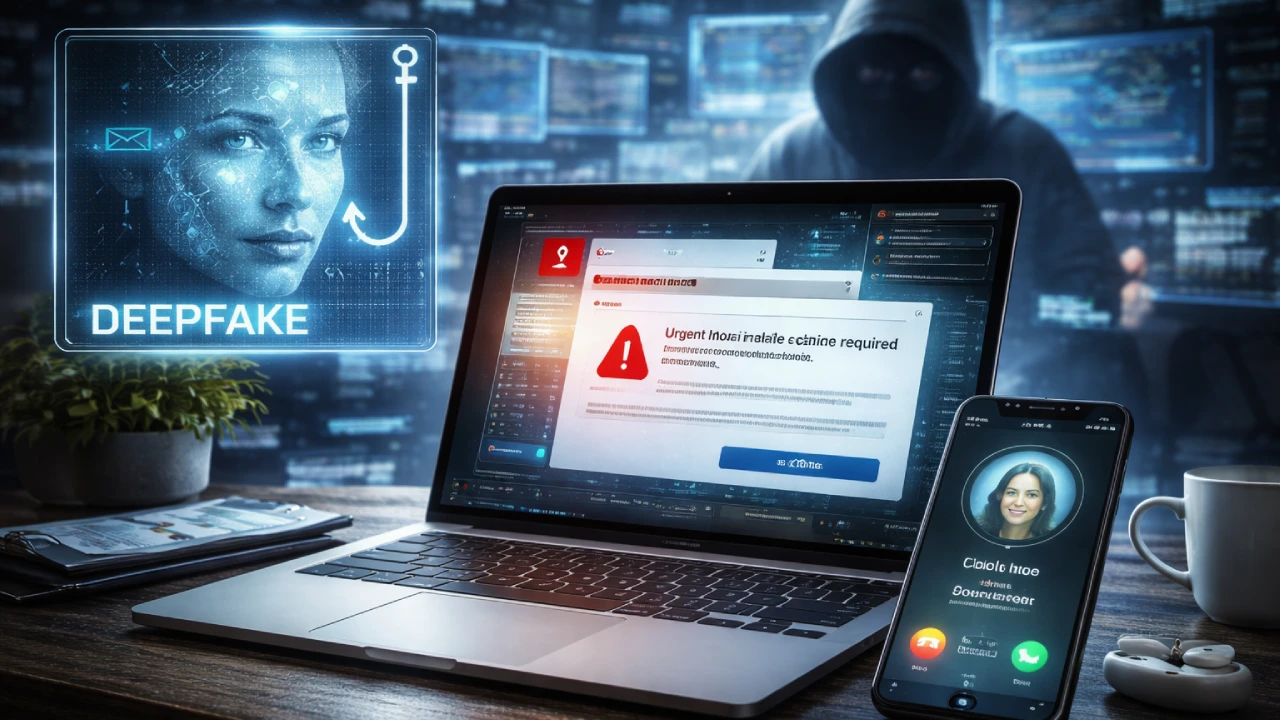
AI in cybersecurity has continuously developed in response to technological advancements. The unique feature of 2026 lies in its massive scale combined with its realistic nature. Artificial intelligence has changed scams from their original basic form into sophisticated methods that use specific emotional appeals to execute real-time operational modifications.
A phishing email no longer looks like a template. A scam call no longer sounds suspiciously robotic. A fake video no longer needs Hollywood-level resources to create authentic content. With generative AI, deception has become personalised, multilingual, and alarmingly convincing.
Organizations use AI as their primary security solution against cyber threats. The present security situation involves AI systems combating each other while human intelligence functions as an intermediary force.
The development of phishing detection systems and deepfake identification methods requires people to study both aspects of this ongoing technological duel.
AI in Cybersecurity: The New Face of Phishing Attacks
Phishing attacks depended on sending out large quantities of emails. Attackers sent millions of generic emails and hoped a few would work. AI has shifted this model toward precision targeting.
Modern phishing campaigns create fake messages that use leaked data, social media information, and public records to establish believable contexts. Emails reference real colleagues, ongoing projects, recent purchases, or current events. Language barriers have largely disappeared, as AI tools generate fluent messages in any language.

These attacks succeed not because users are careless, but because they are convincing by design.
AI-generated phishing commonly exploits:
- Authority cues, such as messages appearing to come from executives or institutions
- Urgency, framed around deadlines, security alerts, or financial risk
- Familiarity, using accurate personal or organisational
The complexity of modern attacks requires law enforcement agencies to move beyond their traditional method of using spelling errors to identify potential threats.
Voice Cloning and the Rise of Audio Scams
The most disturbing aspect of AI technology used for criminal activities shows itself through voice cloning. Short audio samples, sometimes just a few seconds, are now enough to generate convincing replicas of a person’s voice.
The available tools have created an increase in impersonation scams, which now focus on businesses and families as their primary targets. A phone call that sounds like a CEO authorising a transfer, or a distressed family member asking for help, can trigger immediate emotional responses.
Audio scams work effectively because they use audio content to deceive listeners who depend on visual elements for verification. The attackers use social proof, which originates from previous encounters with the victim, to establish their trustworthiness.
Voice-based deception presents a major threat in countries where people primarily use phones for communication.
Deepfakes: From Novelty to Threat Vector
People originally used deepfakes for two purposes, es which included entertainment and spreading false information. In 2026, they have become a direct cybersecurity concern.
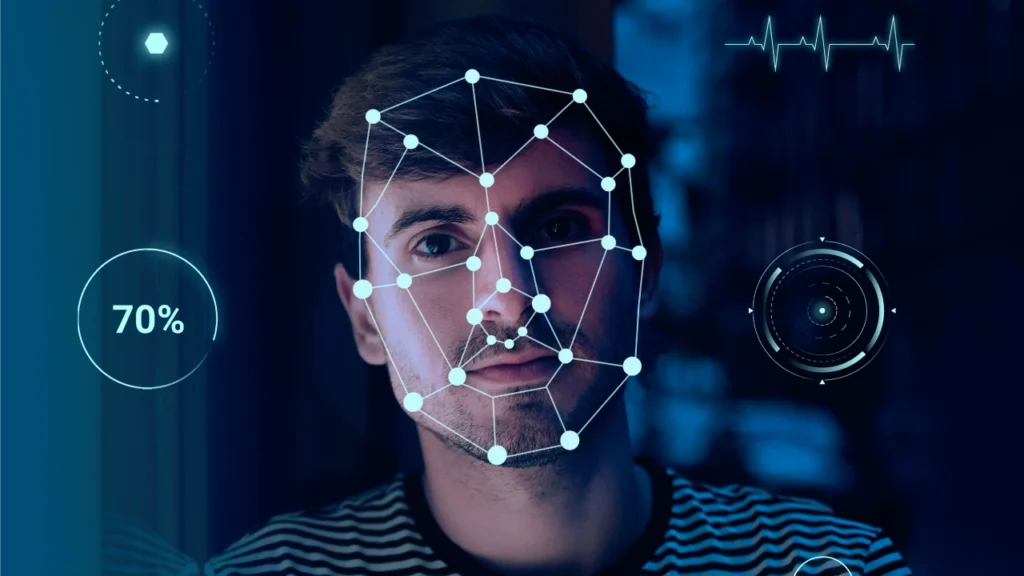
Synthetic video and images are now used to:
- Impersonate executives during video calls
- Fabricate evidence for extortion or fraud
- Undermine trust in authentic footage
The dangerous aspect of deepfakes stems from their realistic appearance combined with their planned usage. The attackers only need to deceive the person who has the power to proceed with their plan.
An organization needs visual evidence to validate its claims of video authenticity. Independence from visual evidence requires an organization to obtain verification.
AI as a Defensive Weapon
The same technology that enables scams also provides improved defense capabilities. AI-driven cybersecurity tools now analyse patterns at a scale humans cannot match.
Major technology companies such as Microsoft, Google, and OpenAI are using AI detection technology to protect their email systems, web browsers, operating systems, and corporate security systems.
The systems detect suspicious conduct through their analysis of spoken words, human actions, digital file information, and computer network conduct. The system determines deception probability through situational analysis without using established identification methods.
AI detection systems provide results as probabilistic estimates because they do not deliver complete accuracy. The system contains two types of errors, rs which include false positives and false negatives.
The Limits of Automated Detection
AI detection systems currently available on the market face major limitations despite the technological progress that the industry has achieved. Generative models develop at a fast pace, which enables them to surpass detection systems that operate on previous training data.

Deepfake detection needs to adapt to ongoing changes. The improved generation quality makes it increasingly difficult to find artefacts. The detection models need to execute continuous retraining because this process creates an endless competition between the two parties instead of providing a singular resolution.
AI detection technology has become widespread, which creates a fundamental problem because it generates privacy-related issues. The process of detecting content manipulation requires the examination of information that needs access to confidential materials, thus creating a conflict between maintaining security and protecting user privacy.
The Importance Of Habits Exceeds The Value Of Tools
The cybersecurity resilience of 2026 will rely on both human behavior and software solutions. The most effective security systems use AI technology together with established human operating procedures.
Key habits include:
- Verifying requests through secondary channels, especially for financial or access-related actions
- Treating urgency as a warning sign rather than a call to action
- The process of identity verification needs to operate separately from content persuasion.
- People need to understand that audio and video materials can be easily created through false means.
- The organization needs to implement these habits through training rather than allowing employees to develop their own approaches.
Journalism, Politics, and the Trust Crisis
AI-driven deception creates two challenges for journalists because they need to avoid being deceived and they must report on synthetic media.
Deepfakes threaten to erode public trust not just in media, but in evidence itself. The phenomenon known as the “liar’s dividend” allows people to dismiss genuine items because all materials can be faked.
Newsrooms now face the task of verifying not just sources, but reality itself, often under tight deadlines. The situation has resulted in a renewed focus on provenance information together with metadata analysis and cross-verification methods.
The effects of this situation reach beyond journalism into democratic systems, legal processes, and international diplomatic relations.

Global Disparities in Cyber Resilience
AI-driven scams do not affect all regions equally. Countries with high digital adoption but limited cybersecurity education are particularly vulnerable.
Many parts of the world experience smartphone adoption rates that exceed the pace of digital literacy development. Scammers exploit this gap, targeting populations unfamiliar with AI-generated deception.
Under-resourced institutions lack advanced defensive tools, which makes human awareness essential for their security needs.
The worldwide cybersecurity system will achieve resilience through educational programs and technology access according to its current requirements.
Regulation and Responsibility
Government authorities begin to implement responses, but existing regulations fail to keep up with new technological developments. Laws exist that prohibit impersonation, synthetic media, and fraud, yet border enforcement remains a challenging task.
Technology companies face increasing demands to implement watermarks on AI-generated materials, provide labels for synthetic media, and enhance their detection processes. The implemented measures provide assistance, but they lack complete application, and users can find ways to bypass them.
Regulatory frameworks establish protective measures against harmful activities, yet they fail to create complete safety against deceitful practices.
The Human Factor: Still the Final Line of Defence
Most successful scams use human psychology to exploit their targets instead of attacking technical security measures. Human beings respond strongly to four psychological factors, which include fear, trust, urgency, and authority.
AI technology enables businesses to develop personalized marketing strategies to reach large audiences through automated processes.
The uncomfortable truth is that cybersecurity in the AI era requires organizations to design systems that help prevent mistakes. The system needs to develop mechanisms that slow down decision processes, demand user authentication, and manage human mistakes without leading to major system failures.

Conclusion
The current situation requires people to stay alert because artificial worlds have become normal parts of contemporary life.
AI has changed cybersecurity into an ongoing battle between creating new threats and finding ways to detect them. Digital life now faces deepfake attacks, phishing attempts, and scam operations, which have become established dangers.
People need to solve their problems through technology solutions, which they should use with understanding, not through their automatic operational systems. People need to maintain critical thinking, which requires intelligent tools and professional methods to develop their expertise.
In 2026, the most secure individuals and organisations will not be those with the most software but those who understand how deception works. The future of cybersecurity exists through human involvement rather than through artificial systems.
The actual evaluation will assess the speed at which NPUs and on-device AI technologies become available for mid-range and budget-friendly laptops.