

The term “AI PCs” appears throughout 2026, existing on laptop boxes, keynote slides, and operating system updates. Yet for many users, the experience feels underwhelming. The laptop still looks the same. Applications maintain their original opening methods. The system displays unpredictable battery performance. The system presents intelligence, which users find difficult to perceive.
The gap between expectation and actual result exists because AI PCs operate with hidden internal elements. The new system introduces a permanent change that determines where computing tasks will take place, but it does not provide users with visible software changes that they can see.
The system makes a transition to new processing technology because it needs Neural Processing Units to create computation. The system today needs to develop new processing technology. The system today needs to develop new processing technology. The system today needs to develop new processing technology. The system needs to establish processing technology that enables AI-based computing and machine learning, which generates advantages from secure information processing. The boundary between two different AI processing systems establishes the path to assessing AI-based systems.
The assessment process determines whether the AI PC provides value through its features, impact on security, and its effects on different user groups.
What is an AI PC?
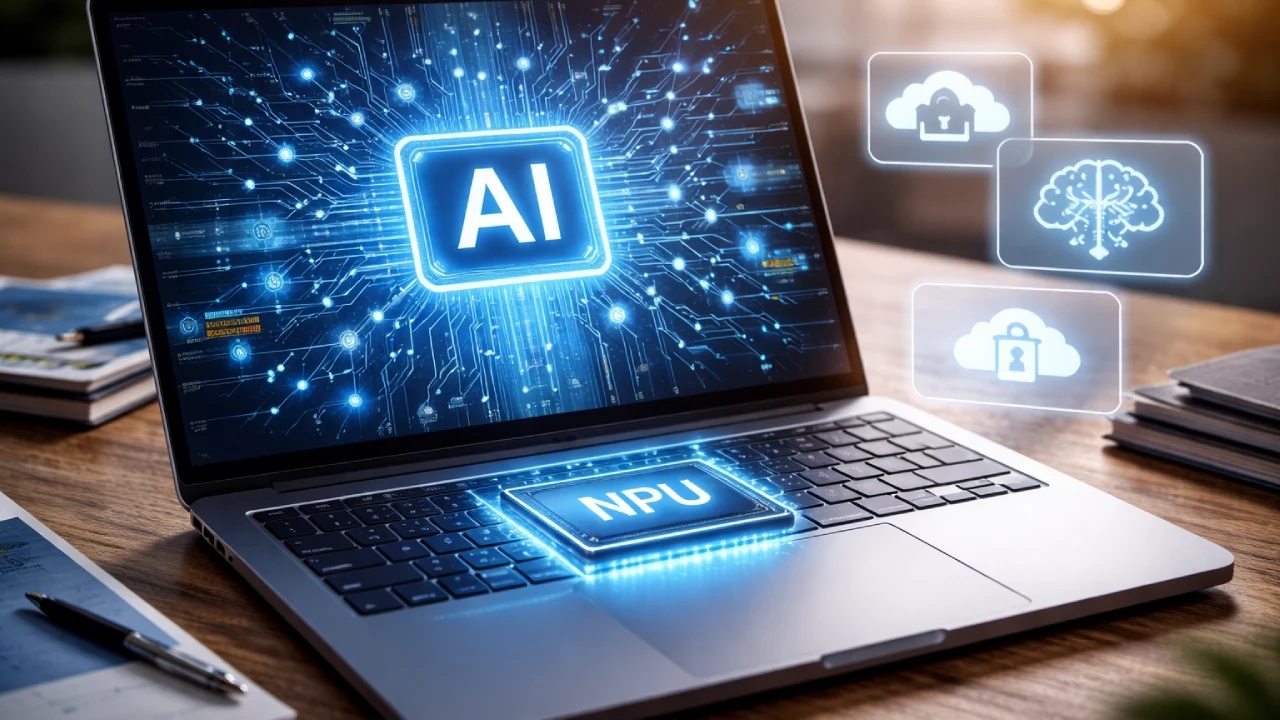
The term AI PC describes a computer system that only provides increased speed and chatbot functionality across its operations. The system functions as a personal computer that includes a specialized NPU that serves as a dedicated machine-learning processor.

NPUs operate through matrix calculations, which serve as the foundation for contemporary artificial intelligence systems, while CPUs perform basic logical processes and GPUs handle visual content and simultaneous tasks. The system can handle those operations nonstop while using minimal energy because it was built to conduct continuous background intelligence operations.
Major silicon manufacturers now include NPU processors in their consumer processor products, which include Intel, AMD, Apple, and Qualcomm. This development marks a crucial step towards establishing sustainable architectural designs that will remain effective for an extended period.
The existence of an NPU in a laptop does not enable the device to perform complete AI processing on its own. The technology enables efficient local AI processing, which has become more practical for use.
What AI Tasks Actually Run On-Device Today?
On-device AI focuses on tasks that benefit from immediate results, require data protection, and need to operate without interruptions throughout the day. The systems use compact models that designers created to function under strict power consumption limits and memory capacity restrictions.
The essential functions of AI systems, through their native capabilities, perform these tasks:
- The system protects calls by using real-time technology to remove background noiseand cancel echoes.
- The system enables video conferencing through background blurring, eye contact correction, and automatic framing.
- The system provides real-time live transcription and translation services while generating captions for audiovisual content.
- The system enables users to perform intelligent search and summarisation tasks across their local document collection.
- The system uses image enhancement features, which include background separation and upscaling functionality.
- The system operates locally because sending audio or video content together with personal documents to the cloud would create delay problems and raise energy consumption while violating user privacy.
- The system uses NPUs to enable users to operate the features because these components execute operations silently throughout the day without needing to activate the device’s advanced CPU and GPU processing units.
What Still Runs in the Cloud and Why That Hasn’t Changed
The market forces companies to develop powerful generative models that will operate exclusively from cloud-based systems. The system needs memory together with processing power to handle tasks that require generating long text documents, performing complex reasoning operations, creating images, and executing multi-modal analysis.

Cloud AI holds a dominant position because it enables:
- Users to interact with large language models
- The system creates high-quality images together with videos
- The system performs a detailed analysis across extensive textual content
- The system offers personalized experiences by using data from different devices that users own.
The majority of AI functions on AI PCs use a combination of local processing and cloud-based resources. The device will perform local processing to analyze input before sending a model request to the cloud.
AI PCs enable users to reduce their dependency on cloud services, although they maintain essential cloud requirements.
NPUs and Battery Life: Where the Real Gains Hide
The power efficiency of AI PCs can be observed as their most valuable benefit, which remains hidden from sight.
The AI workloads that require CPU or GPU processing demand high energy costs to operate them. The system experiences thermal issues, together with fan activation and battery consumption, whenever there are short time intervals. NPUs function to prevent these problems because they maintain low power usage while supplying adequate processing capabilities for basic intelligence tasks.
The software achieves optimal performance through proper optimization, which enables:
- The system maintains continuous AI functionality without impacting battery life.
- The system experiences lower temperature increases during phone calls and multiple tasks.
- The system achieves extended battery power during actual work situations.
The system gains advantages that exist in a state of instability. The system loses efficiency when software fails to use NPU processing and instead selects CPU or GPU operations. The system depends on operating system scheduling together with developer practices for proper function, rather than requiring strong hardware support.
The most compelling justification for on-device AI technology centers on privacy issues.

AI PCs deliver their strongest long-term benefits through their ability to protect user privacy.y
When AI tasks run locally, the device keeps sensitive data secure by preventing any voice recordings, facial features, keystrokes, and personal documents from leaving the device. This approach minimizes the chances of data breaches, unauthorized access, and cross-border legal issues.
This issue matters significantly for all countries across the world. Some areas enforce strict data protection regulations, while other regions lack complete data protection enforcement. The implementation of on-device AI follows privacy-by-design principles, which give users control over their data instead of remote servers obtaining that control.
The implementation of privacy advantages requires specific conditions to occur. Users need to recognize which features work locally and which features need cloud-based processing. Software vendors provide inconsistent levels of transparency, which results in a new literacy gap concerning AI computing.
Who Actually Benefits from an AI PC in 2026?
AI PCs deliver genuine advantages to users, although their benefits are distributed unevenly across different user groups.
The system provides its highest value to the following user group:
- Knowledge workers who need to work for extended periods use meetings, document work, and communication tools
- Students and researchers depend on transcription,d summarization, and search functions
- Creators require tools that provide them with immediate improvements instead of tools that require time to process their work.
- Professionals who handle confidential information or data that needs protection
The system provides value to customers who want to use: - Users who mainly visitthe website,d watch videos, and make digital purchases
- Gamers need dedicated graphics processing units to handle their gaming tasks.
- Local AI systems must completely take over all functions of cloud assistants to meet buyers’ expectations.
AI systems in their current state provide users with basic improvements. The system’s worth increases as time passes because its software components develop.
The problem arises from software limitations that restrict the system’s operation, not from hardware restrictions.
The main obstacle that prevents AI PCs from operating effectively in 2026 is software limitations rather than silicon power.
The industry has just started to build NPU-ready systems, which require developers to create new scheduling methods and modeling systems. The development process time needs years instead of months for developers.
The functioning of operating systems serves as a foundation for this process. NPUs become operational through intelligent task routing, model lifecycle management, and developer tooling.
The difference between hardware capabilities and current software capabilities results in AI PCs providing subpar performance even when they have advanced hardware specifications.
AI PCs and the Global Digital Divide
AI PCs present both benefits and dangers for international progress.
On-device AI functions allow users to achieve transcription and translation and document support without needing to access high-bandwidth internet. This technology will transform education, accessibility, and productivity in developing nations.
At present, AI PCs demand a higher price, which restricts user access to them. The system will expand the digital divide if its functions remain exclusive to high-end products.
The Risk of Overpromising
AI PCs face a common technological challenge because their upcoming development exceeds what their current systems can deliver.
People expect an AI PC to deliver visible changes according to their expectations. The scepticism increases when the transformation takes place in a minor way or after a certain period. The communication process failed to deliver the technology properly.
AI PCs should be framed as foundational infrastructure, not magical upgrades. The advantages of these systems develop over time instead of creating instant advantages.
The process of controlling this story will determine whether users continue to use the product.
Conclusion
The development of AI PCs demonstrates adequate control systems that operate through their security features instead of their fashionable aspects. The core character of AI PCs comes from their ability to control system operations through intelligence, which works closer to users while they operate their functions without needing outside servers, and maintains a balance between security measures, system capabilities, and processing speed.

The implementation of NPUs enables practical technology transformation. The system enables permanent background AI operations, which boost daily activities through its automatic support without requiring user focus or system resources.
The AI PC market will not need to develop its products for public usage until 2026. The development of AI PCs shows how personal computing will progress towards systems that function locally and operate with higher efficiency and better protection of user information.
The actual issue revolves around the implementation of AI on personal devices because it will determine the boundaries of responsible, transparent, and fair usage.