
Highlights
- Latency and network stability, not peak bitrate alone, determine whether cloud gaming feels competitive.
- GeForce NOW and Xbox Cloud Gaming are strong cloud options; Steam Deck and contemporary consoles remain best for low-latency native play.
- Global viability hinges on local broadband quality and datacenter proximity rather than the theoretical capabilities of streaming tech.
Cloud gaming is ready to change the whole game-making and game-playing scenario by transferring the entire load of heavy computations to the data centres and sending the rendered images to the thin client via streaming. However, traditional gaming consoles and PCs place performance at the very end: the visuals and game logic are produced and run by powerful local hardware.
Thus, the debate between the two sides is not about ideology but about the consumers’ measurable trade-offs: latency and input responsiveness, visual quality under various network conditions, long-term cost, and how suitable each model is for the real-world internet infrastructure and user habits in different markets. In this paper, we will compare the two methods, analyse the top cloud services and local hardware of the present time, and give practical advice to consumers who are considering their options in 2025.
Technical trade-offs: latency, bandwidth and consistency
Latency is the key technical struggle between the cloud and local gaming. In local gaming, the input-to-display delay is determined by device hardware, controller activity, and display response time. Cloud gaming, on the other hand, includes encoding, network transit, and decoding delays as well. Quick response genres such as competitive shooters, fighting games, and high-frame-rate racing may find those extra milliseconds to be crucial. Whenever there is an ideal connection, and the user is very close to a cloud node, cloud services can deliver extremely low latencies, but the real-world conditions are the ones that introduce jitter, packet loss, and variable routing, which eventually raise latencies unpredictably.
Bandwidth requirements are often overstated in marketing. Providers publish minimum and recommended speeds for acceptable performance, typically suggesting 10–20 Mbps for mobile devices and higher for 4K streams. Xbox Cloud Gaming, for example, notes that the best results are achieved with roughly 10 Mbps on phones and 20 Mbps for consoles, while also recommending 5 GHz Wi-Fi or adequate mobile data. These figures are realistic baselines, but achieving consistent, low-latency play at higher resolutions usually demands both more throughput and more stable network paths.
Visual quality and input fidelity: compression vs native rendering
Frames are encoded and compressed by cloud platforms before sending. This method is not only effective but also gets better with modern encoders, but still compression artefacts, banding, and lower effective bit-depth are invisible in the complex scenes, fast pans, or on large displays. Some cloud services utilise top-notch GPUs and offer features like HDR and high frame rates, but even the most powerful server hardware cannot completely prevent the impact of network fluctuations.
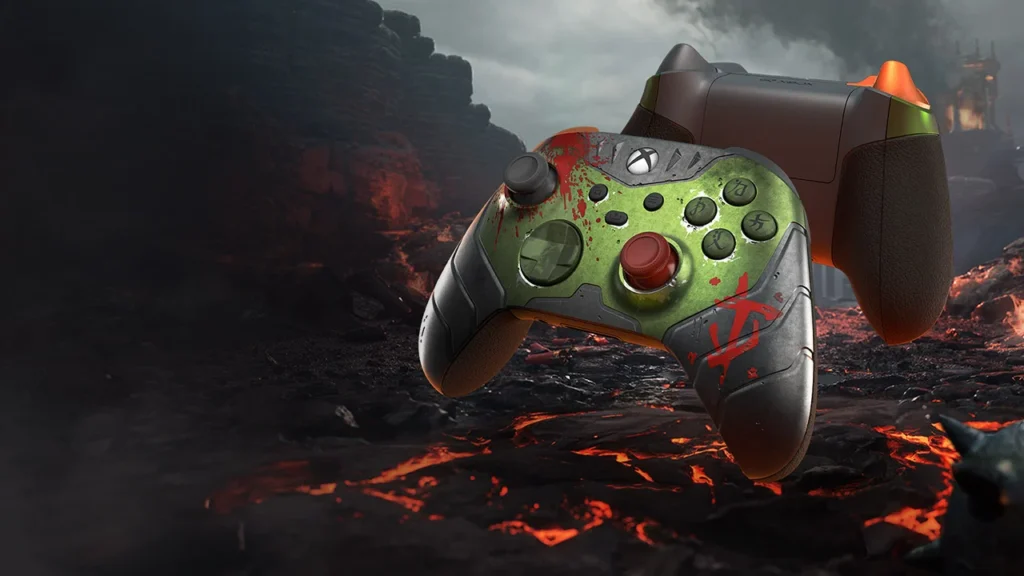
Local consoles and gaming PCs are capable of rendering frames natively with practically no compression that is perceivable to the human eye (apart from the ones used for textures in games). Image quality and stability of frames on a perfectly calibrated 4K TV linked to a Series X or PS5 Pro will typically be better than the quality of the cloud, unless the cloud connection is almost perfect.
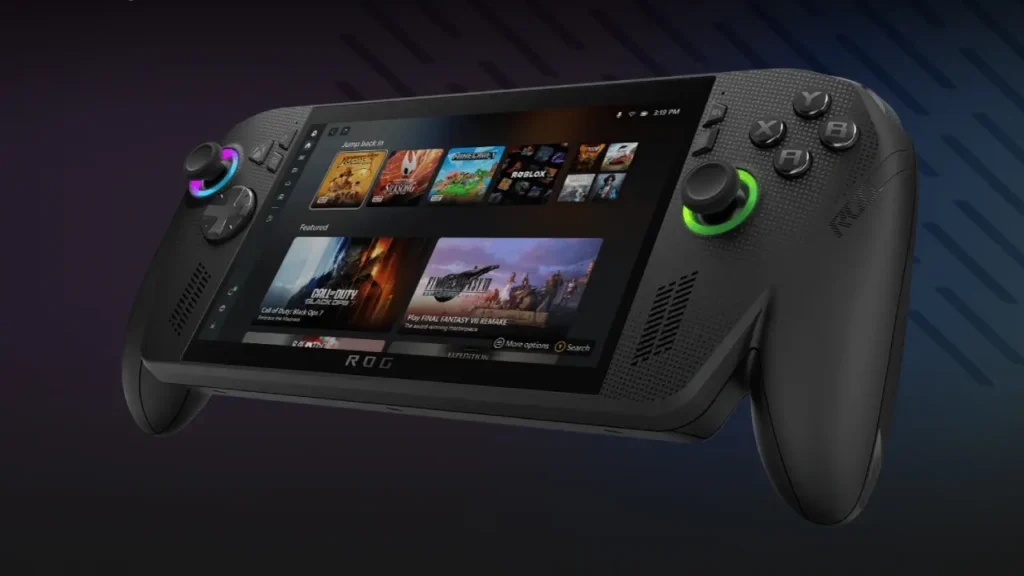
The latest console updates and the Steam Deck by Valve, among other portable devices, provide hardware and display options that support high-quality and fast-responsive gaming, which cloud streaming cannot always replicate. The Steam Deck is still recommended for playing games locally on the go, exactly for the reason that it avoids the dependency on the network while providing very good native performance.
Representative services and devices in 2025
NVIDIA’s GeForce NOW brings PC-grade GPUs to the cloud and is widely recommended for players who want access to existing PC libraries without owning a high-end GPU. GeForce NOW advertises ray-tracing and high frame-rate capability on supported titles and is valued for its platform-agnostic approach to game ownership. Its strengths are particularly visible when a user’s device would otherwise be underpowered. However, community reports indicate that input lag and session variability can occur depending on region and the user’s last-mile conditions, reinforcing that the service is only as good as network performance between the user and the datacenter.
Xbox Cloud Gaming demonstrates a service model built around subscription access and integration with an existing console ecosystem. Microsoft’s offering streams console versions of titles and is practical for those already invested in Xbox Game Pass. The service lists explicit network recommendations and tends to be praised where Microsoft’s global datacenter footprint provides low transit times. Yet reviewers and players note compromises in image processing on some platforms, and that experience varies with device and local bandwidth.
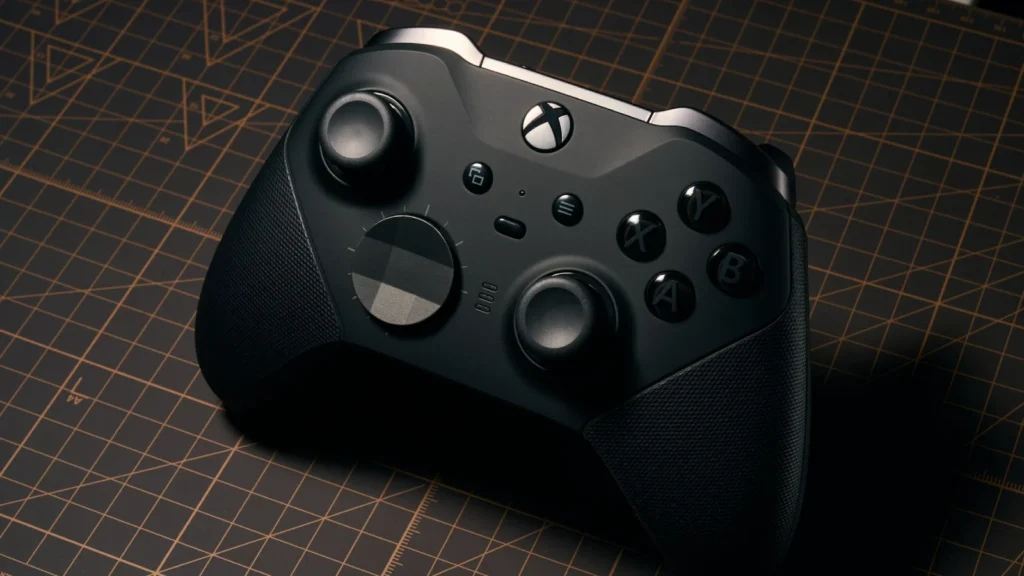
PlayStation’s cloud offering, tied to PS Plus Premium, is a pragmatic addition for players who want to try or stream catalogue games without immediate downloads. It is especially useful for players with high-speed home connections who want quick access to large game libraries without expanding local storage. Console hardware such as the PS5 and Xbox Series X meanwhile, continue to be recommended for their raw power, exclusive titles and predictable performance. The Series X is regularly cited as offering some of the best native 4K gameplay available on the consumer market.
Amazon’s Luna illustrates a middle path and a cautionary tale. The service has experienced catalogue rotation and uncertainty, which highlights a fragility in platform-exclusive or limited-library cloud offerings; game availability and publisher agreements materially affect value. Luna’s evolving catalogue suggests consumers should evaluate cloud subscriptions with an eye to content stability and platform commitments.
Cost and accessibility: subscription vs ownership
Cloud gaming cuts down the initial cost by swapping the huge one-time hardware costs with recurring subscriptions and cheaper client devices. For non-serious gamers, this financial arrangement might be very attractive: a small monthly charge can give access to top-of-the-line hardware as if it were real.
However, in the long run, a subscription model can end up being more than the amortised cost of a console or mid-range PC, especially for gamers who play a lot and value ownership and offline play. Different regions have different pricing and data caps; therefore, these factors make it even harder to determine value: in places where high-speed internet is costly or metered, the low hardware cost of cloud gaming can be made up for by the large data bills.
Local consoles are constantly in demand and can be sold for a good price when they are still in working condition. Plus, their long-term costs can be easily predicted. Also, they allow for offline play and modding communities, which are characteristic features of the cloud platforms that cannot be replicated. Hybrid approaches, such as gaming remotely from the local console to the handheld device or home streaming over LAN, are ways that show how consumers often mix both models rather than strictly using one model.
Genre and use-case suitability
Genres set the limits for what is suitable. Turn-based strategy, single-player narrative games, and most RPGs can be easily streamed, but they are not really affected by slight variations in latency. On the other hand, competitive multiplayer games require the minimum input lag and thus they can only be played on local hardware or very good LAN cloud links.

Considering portability, it is another dimension. With Cloud gaming, a user could easily play a high-quality title on his/her phone or a thin client far from home. On the other hand, the Steam Deck and handheld local hardware provide guaranteed responsiveness for portable gaming without depending on the network.
Global viability and infrastructure realities
The viability of cloud gaming is inextricably linked to local internet infrastructure. Inhabitants of markets where fibre optic is universally available and low-latency routing is the norm can treat cloud platforms as a primary and legitimate gaming mode. The use of local consoles and offline play will continue to be predominant in areas of slow or unreliable connectivity. However, the providers continue to build edge datacenters to lessen the impact of transit delays, and this is not happening at the same rate globally.