





Table of Contents
Highlights
- VPNs, password managers, and secure browsers protect different layers of personal privacy risk.
- Password managers with passkeys deliver the highest immediate security return for most users.
- Secure browsers reduce tracking and fingerprinting at the point where data exposure is highest.
- A layered data privacy setup offers strong protection without requiring advanced technical expertise.
Glancing at the contemporary landscape of vigorous data collection, customised marketing, as well as elaborate phishing and credential-stealing campaigns, regular consumers have no alternative but to view privacy measures as an integral part of the infrastructure instead of optional extensions. The personal data security kit by 2025 usually consists of three categories of items that each tackle a corresponding layer of risk: virtual private networks (VPNs) for encrypted transport and privacy of location, password managers for maintaining clean credentials and managing secrets, and privacy-oriented browsers to restrict tracking and minimise attack surfaces at the point of web interaction.
They are each targeting a particular threat with their distinct and complementary features, functions, usability and cost. The present article contemplates the best options in each category, illustrates their cooperation and shares realistic advice concerning which mix of tools provides the maximum reduction of risk for certain types of users.
What each tool actually protects
Creating an encrypted tunnel utilising VPNs facilitates the seclusion of your data, and thus nobody can be aware of the places you visit online or the information you exchange. The major advantage is that even if the internet connection is untrusted, the user can still make the most out of the service by going through the VPN. Moreover, the user can also bypass simple location-based restrictions and, in addition, reduce the extent to which their Internet Service Provider and local observers see their DNS and traffic metadata.

Nevertheless, VPNs alone do not suffice to prevent online entities from associating the user with the account being used while they are active and do not deter browser fingerprinting or cross-site tracking after a user’s session has been established.
When it comes to security, password managers come out on top because they uncommonly but securely generate, store, and autofill every password or passkey for each user account. Besides this functionality, they also offer services such as secure sharing, breach monitoring, and enterprise policy controls. Their main security advantage is due to the non-reuse of passwords, thus putting an end to one of the biggest causes of account break-ins.
Passkeys (FIDO/WebAuthn) are now seen as a worthy alternative, which cannot be easily misled, to passwords; the migration to passkey-based authentication is not just there but also fast and taking place across major platforms. The architecture of password managers differs: open-source managers allow the code to be audited by the public, whereas closed commercial products usually place more emphasis on user experience and enterprise features.
In trying to achieve personal security for browsers, the developers mainly focused on reducing the risks associated with tracking and fingerprinting while at the same time preventing drive-by attacks. Their approach involves employing third-party tracker-blocking measures, network state partitioning, and providing highly secured sandboxing as their methods of operation. They find themselves sitting between convenience and exposure: the browser is the place where most of the personal data is revealed, hence it is a very powerful control point, but privacy protections can obstruct site functionality unless they are skillfully and properly adjusted.

VPNs in 2025: speed, jurisdiction, and trust
There are no two similar VPNs. By the end of the year 2025, the market’s best and most trustworthy VPNs will be characterized by three traits: the transparent no-logs policies with independent audits, the modern protocols that make speed and security the most important factors (WireGuard and proprietary optimized protocols), and the large geographical distribution of servers that lowers latency and increases reliability.
The top-ranking service providers incorporate these features but at a reasonable price; users are offered a choice between NordVPN, Proton VPN, and ExpressVPN, which are considered the practical leaders because they provide great performance, user-friendly apps, and privacy claims that have been audited. A reputable paid VPN is still a wise component of a layered defense for users who travel a lot or use public Wi-Fi, but it is essential to know the restrictions: a VPN hides your IP but does not make your activity on sites where you log in anonymous, and free or ad-supported VPNs usually sell user data, thus defeating the purpose of their existence.
Password managers and passkeys: the highest return on investment
Of the three tools discussed here, password managers offer the largest and most immediate reduction in personal risk per unit effort. Using a manager to generate unique, complex credentials for each site eliminates the single biggest convenience-driven vulnerability: password reuse. Modern managers also support passkeys and integrate breach monitoring to notify users when stored credentials appear in public dumps. Enterprises benefit especially from managers that provide policy enforcement, secure sharing and audit trails.

From a usability perspective, the gap between technical users and non-technical users has narrowed considerably: contemporary password managers provide seamless autofill across browsers and mobile apps, making good hygiene the default rather than an onerous chore. Security analysts and industry reviews consistently prioritise reputable managers — both open source and commercial — for their combination of security posture and user experience. For most users, adopting a password manager is the first and most consequential privacy investment they can make.
Passkeys are a vital joint part and in many cases already the best choice: passkeys are based on public-key cryptography linked to a specific device or platform, thus they are naturally immune to phishing and replay attacks. The scenarios of usage will increase with the passkey adoption by major service providers, and are going to be organisations’ migration strategies to combine passkeys with password managers and still transition smoothly rather than treating them as exclusive.
Secure browsers: pragmatic protections at the browser layer
The loss of privacy is less when you choose a privacy-oriented browser and still use a VPN. Brave, Firefox, and other browsers that have gone through strict privacy measures, among other things, implement track blocking, anti-fingerprinting tactics, and cookies and referrer headers that are treated more stringently. All these protections work together to get rid of the cross-site tracking, which is the basis for targeted advertising and is thus a part of the ad-tech economy.

For users who value both convenience and privacy, Firefox with appropriate add-ons or Brave with its default strong protection are the right and practical picks: they offer the same user interface as the rest but with strong defaults that prevent a large category of trackers while still allowing reasonable compatibility with the popular sites. The Tor Browser is still the one that guarantees maximum anonymity, but with the high usability and speed costs, it will no longer be the choice for everyone for their daily browsing. The privacy test suites and comparative audits keep on revealing effectiveness differences, hence users should rely on reputable privacy testing resources to compare browsers.
The practical trade-off is that aggressive blocking sometimes breaks site functionality, and users will face occasional configuration decisions. Good password managers mitigate this by keeping authentication workflows smooth even if trackers are blocked.
Practical recommendations for the user profile
Travellers and remote workers who are always on the go and are the ones who fully rely on public Wi-Fi the most should go for a VPN that is reputable (The one that is paid, audited) and have their password manager set up for all-device sync, along with a strong master passphrase protection. Families and small teams should make use of a password manager that allows safe sharing and comes with a breach monitoring feature, and should also inform the non-technical staff about phishing attacks. Privacy lovers should use a well-secured browser together with the disciplined way of compartmentalisation: different browser profiles for sensitive accounts, use passkeys wherever possible, and restrict the use of third-party browser extensions.
Conclusion: layered security, realistic expectations
The best personal privacy strategy in 2025 is layered: VPNs, password managers, and secure browsers each work at different threat surfaces and, when combined, represent a huge reduction in risk. None of the products guarantees complete privacy or anonymity; every one of them has certain limits and ways of failing.
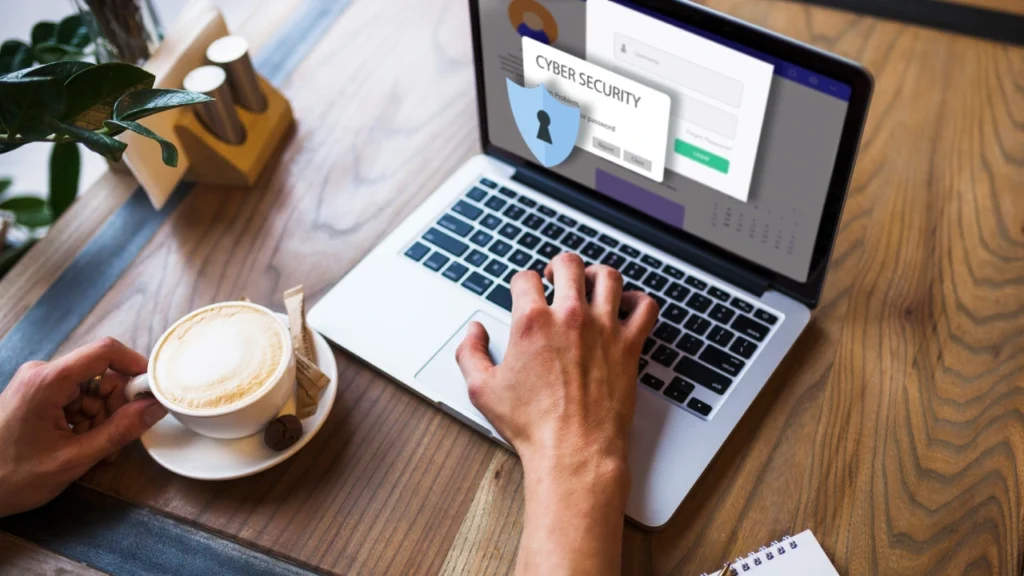
Therefore, most of the users’ priority is protection in practice rather than in theory: pick trustworthy and thoroughly checked services, keep them up to date, and direct your efforts where they will get the highest additional benefit – starting from unique credentials and strong authentication. The good news is that the tools have progressed to such an extent that strong protection can now be provided without needing to have a very high level of technical knowledge; the only challenge left is the adoption and disciplined use.
