





Table of Contents
Highlights
- IBM FlashSystem AI storage is focused on autonomous management.
- The new system can reportedly handle up to 90% of routine storage tasks automatically.
- Built-in ransomware detection, immutable snapshots, and NVMe performance enhance security and speed.
- Designed for hybrid cloud enterprises to reduce IT workload and manual monitoring.
IBM has rolled out its new FlashSystem storage portfolio, and this time the company is talking a lot about “autonomous storage.” In simple words, IBM wants storage systems to manage themselves with the help of AI.
The company says the new FlashSystem models can handle up to 90% of daily storage management work on their own. That includes performance tuning, spotting ransomware threats, and fixing common issues before they turn into bigger problems.
For companies struggling with growing data and small IT teams, this update could matter.
What IBM Is Introducing in the New FlashSystem Lineup
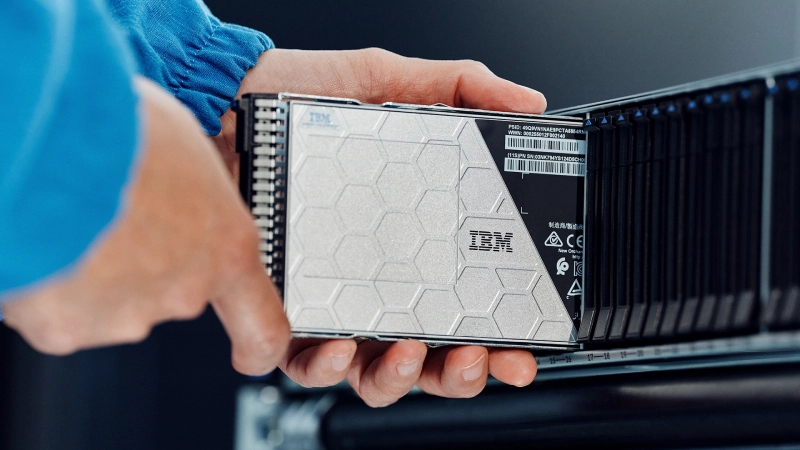
The new IBM FlashSystem portfolio is an upgrade of IBM’s enterprise storage systems. The main highlight is the use of what IBM calls agentic AI. Now, instead of just giving alerts or suggestions, the system can take action by itself. If performance drops, it can adjust settings. If it sees unusual activity, it can respond quickly.
IBM says this reduces the need for constant human monitoring.
In many companies, storage admins spend hours checking dashboards, tuning workloads, and handling small issues. IBM believes most of that routine work can now be automated.
What Does “Agentic AI” Mean Here?
The term may sound technical, but the idea is simple. The storage system watches how data behaves. It learns from patterns. And when something looks off, it reacts.
IBM says the system is trained using data collected from thousands of its storage setups around the world. So it is not working blindly. It is based on real usage data.
The AI inside FlashSystem can:
- Adjust performance automatically
- Balance workloads
- Predict hardware problems
- Detect ransomware-like behavior
- Make configuration changes without waiting for approval
IBM claims this can cover up to 90% of storage tasks that usually require manual effort.
Strong Focus on Ransomware Detection and Immutable Snapshot
Ransomware attacks are a serious problem for businesses. Storage systems are often the main target because that is where the data lives. IBM says the new FlashSystem keeps checking data activity in real time. If it finds unusual encryption patterns or strange behavior, it can raise alerts and respond quickly.
The system also supports immutable snapshots. That means clean copies of data can be stored safely and used for recovery if needed. For companies that cannot afford long downtime, this kind of built-in protection is important.

NVMe Performance and Hybrid Cloud Optimization
Today, most businesses do not run everything in one place. Some workloads are in their own data centers. Others are in the cloud. Managing storage across different environments is not easy.
IBM says the new FlashSystem works smoothly in hybrid cloud setups. It supports modern workloads like AI applications, analytics, and container-based apps. The system also uses NVMe (Non-Volatile Memory Express) technology, which helps in faster data access and lower delay.
IBM is clearly aiming this at enterprises that deal with large amounts of data and need stable performance.
Less Manual Work for IT Teams
One big message from IBM is to reduce pressure on IT teams. Storage management may not always make headlines, but it takes time. Monitoring systems, fixing slowdowns, applying updates – it adds up. IBM believes that by automating most of this, companies can save time and reduce human errors.
Instead of reacting to problems, the system can act early. That shift from reactive to self-managed storage is what IBM is pushing here.
Competition in the Storage Market
IBM is not alone in adding AI to storage systems. Companies like Dell Technologies, Hewlett-Packard Enterprise, and Pure Storage are also offering smart features. The difference is that IBM is focusing strongly on systems that can act on their own, not just suggest actions.
Whether companies are ready to trust AI with this level of control is something that will become clear over time.

Final Word
With its new IBM FlashSystem autonomous storage portfolio, IBM is trying to make storage simpler and smarter at the same time. The promise of handling 90% of management work, along with built-in ransomware protection and hybrid cloud support, shows where enterprise storage is heading.
As data keeps growing, tools that reduce manual work and improve reliability will get serious attention. IBM is placing its bet on autonomous storage being the next step forward.
