

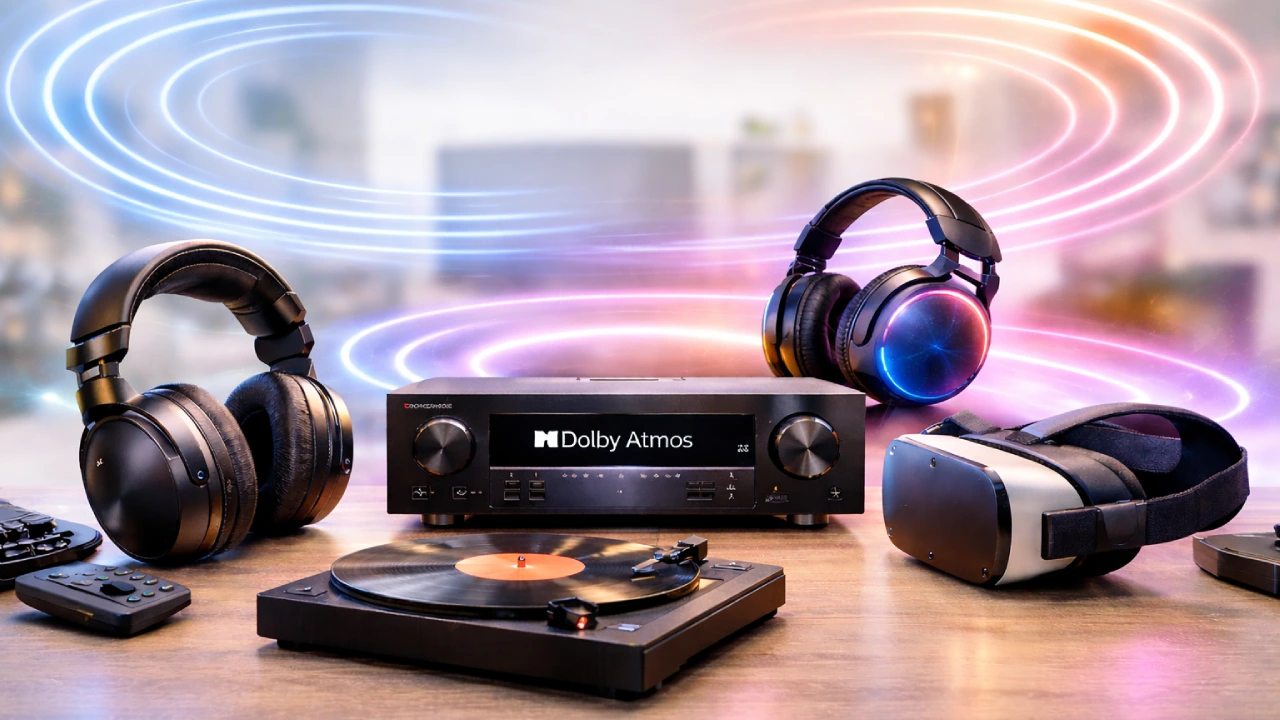
Highlights
- Immersive audio gadgets use 3D sound and spatial audio to place effects around you instead of limiting sound to left and right channels.
- Tools like 3D mixing, ear-level effects, motion sensing, and focused speakers work together well, especially when matched with good material and correct gear.
- Films often gain the most, games grow sharper in feel and location cues, while music might open up wide or seem strangely distant based on how it’s built.
Sound ought to wrap around you, not just come from two sides. Lately, tech once stuck in fancy theaters shows up in phones and laptops too, because of tools such as Dolby Atmos, plus tricks inside headphones that fake depth and elevation. The media feels a lot fuller than it used to be. Still, does it actually change how we enjoy films, songs, or games?
How immersive audio works
Sound in an old stereo sits on a line between the left and right sides. Going beyond that, early surround setups brought in backup rear speakers plus a middle one to stretch the scene wider. Still, these systems tied each sound to a set of speaker spots, which could never deliver a true surround sound.
Newer 3D audio works in another way entirely. Rather than lock effects into channels, creators now place them like floating points in open air. Each point holds data showing exactly where it belongs, say, rain falling behind or up high. Your gear grabs this map and reshapes the experience to fit your setup, whether speakers or earbuds. What you hear feels real, as if things move around you naturally.
One way people make sound feel real comes from systems such as Dolby Atmos, DTS:X, or Auro-3D; these allow creators to place noises anywhere in space, so your gear tries its best to match that layout at home. When using headphones, a method called binaural rendering steps in; this uses something named HRTF, which mimics how your body changes what you hear based on where noise arrives from, fooling your mind into thinking sounds live around you instead of inside your skull. Though powerful, neither path works well without care: sloppy placement in Atmos or low-quality HRTF math breaks the illusion fast, even with high-end setups.
Gadgets that deliver immersive audio
Sound wraps around you in various gadgets, yet how it reaches your ears changes everything. Right inside your ears, earbuds and headphones cut out the world, skipping walls that bounce noise back. Twist your head, and clever systems adjust instantly, locking sounds where they should be, making them sit still in imaginary rooms. This trick relies on mimicking natural hearing plus watching head motion closely.
Not every pair pulls it off smoothly; some just fake depth using old tricks on regular speakers crammed close. These cheaper versions stretch sound outward but often trap it behind your eyes, leaving a cramped echo if the fit is not precise.

Some setups go another way entirely, small speakers firing up or aimed carefully around the room. Instead of relying on software tricks, they bounce audio off ceilings or shape beams of sound to fill space differently. This can give you a feeling of openness overhead, something earphones often miss completely. Right execution matters; otherwise, it just feels flat or odd. High-quality receivers paired with special speakers do this best, creating an experience close to real life, yet price tags and living space limits mean not everyone can fit such a system at home.
When playing games, people often pick headsets that mix fake surround effects with digital tuning meant to track where sounds come from fast. Certain brands offer preset modes built around particular titles so you hear footfalls or gunfire more clearly. Devices like outside sound processors or USB audio boxes sometimes pack special chips just for 3D positioning of noise. What matters most here is not rich echo but sharpness and speed; knowing which way a shot came from might decide if you win or lose.
When your head moves in virtual reality, the sound shifts just like it would in real life because special software tracks motion and adjusts noise on the fly. Instead of static background tones, these systems think about walls blocking sound, echoes bouncing off surfaces, and volume fading across space. Without accurate timing and positioning, what you hear does not line up with where you look or walk. That mismatch breaks the feeling of being inside the world.
So realistic audio stops being extra detail and becomes part of the foundation. Missing it means losing believability. The brain notices when footsteps behind you stay equally loud even after turning away. Matching sound behaviour to visual cues keeps everything locked together.
Tools shaping how things feel.
Behind rich soundscapes, code matters just as much as circuits. Instead of fixed channels, formats such as Dolby Atmos or DTS:X let sounds float freely through 3D environments, now routine in films, online video, and disc media. Some brands shape the experience around specific gadgets: Apple’s version adjusts playback for its headphones using custom data, while Sony builds depth into music streams with similar tricks. Built-in tools show up inside phones, computers, and even game machines, like Microsoft’s spatial mode, simple to enable yet inconsistent when it comes to lifelike results.

Sound in games and pro setups often relies on tools like FMOD, Wwise, or open options such as Steam Audio, as these help creators add 3D positioning, blocked sounds, and real-time echo effects tied to environments. Sometimes, software tries to scan the ear shape or guess its form to tailor how audio reaches each listener. If the fit is right, telling where the noise comes from feels sharper. Yet flaws show clearly when mismatched; one generic model rarely fits everyone well.
If you are curious about how these devices work, it is best to test things yourself: use familiar tracks or shows, explore different systems, adjust speaker angles, then judge if height and depth add something real. This kind of audio stopped being just flashy tech, as it now adds weight to explosions, clarity to quiet steps, and even shape to songs, if it is set up with care.