





Table of Contents
Highlight
- MediaTek vs Snapdragon has become an actual mid-range battle, with MediaTek offering powerful performance, cooler operation, and excellent value for money.
- In the MediaTek vs Snapdragon comparison, Snapdragon still leads in gaming stability, thermal management, and long-term software support for power users.
- The MediaTek vs Snapdragon gap has narrowed significantly, making real-world experience and user priorities more critical than raw benchmark numbers.
Every smartphone user knows their phone brand. But very few realize that the real battle happens deep inside – between the chipsets that power these devices. In the mid-range smartphone market, two brands reign supreme: MediaTek and Qualcomm Snapdragon.

Both brands have evolved from the early days of basic mobile processors to the advanced SoCs (System-on-Chip) that govern how fast, efficient, and generally capable your phone feels when in use. But regardless of what both brands launch—whether it’s MediaTek’s Dimensity series or Snapdragon’s 7 Gen lineup – the age-old question is back on the table: which will provide better value in the mid-range market?
Let’s break down this silent war and find out who’s truly ahead – not by specs alone, but by real-world performance and experience.
The Evolution of Mid-Range Chipsets
How MediaTek Caught Up with Snapdragon
A few years ago, MediaTek was seen as the only “budget” brand because its processors were found in cheaper devices, while a Snapdragon chip powered most premium phones. But to be fair, that has changed with the launch of MediaTek’s Dimensity series, which offers performance and efficiency at prices that challenge Qualcomm’s presence in the mid-range marketplace.
MediaTek showed it can deliver a 5G, AI-oriented processor and good gaming performance without the price going through the roof with the Dimensity 700 and 800, then the bump to 900 and 1200. This was a key inflection point, as brands like Realme, Xiaomi, and Vivo began releasing their latest competitive mid-range phones powered by this processor line.
Qualcomm’s Dependable Inflection Point
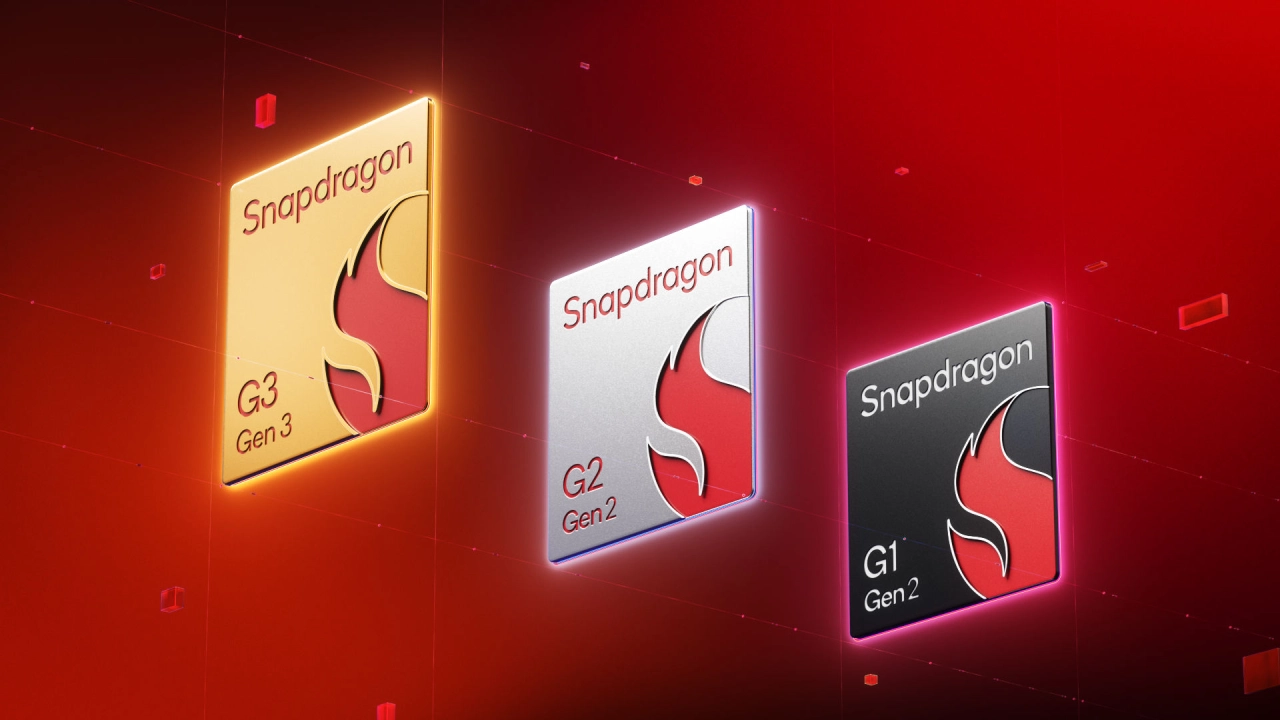
Qualcomm has always had a stable and trustworthy position in the market. The Snapdragon 6 and 7 series chips have become the gold standard for performance in the community, especially for users looking for smooth multitasking, better GPU performance, and reliable thermal performance that is often lacking in competitor chips. The Snapdragon 778G was another significant step forward in the larger Snapdragon evolution in the market. The Snapdragon 7 Gen 1 has always been dependable, and the 7 Gen 2 appears to be something newer and better in the same space.
Qualcomm has maintained the same idea of balancing performance with optimization. Their rich history with brands like Samsung, OnePlus, and Motorola positions Qualcomm in a differentiated position in perception and anticipated value.

Performance Breakdown – CPU, GPU, and AI Capabilities
CPU Architecture and Efficiency
Mediatek’s latest Dimensity 8000 and 8050 chips are built on TSMC’s 5nm process, providing advanced efficiency, heat management, precision, and performance. These chips are built with a full array of ARM cores, often matching or even exceeding Snapdragon performance on synthetic testing.
Snapdragon 7 Gen 2 is similarly based on a 4nm node, but has been shown to sustain performance slightly better. The efficiency cores handle background operations more effectively, so daily or long-term operations run smoothly, particularly with multitasking-specific applications.
In simple terms:
- MediaTek often has more cores and raw clock speed.
- Snapdragon focuses on optimization and sustained performance.
GPU and Gaming Performance
This is where the chipset really makes a difference, and gaming is where users will notice it most. MediaTek phones use Mali GPUs, while Snapdragon phones use Adreno GPUs, both of which are custom-calibrated for better graphics performance.
Considering the real gaming experience with games like BGMI, Genshin Impact, and Call of Duty: Mobile, the Snapdragon chips still deliver slightly better stability, which becomes noticeable after a long session. But in that regard, using Dimensity chips like the 8100 and 8200, we have equally impressive performance at lower temperatures, showing we can still achieve the same frame rates.
Verdict: Snapdragon still leads slightly in gaming, but MediaTek came close enough that I’m not hesitating to recommend it now. The difference for most users will be negligible in daily use and in gaming.
AI and Connectivity
Both chipsets now integrate dedicated AI Processing Units (APUs). MediaTek’s latest APU 580 efficiently enhances camera detection, voice commands, and background optimizations. However, Snapdragon’s Hexagon DSP still has an advantage for intelligent photo processing and for on-device learning tasks.
In terms of wireless connectivity, both devices now support the common standards of 5G, Wifi 6/6E, and Bluetooth 5.3. But Qualcomm’s modems are better at maintaining stability when cellular networks are highly variable (e.g., dropped signals), particularly in rural areas.
Power Efficiency and Battery Management
Battery life determines how practical a smartphone feels in daily use. MediaTek’s chips, particularly those in the Dimensity 8000 series, maintain a cooler performance. This results in less thermal throttling and allows for much-improved sustained power efficiency under load.
However, Snapdragon’s chips benefit from better thermal management across both software and hardware. Their efficient power delivery results in a phone that handles background tasks better and has a little less battery drain in standby.
If you are a heavy user who spends several hours browsing, gaming, and streaming, a Snapdragon chip maintains a more uniform thermal profile. However, if battery longevity and price-to-performance ratio are paramount, MediaTek offers more bang for your buck.
Camera and Image Processing
Smartphone cameras use the ISP (Image Signal Processor) built into the chipset. This is a significant determinant for color, night photos, and even 4K video recording.
Snapdragon’s Spectra ISP is recognized for its variety in tonal range, detail retention, and AI-scene detection. When comparing photos taken with a Snapdragon-branded phone, they tend to look more “real” and handle lighting conditions better.
MediaTek’s Imagiq ISP has made huge advancements, even though it has not been out as long as the other processors. The Dimensity 8200 enabled MediaTek phones to use 200MP sensors and 4K HDR video recording, as well as real-time, AI-based beautification, which were almost impossible a couple of years ago.
In conclusion, Snapdragon offers greater consistency in image logic and use model, and MediaTek is competently competing on price with technology that has rapidly caught up. For casual photographers, the gap is smaller than ever.
Heating, Stability, and Longevity
This illustrates how real-world experience diverges from benchmarks. MediaTek chipsets, although competent, will exhibit spikes in temperature when gaming nonstop or recording 4K. Their flagship Dimensity 1200 and 8200 mitigate somewhat; however, Snapdragon chipsets are still better for sustained loads, and that has to do with the technology finally reaching more products and maturing, coupled with its presentation in software updates and driver support across more models within each generation.
Longevity is also in Qualcomm’s favor. Its software support, firmware stability, and developer ecosystem enable more consistent performance over time. This is another example of why most custom ROM developers lean towards Snapdragon chips for their devices: it is easier to get a Snapdragon-optimized device, as it has a situational advantage with years of field data for setting voltages and temperatures.
At the same time, brands like OnePlus and Xiaomi are collaborating more closely with MediaTek these days, which may help Dimensity chips significantly improve this status quo soon.
Pricing and Market Reach
In mid-range phones, pricing decides everything. MediaTek’s biggest strength lies here. The Dimensity family of chips enables phone brands to offer distinct premium features, such as 5G and AI-focused cameras, at sub-$300 price points. Affordability has made Dimensity a new favorite among Realme, Poco, and Redmi users.
Snapdragon chips, being slightly more expensive, are often found in phones priced between $350–$600. The cost includes better GPU tuning and brand trust. For users who value stable updates and refined performance, this premium feels justified.
Ultimately, the choice depends on user priority – value versus refinement.
What Reviewers and Users Say
Tech reviewers and smartphone enthusiasts agree on one thing – the gap between MediaTek and Snapdragon is narrowing fast.
- On GSM Arena, tests show the Dimensity 8200 often beating the Snapdragon 7 Gen 1 in benchmarks.
- Android Authority reviewers praise MediaTek’s gaming efficiency.
- But The Verge and Tom’s Guide note that Snapdragon still offers better app compatibility and developer support.
User opinions mirror this divide. Budget-conscious buyers prefer MediaTek’s better price-performance ratio, while power users trust Snapdragon for stability and long-term use.
The Future of Mid-Range Chipsets
The battle is getting even closer. MediaTek appears to be pursuing a trickle-down approach with its Dimensity 9000 series strategy for affordable phones. At the same time, Qualcomm takes the same methodology. It refines it more toward the 7s Gen 2, with improvements in thermal efficiency and, lastly, better integration with AI or other forms of user assistance.
As smartphones continue to iterate and a range of profiles become common across all chip makers, it seems the needs of the user base, both early adopters and mainstream consumers, are every bit as central as the improvements in performance. This is where all the expanding performance factors are either offset or communicated uses for an AF focused profile, with AI, battery efficiency, and gaming mode all seeing advancements today with last generation’s flagship performance before 2021.
Final Verdict – Which Should You Choose?
Both brands have developed to the point that it is no longer merely a matter of better or worse.
- Select MediaTek for fast performance at a lower price, cooler operation, and a long-lasting battery.
- Select Snapdragon if you want consistent gameplay, better heat control, or more extended update support.
- The difference now is not power but philosophy: MediaTek delivers innovation for everyone, while Snapdragon has honed performance for reliability.
Conclusion
The MediaTek vs Snapdragon battle has evolved beyond benchmarks. Today’s mid-range chipsets are cleverer, faster, and even more efficient than before. Whether you select a MediaTek Realme or a Snapdragon OnePlus, you are already holding mobile technology that outperforms the best of the past.

The real winner is the user – because this competition continues to push the industry forward.
Keep following TechGenyz for more comparative analysis, benchmarks, and performance stories from the world of mobile innovation.
