

Highlights
- ChatGPT Prism is a free AI-powered research and writing tool built by OpenAI using GPT-5.2.
- It helps users draft, edit, summarize, collaborate, and manage citations in scientific and technical work.
- The platform aims to improve research efficiency, accessibility, and collaboration across academia and industry.
The new AI-powered tool ChatGPT Prism, which OpenAI developed, helps researchers, students, and professionals by streamlining their writing, analysis, and collaboration work in scientific and technical fields. Prism, which operates on the latest GPT-5.2 system, provides free access to advanced AI research tools that help users create research papers, develop their ideas, understand difficult material, and work together with their colleagues.
A New Era for AI-Assisted Research and Writing
With ChatGPT Prism, OpenAI developsAI technology which serves as both a basic conversational assistant and a dedicated scientific and technical writing partner. The platform provides users with advanced tools that enable them to create content while also helping them to develop their ideas, evaluate their writing, and transform their unorganized notes into structured content that meets publishing and presentation requirements. The organization aims to provide advanced artificial intelligence functions to all users without requiring them to pay for subscription services.
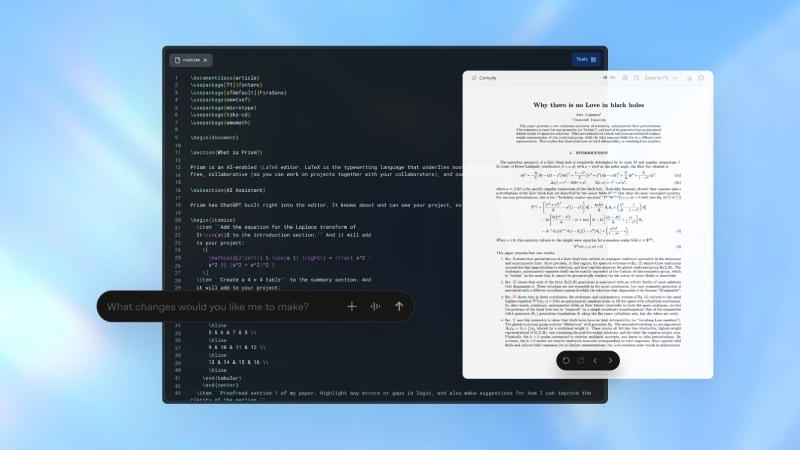
OpenAI announced thatPrism offers research users two main benefits by improving their work efficiency and their ability to create clearer research findings. The system provides users with an AI-supported feedback mechanism, which allows them to improve their work output through better work efficiency and work quality improvements.
Key Features Powered by GPT-5.2
Prism uses OpenAI’s latest large language model GPT-5.2 as its fundamental technology, which enables the system to enhance reasoning abilities, context comprehension, and content creation. The main abilities of ChatGPT Prism include the following functions:
1. Smart Drafting and Editing:
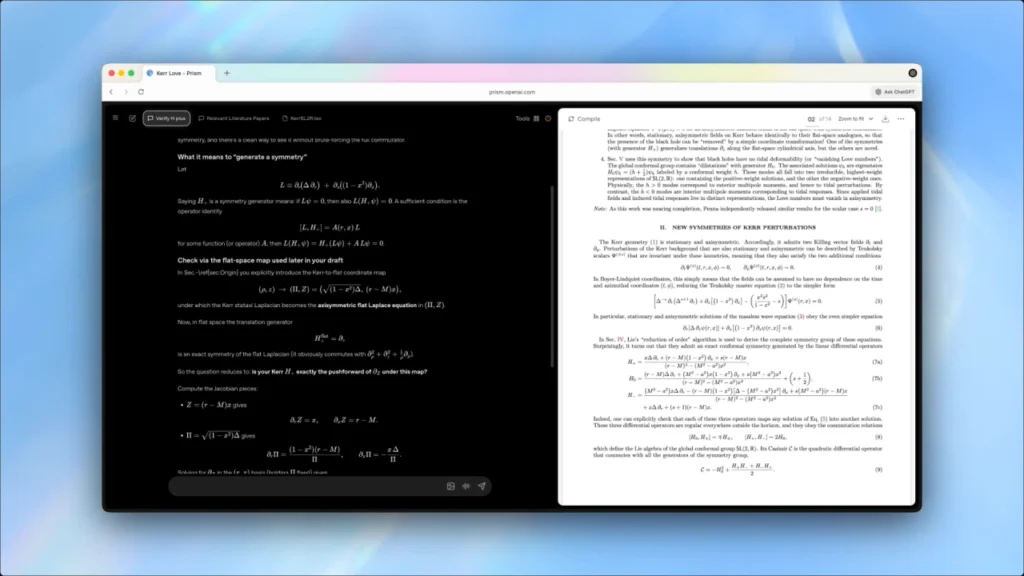
Prism can create organized content by using basic notes or initial writing prompts, and it helps users improve their writing through clear and tonal enhancements while maintaining scientific arguments in a logical structure.
2. Enhanced Summarisation:
The tool can create brief summary documents from complex technical sources, which include research articles, literature reviews, and data-heavy reports.
3. Contextual Collaboration:
The platform allows users to work together by establishing shared workspace environments, which enable them to exchange drafts while using AI-driven feedback systems that improve their conversation efficiency.
4. Reference and Citation Support:
Prism assists users in managing their citations and references by providing formatting support, which helps them maintain citation consistency throughout their academic writing process.
The features of this system work to eliminate research process obstacles that frequently occur when researchers need to combine multiple textual and data sources into cohesive research findings.
Designed for Accessibility and Inclusion
The most important feature of Prism is its free access, which users can use from its initial release. The tool establishes its accessibility for all users, including students, researchers, and professionals who do not have access to paid AI services or institutional research resources. OpenAI’s dedication to making its products accessible helps promote discussions about providing all users with equal access to advanced AI technology.
OpenAI developed this product to enhance productivity through its specialized tools, which AI developers create for specific professional fields that require exact and detailed operational methods.
Collaboration and Workflow Integration
Prism will enable document importation and document sharing between users who work on the same project while they create new document versions, according to early reports about its upcoming features. The rising need for collaborative research work between distributed teams from different locations has become an important development in both educational and industrial environments.
The platform provides users with academic integrity protection through its ability to guide AI assistance documentation and content creation evaluation before publishing or submitting work. The details of the protection system have not reached complete disclosure yet, but OpenAI has established responsible usage requirements that require users to balance system abilities with moral responsibilities.
What This Means for Research and Academia
The launch of ChatGPT Prism will create a ripple effect that will impact academic institutions, startups, corporate research and development teams, and independent scholars. OpenAI provides free access to its advanced technical AI writing assistant, which allows more people to access research tools that were previously unavailable to them. The Prism system will initiate broader discussions about AI integration in educational and scientific environments concerning authorship and citatio,n and the impact of automated systems on academic communication.