

Highlights
- Leon Kennedy returns in Resident Evil: Requiem, paired with newcomer Grace Ashcroft.
- Capcom splits gameplay into action‑driven missions for Leon and survival horror for Grace.
- The dual‑protagonist design risks imbalance but could redefine Resident Evil’s future storytelling.
Capcom’s revelation of Resident Evil: Requiem, the ninth mainline title in the series, brought back one playable character, which immediately caught the eye of the hardcore fans: Leon S. Kennedy. His participation is more than just a trip down memory lane; it is a sign of the intention to pair the series’ historical fabled action discontinuity with its present-day survival horror.
Together with Leon, the users will also enter the world of Grace Ashcroft, the FBI analyst whose investigative talent and frailty contrast with the hardened resistance fighter Leon’s persona. The two-character-led nature of the game is, on the one hand, Requiem’s development philosophy, and, on the other hand, the challenge of how Capcom will combine the different play styles.
Gameplay Dynamics: Echoes of Resident Evil 4
With the return of Leon, only one question comes to mind. Will Leon’s campaign missions be similar to the escort sequences that involved taking care of Ashley from Resident Evil 4? The sequence has been the subject of much debate, as it added tension to protecting a vulnerable character, while others found the mechanics a tad frustrating. Requiem seems to go the other way completely.
Rather than the escort missions, Capcom has given clues that Leon and Grace will have separate, completely different stories. Leon’s journey is all about violent clashes, mobility, and firepower, whereas Grace’s saga is characterized by survival horror, puzzle-solving, and resource scarcity. This division overcomes the errors of the escort mechanics while still ensuring interaction between the two protagonists who are part of the same unfolding mystery.
What It Means for the Franchise

Leon’s reappearance is not just a matter of inconvenience; it’s loaded with symbolism instead. He is depicted as older, more tired, and battle-scarred, which contributes to the solemnity of his story.
This character development aligns with the franchise itself, which has matured from the time of fixed camera angles and tank controls through the global blockbuster period, when narrative complexity was experimented with, to the present day, when games are distributed with purely horror- or action-focused storylines.
While Grace, on the other hand, introduces new weaknesses and cognitive skills, ensuring that Requiem is not a mere recycling of past patterns but a continuation of expanding the series’ market. The two characters always represent the push-and-pull between the old and the new at the core of Resident Evil’s brand.
Risks and Challenges
Of course, such ambition comes with risks. Balancing two distinct gameplay styles is a challenge, and there is always the danger that Leon’s action‑driven missions could overshadow Grace’s slower, more methodical segments.
Narrative cohesion will be critical; both campaigns must feel essential rather than filler. And while many fans welcome the departure from escort mechanics, some may still crave the nostalgia of Leon‑and‑Ashley‑style dynamics. Capcom’s task is to satisfy long‑time players while pushing the series forward.
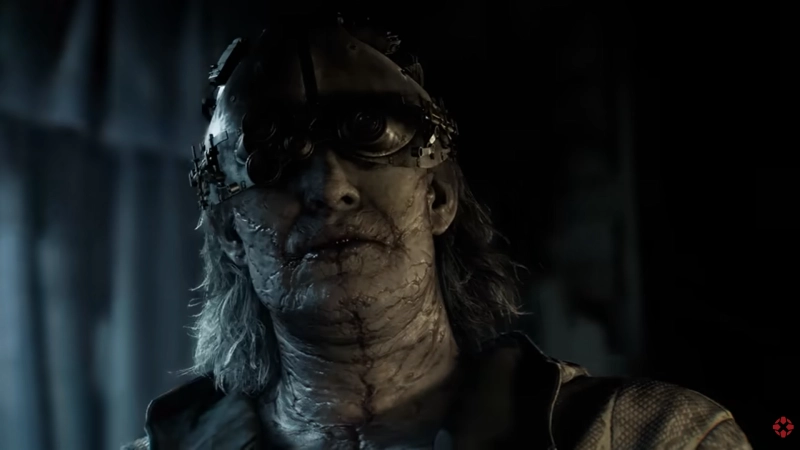
If it is carried out properly, Requiem could completely change the way that Resident Evil multi-protagonist storylines are written. By contrasting yet complementary campaigns, the game is set to provide a richer, more diverse experience, something a single-style entry cannot deliver. It takes up the role not only as the end of the line for Leon Kennedy but also as a brave experiment in the gameplay design.
Conclusion
The new title is a declaration: to respect the past and at the same time to challenge by offering players the excitement of battle and fear of survival horror, along with mixing those experiences through the view of two quite different protagonists. The return of Leon Kennedy assures unity, but the choice of Grace Ashcroft indicates that there will be changes. The two of them might be the ones to characterize the next saga of Resident Evil.