


Highlight
- Humanoid robots are rapidly evolving through advances in AI, LLMs, and robotics, enabling real-world applications across industries.
- From healthcare and logistics to education and retail, humanoids are becoming supportive companions and efficient workspace assistants.
- Despite breakthroughs, challenges like cost, empathy gaps, and ethical concerns keep truly human-like android assistants just out of reach – yet closer than ever.
For years, science fiction has created impressive visions of humanoid robots walking among us: machines that talk, think, and perhaps even feel like humans. From C-3PO in Star Wars to Ava in Ex Machina, humanoid robots have long represented humanity’s ultimate technological dream: creating machines in our own image. But as artificial intelligence and robotics develop rapidly, that dream is becoming more of a possibility.

Humanoid robots are no longer merely figments of movie imagination or research labs. They are being tested and used in factories, nursing homes, warehouses, and homes. But are we really close to living with android assistants, machines that look like humans but also have human-like intelligence, empathy, and adaptability? The answer lies at the intersection of AI, robotics, and ethics.
The Age of Humanoid Robotics: From Concept to Creation
The concept of human-like robots dates back to ancient Greek myths about robotic servants and to automata in Europe during the 18th century. However, the 21st century is the first time that functional humanoids exist that can do real work.
Several companies, including Boston Dynamics, Tesla, Agility Robotics, and Apptronik, define the term “humanoid” robot. Boston Dynamics has a humanoid robot named Atlas that demonstrates extreme gymnastic agility. Agility Robotics has built a humanoid robot named Digit that can walk, pick up boxes, and interact with humans. Tesla’s case with the widely discussed robot, Optimus, aims to be a versatile, general-purpose humanoid robot for industrial and domestic applications alike.
In addition, there are examples of robots with a social approach to robotics and human-robot interaction in Asia. SoftBank’s Pepper and Hanssolo Robotics’ Sophia epitomize humanoids built to read human emotions, able to converse and express simulated feelings.
These machines combine mechanical engineering, machine learning, computer vision, and natural language processing (NLP). Navigating through spaces and humans, recognizing multiple gestures and speech while responding—these were some milestones achieved, and all are closer to finding companionship in androids.
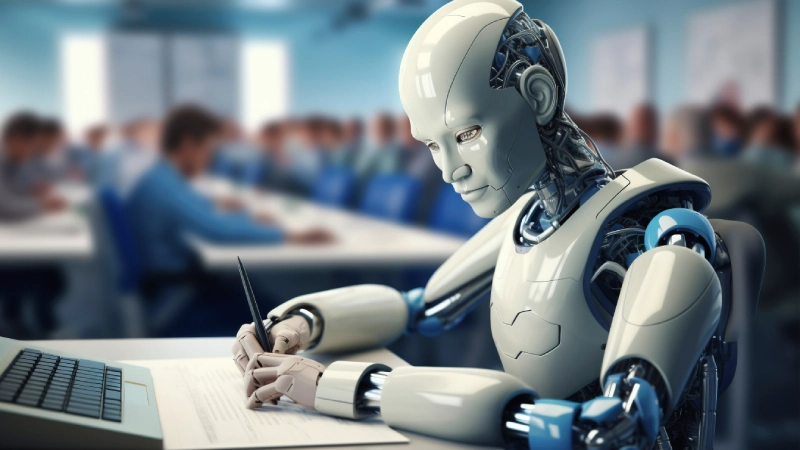
How do Humanoids “think”?
Humanoid robots are grounded in the combination of AI and automation – the alliance of mechanical acumen and cognitive skill.
Today’s humanoids depend on large language models (LLMs) similar to those that power conversational AIs like ChatGPT, enabling them to understand and generate natural language. When LLMs are combined with computer vision, the robots can recognize faces, recognize emotions, and interpret visual information. Machine-learning algorithms help them adapt – learning from user behavior, improving responses, and predicting intentions.
The physical mastery of humanoid robots is aided by actuators and sensors that mimic muscle movement and balance. For example, a product with some peripheral joints and sensors in the limbs and torso – the robot Digit can dynamically walk on uneven terrain. A feat that took years of research in motion control development.
Put another way, humanoid robots are becoming conscious in a non-philosophical way and can perceive, process, and respond to their environment intelligently.
Applications
Manufacturing and Logistics
Digit and Optimus, two humanoid robots, are being utilized in warehouses for simple tasks, such as sorting, lifting, and transporting goods. Humanoids have advantages over robotic arms because they can work in areas designed for humans. They can navigate aisles, open doors, and use tools that are already there.
Health and Elderly Care
Japan is at the forefront of adopting humanoid robots to serve aging societies. Humanoids, like Robear, help caregivers lift their patients, while Pepper can provide companionship and a conversation partner for older people who may be lonely. These humanoids are not intended to supplant human compassion in caregiving; instead, they are built to supplement it, serving as gentle, unwavering assistants that do not tire.
Hospitality and Retail
Humanoids are greeting customers at hotel check-ins and shopping malls, answering questions, and demonstrating basic functions. Although many people seem intrigued by the novelty and experience, the long-term value of humanoids may lie in customer service when staffing is limited or customer traffic is high.
Education and Therapy
At schools and therapy centers, a few humanoids are working with children with autism to teach social skills. Robots like Nao have been together with children who, in turn, indicate they were engaged and learning. Although they have substituted humans for therapists, they create more frequent, less judgmental opportunities for children to practice social skills.
In each of these service sectors, robots act as intermediaries between automated and human labor. They perform human labor while embodying social presence.
Challenges
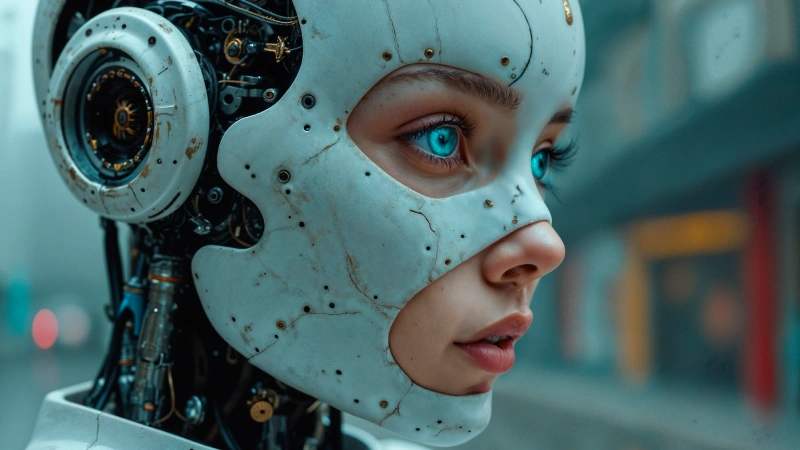
Humanoid robots still have a long way to go before achieving any semblance of human-like intelligence. They can pretend to have emotions, but they do not actually experience emotion. They can speak without consciousness or any context.
This gap between imitation and understanding clarifies the issue this project opens: Are we anywhere near android assistants?
AI can recognize patterns of emotion. For example, it recognizes a smile or detects a tone of sadness, but it does not contextualize the reason a human feels those emotions. Robots can comfort a person by saying, “I understand,” but lack the emotion that accompanies empathy. This is not a limitation for many researchers; instead, this is an intentional design of the robot. The intent is not to create artificial humanity; it is designed for robots to exist with humans and be useful.
There are many technical hurdles to overcome:
- Battery life remains limited for mobile robots that operate while moving and processing simultaneously.
- Real-time perception, especially in unpredictable, uncontrolled environments (such as an office full of coworkers), is still very hard to realize.
- High manufacturing costs make humanoids commercially unviable for most of the market.
Then, there is the ethical concern: how human must a robot appear? At what point does the human likeness of a robot become too human? This phenomenon is called the uncanny valley, describing the unnerving effect people feel when machines appear almost human (but not quite). The designer finds himself/herself/hirself always balancing between realism and emotional relatability.
India’s Growing Role in Humanoid Robotics
India is also developing in this area. In recent years, startups like ASIMOV Robotics and Genrobotics have been recognized for building service-oriented humanoids and automation systems tailored to local environments.
Kerala-based ASIMOV Robotics has developed robotic assistants that function in the fields of healthcare and elderly care. The robot Bandicoot variants made by Genrobotics are dislodging several centuries of reliance on manual scavenging. Invento Robotics has developed a humanoid robot called Mitra, which made headlines when Prime Minister Narendra Modi was greeted by the robot at the Global Entrepreneurship Summit.
These organizations underscore an important aspect of India’s humanoid revolution – while the humanoid revolution has aspects that represent state-of-the-art AI, the social context of robotics in India, as humanoids, means social robotics. This means the application of assistive and inventory robots that solve challenges of healthcare, sanitation, and accessibility, which are prevalent in developing countries.
India’s multiple robotics startups, government support through Make in India, and growing investments in AI research provide a foundation for India to become an emerging hub for ethical and affordable humanoid solutions.

Conclusion
So are we close to android assistants — the kind you can walk, talk, and share life with? In many dimensions, sure. The hardware is ready, the essence of AI is becoming better, and finally, the social impetus is trending upward. However, the android assistant with intellectual reasoning, the ability to empathize, and the virtue of trust seems a little bit further away.
What we have are precursors, impressive machines that have our shape, take on our semblance when we talk, and assist us at work. They exemplify all of the advancements in technology, as well as our instinctive desire to construct life in our own image.
Ultimately, humanoid robots remind us of something so much more profound: our humanizing machines are an exercise in understanding the very value of being human, emotion, purpose, and, of course, the unquantifiable sorcery of consciousness. Until machines have the opportunity to really understand that, the vision of android assistants will remain in process: the balance of silicon and soulful otherness ever so close yet just not the same.