

Highlights
- Smart dust and bio-nano sensors enable real-time environmental and agricultural monitoring, boosting efficiency and crop yields.
- Precision data from microscopic sensors helps cities map pollution and supports smarter climate action.
- Invisible nano networks are redefining surveillance and environmental insight in urban and remote environments.
- Bio-nano sensor tools facilitate early medical detection, continuous health monitoring, and faster diagnoses.
What Is Smart Dust?
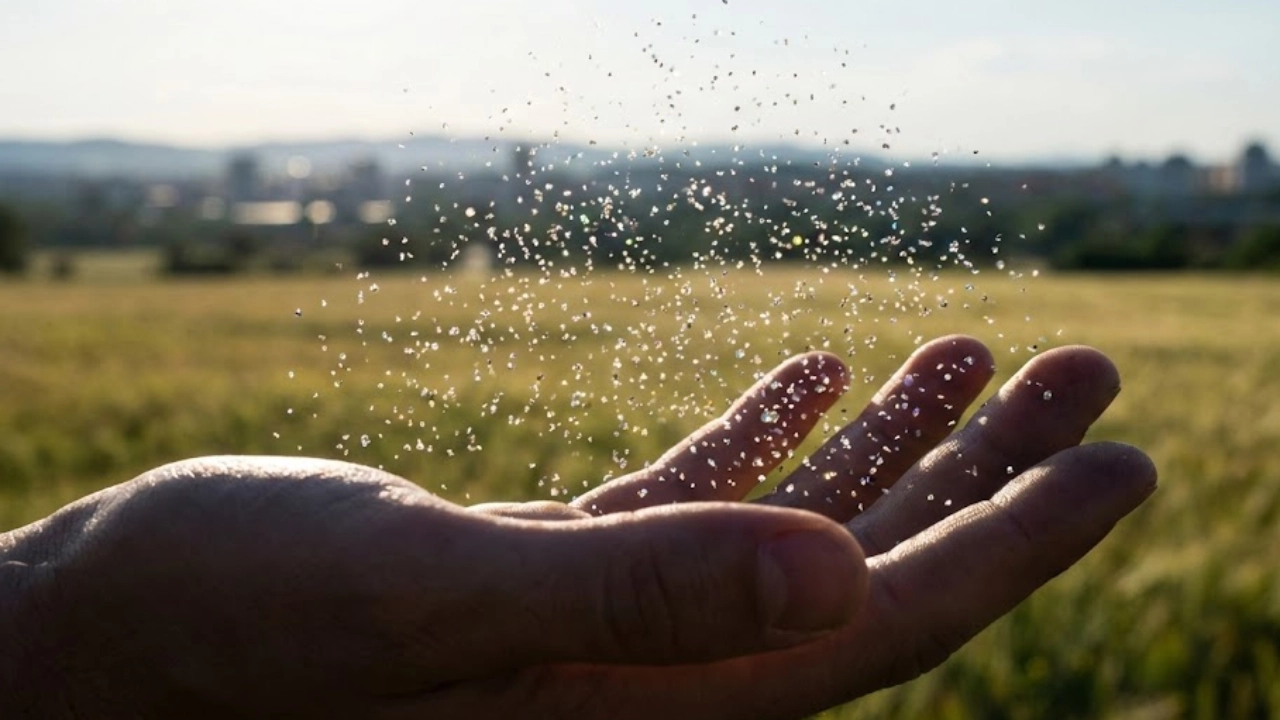
The term “smart dust” refers to an array of small electronic devices that contain sensors, processors, and radio transceivers, all housed in grain-sized form.
- Smart dust motes can provide environmental data on humidity, temperature, movement, and chemical composition.
- Internal processing enables basic data collection and storage.
- Most motes are powered by energy harvesting, such as sunlight, vibrations, or mechanical forces.
The additional bio-nano sensors add a different dimension by enabling the identification of proteins, viruses, and similar chemicals. These two technologies, working in concert, allow monitoring vast areas that may be impossible or hazardous for human intervention.

How does this change farming globally?
Smart Dust in Agriculture: Precision Farming Boosts Yields Worldwide
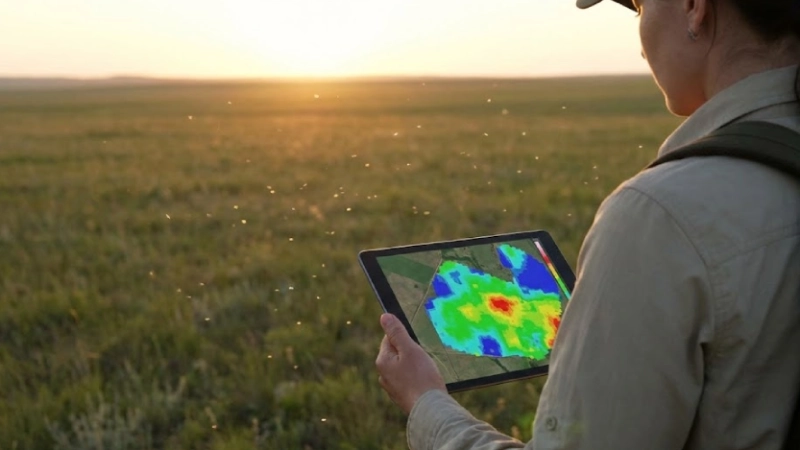
Farmers have used smart dust sensors that measure field moisture levels multiple times each day.
- This enables farmers to irrigate only specific areas of their fields that require it, rather than irrigating the whole field at once.
- Studies on targeted water application have shown that it is possible to reduce water usage by as much as 30% compared with applying water to a whole field.
- By providing soil nutrient readings, farmers can now reduce fertilizer use and improve application accuracy.
- This technology has also assisted in diagnosing plant disease before the symptoms are visible on the leaf surface through bio-nano technology.
- By identifying threats, drones can now treat only affected areas, minimizing the amount of chemicals used in spraying.
Trials in the Midwestern U.S. and European grain belts have observed yield increases of 15–20%.
In Africa and Southeast Asia:
- Smallholder farmers are testing cost-effective versions of this technology.
- They receive alerts via mobile apps combining sensor data with satellite imagery.
- These systems help decrease runoff and improve soil structure over time.
Can these microscopic tools also support climate action?
Bio-Nano Sensors for Climate Monitoring: Tracking Environmental Change at Micro Levels

Pollution tracking is being done using Smart Dust in many cities.
Intelligent Dust networks measuring CO₂ emissions, particle pollution, and ozone concentrations in cities such as London, Sydney, Los Angeles, and Beijing provide powerful insights.
How this helps city planners:
- Identify pollution hotspots quickly.
- Optimize vehicle traffic patterns more efficiently.
- Inspect industrial sources of pollution much faster.
Uses of Smart Dust in the Environment
- Clusters of sensors dropped in the oceans to measure ocean and plankton acidity.
- Monitoring early signs of coral reef temperature increase.
- Tracking carbon emissions linked to deforestation in the Amazon and Congo Basin.
Why Smart Dust Works So Well
- The small size of each particle means they remain in the atmosphere longer than larger particles.
- Their lower energy needs allow longer operational life.
Impact of Micro-Level Data
- Micro-level data can improve climate mishaps by providing early warning signals.
- The data helps fine-tune climate models with far higher accuracy.
- It supports the creation of better climate policy backed by precise environmental evidence.
Where does this technology fit into global security?
Nano-Sensors Transform Surveillance
Intelligent dust networks continuously monitor CO₂, particulate matter, and ozone in significant cities.

- Pollution “hotspots” help planners modify traffic patterns.
- Faster detection improves industrial regulation.
Researchers also:
- Place bright dust clusters in oceans to track pH changes and plankton behavior.
- Use micro-level data for early warning signs on coral reefs.
- Measure carbon emissions from deforestation.
Many sensors remain active for months due to low power consumption.
Data produced by smart dust improves the accuracy and competitiveness of climate models for policymakers.
How does the medical field make use of these nanosensors?
Bio-Nano Sensors in Healthcare: Early Detection Saves Lives Around the World
Implantable sensors, with a size smaller than a coin:
- Monitor glucose, cancer markers, and inflammation.
- Alert clinicians automatically when levels become dangerous.
- Work without requiring human testing.
Other medical applications include:
- Infusion pumps and devices that respond automatically to alerts.
- Wearables with nano-sensors detecting infections before clinical symptoms. Trials show 25% fewer readmissions.
- “Brain dust” is implanted to monitor real-time neural activity in patients with epilepsy.
- Low-cost molecular sensors (under USD 50/year) provide rural patients with continuous health data.

Challenges and Future of Smart Dust: Scaling Toward Smarter Global Systems
Key challenges include:
- Power limitations despite advancements in energy harvesting.
- Many sensors still depend on tiny batteries.
- Increasing privacy laws in the US and the EU are restricting deployment in public spaces.
Manufacturing trends:
- The semiconductor industry is expanding the use of microfabrication technologies.
- The goal is to reduce micro-scale device costs to pennies by around 2030.
Future growth:
- Artificial intelligence is being integrated to predict events such as floods or system failures.
- Global organizations like IEEE are working toward universal standards for sensor communication.
Conclusion
There will be significant changes due to the impact of microtechnologies on our society and environment.
The advent of Smart Dust and Bio-Nano Sensors will result in cleaner cities, healthier oceans, earlier diagnosis of health conditions, more career opportunities, and a more intelligent climate policy. These two distinct but connected developments are a tremendous force.
The very foundation of microscopic technologies is their ability to generate data at what is called the micro level of our world and then to change the macro level through faster responses and higher intelligence in decision-making and physical environments, enabled by the intelligence and sophistication of the data they generate.
So, the question now becomes: should you personally adopt nanosensors for your future, or should you allow nanosensors to transform the world without you?