

Highlights
- AI-Powered NPCs may evolve into adaptive storytellers with memory, emotions, and autonomy by 2026.
- Dynamic dialogue, reinforcement learning, and social simulation promise living, unpredictable game worlds.
- Ethical debates on authorship, labour rights, and creative integrity will shape AI’s role in gaming.
The rise of advanced artificial intelligence is turning the future of interactive entertainment upside down in ways that have never happened before. Non-player characters (NPCs) have changed from being merely scripted entities to taking an active part in the game world as complex beings in the course of a decade.
The industry, however, with the help of machine learning, procedural dialogue systems, and real-time generative models, passage to another radical transformation is now a mere step away. By the year 2026, the application of AI-driven behaviours might have reached such a level that NPCs could be acting, speaking, and responding like humans and even with a subtlety of storytelling that was previously impossible without being directed by a human. The question that now excites both researchers and developers will the game worlds feel truly alive with these innovations?
From Scripted Behaviour to Adaptive Intelligence
The conventional methods of designing NPCs usually involved the use of behaviour trees, dialogues crafted by hand, and quest structures that were linear. More dynamic behaviours were introduced by early open-world games, but the logic still remained rule-based and predictable. The most advanced and sophisticated games of the decade 2010s to early 2020s — which were praised for their animations, branching quests, and character-driven narratives — finally provided an experience shaped by the author’s content of systemic intelligence rather than the author’s.
This shift, however, has been made possible by recent technological advancements. Game developers now have the opportunity to implement large language models, reinforcement learning agents, and neural behaviour systems into their production processes. Such technologies enable NPCs to scrutinise players’ moves, change their conversation style, keep track of previous encounters, and participate differently in the unfolding stories. Rather than just saying the same voice lines over and over or following predetermined paths tightly, NPCs can now figure out the situations in a manner that leads to the creation of spontaneous, individualised interactions.
The transition is not just technical but also of ideas. The developers have begun to consider the non-playable characters (NPCs) not simply as static props but as the creators of the emerging story. In a number of experimental models that were highlighted during the conferences, the NPCs employed the generative models to the extent of even reinterpreting the lore, bringing up new dialogue lines instantly, and answering the player’s behaviour in a way that was contextually relevant. Such demonstrations provide an insight into the design inclinations that will probably be prevalent in 2026 and onwards.

The New Frontier: Dynamic Dialogue and Procedural Storytelling
One of the most apparent changes is in the department of dialogue. In the past, the conversations in the games were reduced in their extent so that they could include at most the fixed recordings or limited branching structures. The artificial intelligence (AI) based systems for dialogue now provide real-time generation of natural language answers, which enables the characters to perform their dialogues in a way that is consistent, as well as prone to the context. The models are capable of synthesising the voice outputs, preserving the emotional tone, and even mentioning earlier interactions, thus imitating the spontaneity typical of human communications.
This change has Narrative Design implications of a staggering amount. Games may not rely on strictly branching quests anymore; rather, they could foster narratives that grew naturally from the interactions that accumulated. NPCs might get to hold certain opinions about the player, change their loyalties, or even create new quest,s including the one that is based on the conditions that have emerged. The intended combination of AI narrative engines with world-state simulation tools suggests that the story arcs could be dynamically recalculated rather than set off by linear scripts.
Behavioural Realism and Social Complexity
The influence of AI is not limited to dialogue, as it is affecting the way NPCs behave in relation to the entire game system. Reinforcement learning is one of the major breakthroughs in this area, which enables NPCs to learn new behaviours by virtually practising. Instead of going through pre-scripted routes or fighting in the same manner every time, the one that is on the player’s side and the one against can learn to develop their own plans, take advantage of the environment, and change their response to the player’s tactics. This leads to more encounters that are not so much like rehearsed ones but are greater in their tactical fluency.

The gaming world is about to revolutionise the area of social simulation thanks to these innovations. By the year 2026, one may find NPCs living in communities that act like interrelated units, possessing everlasting memories, having changing relationships, and owning culture-adapting traits. Every character can harbour internal states that are time-changing, have rumour circles transferring information throughout a region, and have local markets responding to player actions simultaneously.
AI has highlighted the issue of earlier attempts at simulating systems, mostly in immersive sim series, by giving a larger scale and a better quality of the former. Consequently, there is a more unified world where NPCs are interacting in a realistic manner with each other instead of just being props for narratives that are centred around players.
The Role of Voice AI and Performance Capture
The use of AI breakthroughs in voice synthesis is another significant aspect of NPC design. Various game designing companies are already trying out voice models of AI that were trained on synthetic datasets, which will give them the power to conduct real-time dialogue in the same voice. This is a huge benefit as it allows for the recording of each line manually, which is the main drawback of traditional production.
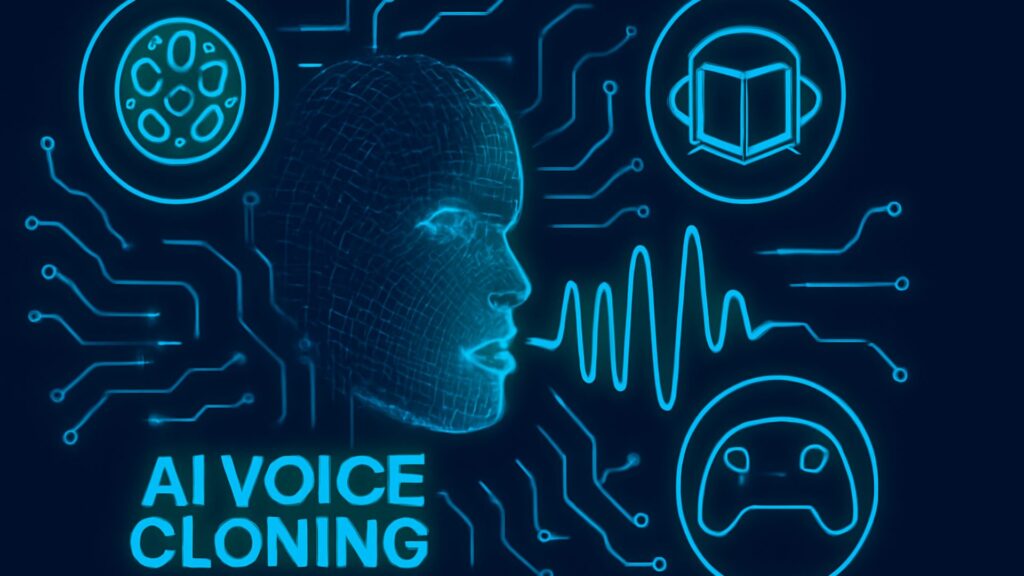
Notwithstanding, the new technology will bring new issues into the public arena, such as questioning who the author is, the rights of labour, and the question of creative integrity. The different players in the industry will have to come up with the rules of engagement regarding the use of AI technology in a fair manner that will keep human actors as the primary performers in directing, even though the AI is making it easier to express.
Toward Living Worlds: What to Expect in 2026
If AI dialogue, behavioural modelling and social simulation are combined, then probably the game worlds that will be produced in 2026 will be nothing but incredibly responsive, emotionally rich and unpredictable. The NPCs will be able to recall the wrongdoings of players even weeks after they happen, talk about their fears and aspirations fluently, or even interact with each other in ways that will astonish the creators.
Nevertheless, the psychological impact might be the most significant one, and not the technical one. For centuries, gamers have treated non-playable characters (NPCs) with the idea that they are nothing but pre-programmed characters. The next generation might dissolve this distinction, thus prompting the players to consider NPCs as co-characters in the storytelling process, of which they are the centre. Such a change would mean a total conversion for players regarding the virtual personalities and, in turn, for the developers of interactive storytelling.

Conclusion: A New Epoch of Immersion
AI implementation entails not only richer interactions but also original behaviours, storytelling reactions and more human-like social settings. Although there are still some technical and ethical issues to be sorted out, the progress of innovation is absolutely clear. The more the developers work on these systems, and the more they are included in the production process, the more indistinct will be the line dividing fictitious worlds from realistic simulations.
If the present trends are to remain the same, the year 2026 may witness the birth of a new era when the NPCs will not only be active characters with memory, feelings and autonomy but also the very leaders of the gaming experience. In such a case, it would not be the games that feel alive but rather the game that interacts as if it is alive.