

Highlights
- Windows 2025 brings handheld-class devices, faster load times, and AI upgrades.
- Advanced Shader Delivery and Auto Super Resolution massively improve performance.
- DirectX upgrades enhance ray tracing and enable next-gen neural rendering visuals.
- ARM-powered Windows devices now support smoother gaming with better compatibility.
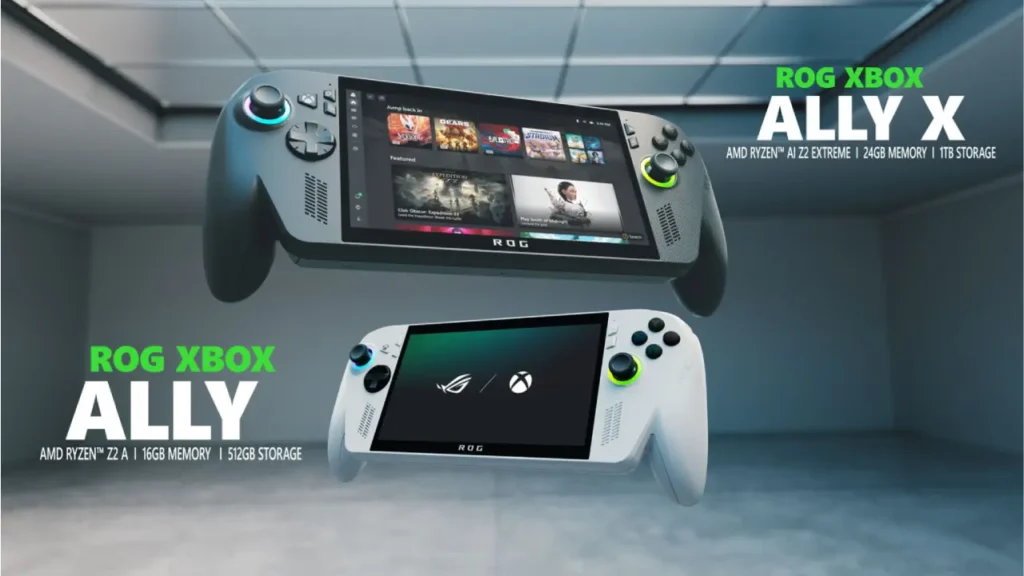
The new devices, like the ROG Xbox Ally and the ROG Xbox Ally X, have made handheld Windows PC Gaming, with an interface tailored for controllers, improved power/graphics management, and so on.
Among the improvements are technologies such as Advanced Shader Delivery (ASD) and the soon-to-be-released Auto Super Resolution (Auto SR), which are geared to reducing load times, improving performance, and enabling AI-powered upscaling, thus extending smooth gaming to a broader range of devices.
Besides, the graphics were pushed to a new level, with 2025 opening the possibility of more realistic images: ray tracing was improved through DirectX updates, and the field of neural rendering was recognized as capable of delivering the visual quality of Windows games.
Windows Gaming in 2025: A New Era of Flexibility and Power
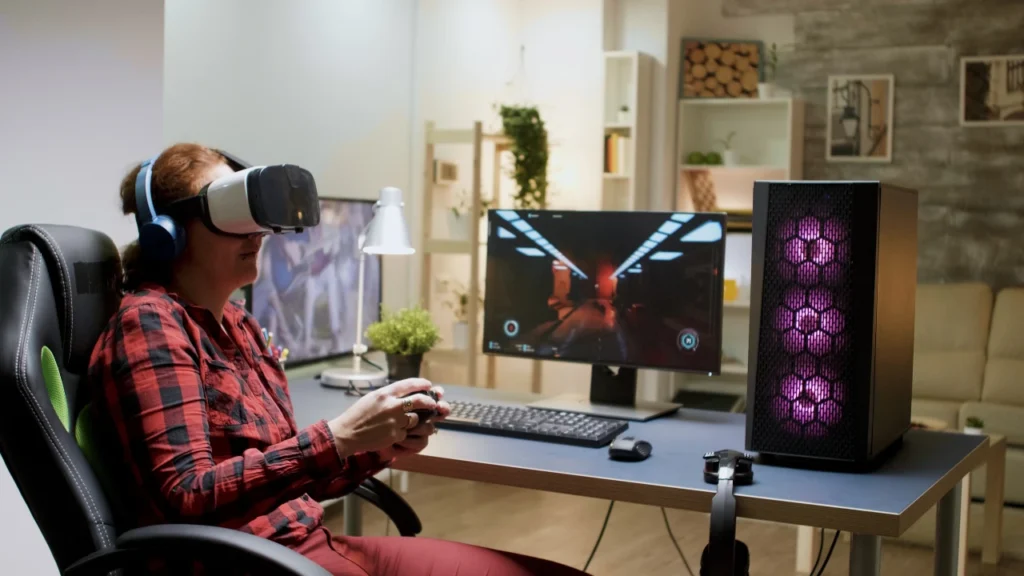
2025 has changed a lot in the world of PC gaming, particularly with Windows. For many years, Windows was the operating system for desktop gaming, but this year it saw significant expansion. The collaboration among hardware partners, platform developers, and game studios made gaming on Windows the most flexible it has ever been. Whether you are using a desktop, a laptop, or a portable handheld, Windows 11 is working to give you a smooth, high-quality gaming experience with no compromise in quality.
Handheld Gaming: PC Power in Your Hands
The most significant change this year is the increase in the number of high-performance Windows-operated handheld gaming devices. The ROG Xbox Ally and ROG Xbox Ally X are the result of a collaboration between Microsoft, ASUS, and AMD, combining PC-class hardware in a mobile-friendly device designed for controller-first gaming.
These devices run Windows 11, but they do not carry the burden of desktop features. On the contrary, they offer a streamlined, console-like experience. The new Xbox Full‑Screen Experience (FSE) provides a controller-first user interface designed for handheld gaming, giving games priority over background tasks, ensuring smooth frame pacing, and minimizing power consumption.

Microsoft is working on power management, memory behavior, and graphics drivers in tandem with its hardware partners. The upshot is that handheld devices can now deliver performance and responsiveness that are surprisingly close to desktops, even when running Windows.
Reducing Friction: Shader Delivery, Smoother Launches, Better Performance
One of the most significant issues that have always bothered PC gamers, the long wait times and the game stutter at the first launch, was addressed very well with the introduction of Advanced Shader Delivery (ASD). The precompiled shaders for the ROG Xbox Ally family games are downloaded at the same time as the game, so the usual compile-on-first-run is avoided. In some games, this has cut first-run load times by more than 80%, and by more than 95% in others.
What is more thrilling is the future: Microsoft has announced plans to release a preview of Auto Super Resolution. This technology works at the OS level and can dynamically upscale games using AI. This implies not only smoother frame rates but also clearer pictures, even on less powerful hardware, thus making the difference between high-end desktops and portable machines smaller.
Graphics Evolution: Ray Tracing, Neural Rendering, Future-Proof Visuals
But for Windows 2025, the primary focus is not only on hardware and convenience but also on brilliant graphics. Ray tracing performance has been considerably improved by updates to DirectX and GPU vendor support; in some cases, it is up to 2.3× better than the previous generation on the same hardware.
In addition to ray tracing, Microsoft is laying the groundwork for neural rendering machine learning methods by denoising, upscaling, and enhancing materials directly within real-time rendering pipelines. This method can provide aesthetic clarity akin to that of traditional high-end rendering, even on less capable hardware.
Windows on ARM: Expanding the PC Gaming Footprint
The year 2025 was a turning point for the Windows on ARM platform in the gaming scene. The progress that began with handhelds delivering shaders, managing resources effectively, and optimizing the graphics stack made using Windows on ARM PCs for gaming much easier. And compatibility issues have been eased by anti-cheat systems that enable several titles to run smoothly on ARM.

This move to support a broader range of hardware means there are more options for gamers to choose from, from power-hungry desktops to energy-efficient laptops, and now even portable devices, all available in the Windows ecosystem.
What It Means for Gamers: Anywhere, Anytime, Quality Gaming
For users of the 2025 technology, the hobby got more modern and flexible. No longer will you be tied to a particular desk or a huge computer to enjoy the latest games. Do you want to play a AAA title on a train or in a café? Handheld devices, like the ROG Xbox Ally, can do that without requiring you to compromise much on quality, speed, or even loading time.
If you are playing on a laptop, especially one that runs on the ARM architecture, the graphics stack and shader improvements will help keep the game running more smoothly and using less battery. And with OS-level upscaling and optimization, what you experience might be very good even on modest hardware.

Fredrick Tendong/Unsplash
To the developers and, more so, the whole industry, these changes are like a new horizon-opening scenario; they can target a broader range of devices from desktops to handhelds much more easily. The use of tools like ASD and Auto SR helps smooth the game delivery process, while DirectX upgrades ensure consistent visual quality across different hardware classes.