





Table of Contents
Highlights
- In 2025, beginner photographers can find powerful, affordable DSLR and mirrorless cameras to get started.
- DSLRs offer great value, battery life, and a broad lens ecosystem, while mirrorless models excel in video, autofocus, and portability.
- Top picks include the Canon R50, Nikon Z30, Sony α6100, and Nikon D3500 for different needs and budgets.
- Overall, choose a camera that fits your style, goals, and inspires your creativity.
Your guide to picking a reasonably priced DSLR or mirrorless camera to begin your photographic adventure
Introduction
For new photographers, switching from smartphone photos to an interchangeable-lens camera is a big step. However, wading through the waters of the DSLR (Digital Single-Lens Reflex) and mirrorless categories can feel huge, especially when you have limited budget options. Good news, though: as we head into 2025, entry-level options are more powerful, affordable, and easy to use than ever.
In this article, we compare budget DSLR and mirrorless models, offer suggestions for top models, and give you real-world advice on which kit might be right for your style, needs, and wallet. Whether you are taking portraits, landscapes, or street images, there is something out there for you.
DSLR vs Mirrorless: What You Need to Know
Before launching into specific models of machines, it is helpful to break down the fundamental differences between DSLRs and mirrorless cameras – and why the “mirrorless revolution” has disturbed the industry’s waters (even at entry level, it has shocked the industry).
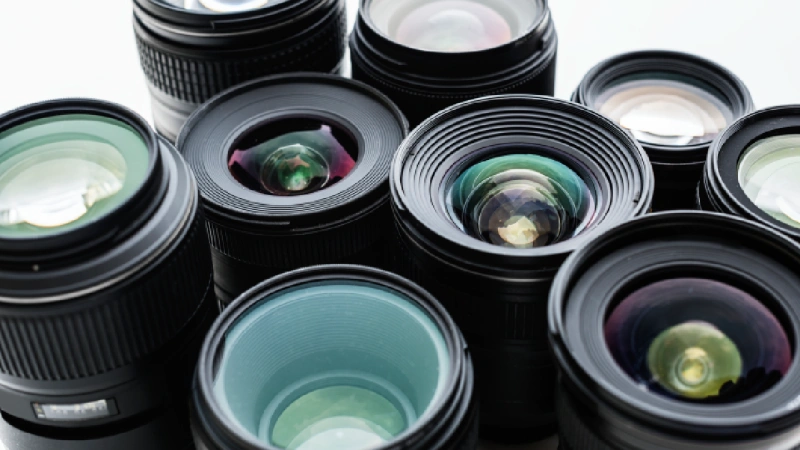
Major-Outstanding Distinctions
| Feature | DSLR | Mirrorless |
|---|---|---|
| Viewfinder | Optical (uses a mirror system) | Electronic (shows live feed from the sensor) |
| Size & Weight | Bulkier, heavier | Smaller, lighter |
| Autofocus | Phase-detect (fast and reliable) | Hybrid on-sensor AF (now excellent) |
| Lens Ecosystem | Established, wide range | Rapidly growing |
| Battery Life | Longer | Shorter due to constant electronic usage |
| Video Performance | Good, but slower in Live View | Excellent — faster AF and better tools |
In recent years, we have seen companies like Canon, Nikon, and Sony innovate & adapt, becoming competitive with DSLR cameras by offering superior autofocus systems, video performance, and portability (while also trying to keep weight down).
Key Takeaways
DSLRs still hold fast as a traditional, stable platform (for now), offering many reliable options and lenses for photographers to choose from.
For entry-level users, it usually comes down to ergonomics, older lens ecosystems (if upgrading from other bodies), and the shooting you intend to do – still, video, or hybrid.
What to prioritize when buying an entry-level camera
When looking and shopping for your first DSLR or mirrorless camera, you will want to look for these 7 factors that primarily drive your results:
1. Sensor size & Resolution
Most entry-level bodies feature an APS-C sensor. Look for an approximate range of 20-32 MP. This provides adequate resolution without excess noise.
2. Autofocus system
The number of autofocus (AF) points, the number of cross-type AF points, and low-light performance matter.
3. Lens selection and ecosystem
Having a pre-determined selection of lenses to select from, especially if you can upgrade down the line, is helpful.

4. Ease of use, controls, and ergonomics
You don’t want to battle with the camera, especially when learning. Intuitive, well-positioned controls, menuing, and a comfortable grip all matter.
5. Video and live view Capabilities
More and more hybrid creators want quality video (generally Full HD or 4K) as well as reliable AF in video.
6. Connectivity and features
Having a camera that connects via Wi-Fi, Bluetooth, or USB for charging can all help enhance workflow, as can a touchscreen and in-camera editing options.
7. Price and availability in your area
A great camera may not be handy if it is hard to obtain local support, repairs, or replacement lenses. Make sure to check out local dealers and support.
Top Entry-Level Cameras to Consider in 2025
You should start by assessing which cameras are well considered across the board for your first camera, or when moving up a level. The following are some recommended best affordable cameras for beginners in 2025, including both DSLR and mirrorless options. All cameras are regarded as good choices for beginners and enthusiastic users alike.
1. Canon EOS Rebel T9 / EOS 2000D (or whatever equivalent name your area uses)
Canon cameras and lenses have been a popular choice for photographers since their inception. The Canon Rebel lineup has been well considered as a simple-to-use camera for beginner photographers.
Sensor: APS-C, ~24 MPAF: 9-point AF Video: Full HD 1080p
Strengths: Canon’s Ease-of-Use mode, excellent support, and many affordable EF/EF-S lens options.
Weakness: No 4K video shooting, somewhat dated AF available in live view.
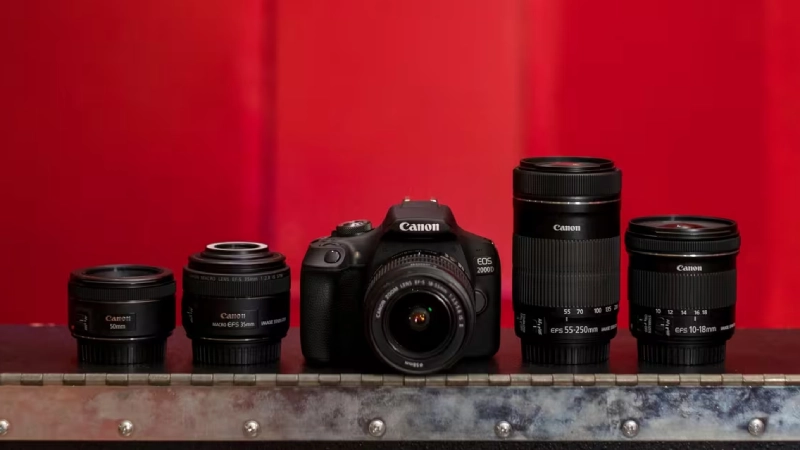
Overall, the T9 is a good option if your primary shooting goal is still photography and you want to use some beautiful Canon lenses along the way.
2. Nikon D3500
Another classic entry DSLR camera that is dependable and easy for beginners to operate.
Sensor: APS-C, ~24.2 MP Autofocus: 11-point AF Video: Full HD 1080p
Strengths: Great battery life (often >1,500 shots), small and compact, good kit lens options.
Weakness: Limited video features

The Nikon D3500 is especially smart for stills-first users.
3. Canon EOS 200D II / EOS Rebel SL4
Another Canon option, but newer, with some features, and a small design.
Sensor: 24 MP APS-C Autofocus: Dual Pixel CMOS AF (magnificent live view)Video: 4K (cropped) + Full HD
Strengths: Vari-angle touch LCD, compact size, Good connectivity
Weakness: Slightly higher price
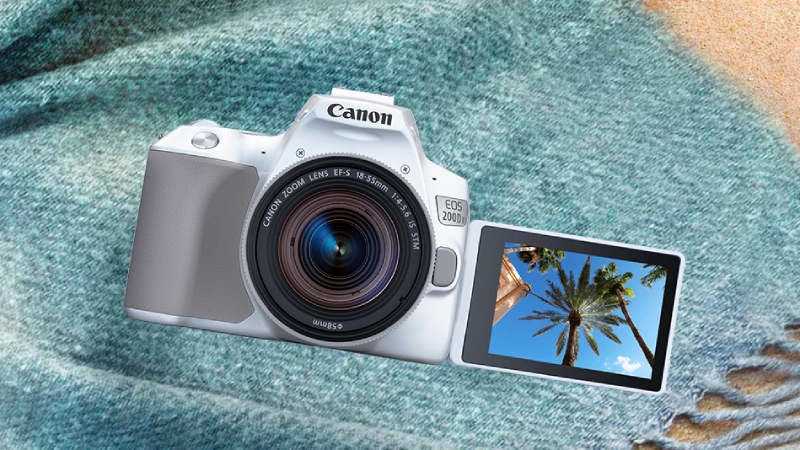
The 200D II / SL4 is a good bridge model to step towards a hybrid use (photo + video) without going to the level of complexity you may not be ready for.
4. Nikon Z 30 (Mirrorless)
Even though Nikon’s Z series is mirrorless, the Nikon Z 30 is well-suited for entry-level/hobbyist photographers.
Sensor: 20.9 MP APS-C (DX) Autofocus: 209 point AF hybrid system Video: 4K, no crop
Strengths: Good video/internet, etc., compact
Weakness: Shorter battery life
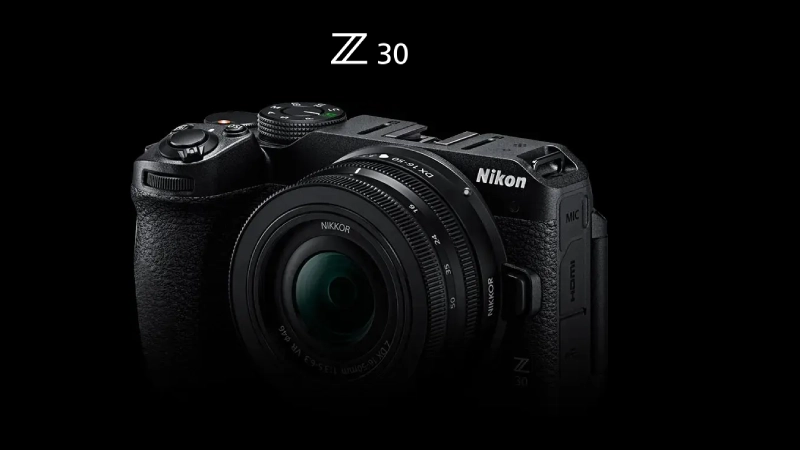
Though not a DSLR, mirrorless hybrid bodies such as the Nikon Z 30 are increasingly your ‘go to’ camera if you’re starting (again, if you want a good camera for video too).
5. Canon EOS R50 (mirrorless)
Canon’s affordable mirrorless body in the R-series is perfect for the beginner graduating from a DSLR.
Sensor: 24.2 MP APS-C Autofocus: Dual Pixel CMOS AF II with subject tracking Video: 4k 30p, 6k oversampling
Strengths: Compact, fun, user-friendly controls, access to RF lens
Weakness: New RF lenses can be expensive
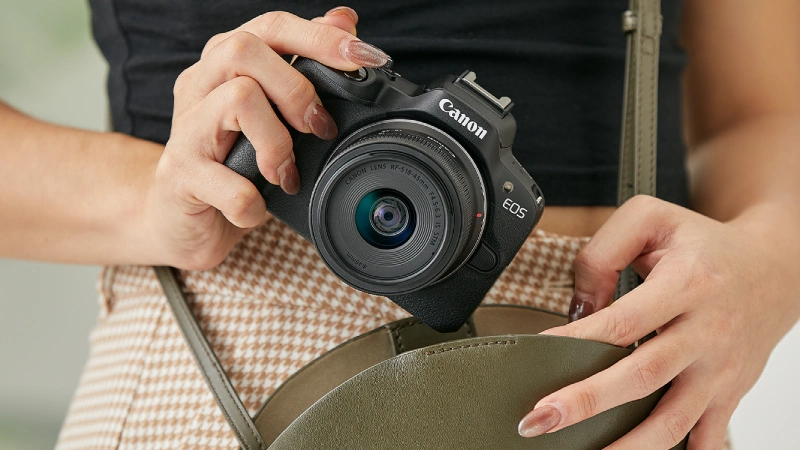
Mount if you’re ready for mirrorless and like the idea of staying inside the Canon ecosystem, it is a solid offering.
6. Sony α6100 (mirrorless)
Sony’s mirrorless system is very mature, lens-rich, and has brought the pedigree of performance down to beginner pricing.
Sensor: 24.2 MP APS-C Autofocus: 425 phase-detect points Video: 4k (full), Full HD 120p slow-mo
Strengths: Excellent autofocus in stills & video, good EVF, compact body.
Weakness: Menus can be complex for beginners

The Sony α6100 has been praised for its future-proof features, so it’s a strong recommendation for 2025.
Which Camera Should You Choose?
| Primary Use | Best Option |
|---|---|
| Still Photography | Nikon D3500 or Canon T9 |
| Photo + Video Hybrid | Canon 200D II or EOS R50 |
| Vlogging & YouTube | Nikon Z 30 or Sony α6100 |
| Lens Flexibility & Growth | Canon EF / Sony E-mount systems |
Side-By-Side Comparison & Use Cases
Now, let’s see how these run against each other as we explore what you plan to do primarily. If the primary focus is still photography, if you are mainly shooting portraits, street, or landscape photography, and video is not a priority:
Nikon D3500 and Canon T9 are both fantastic. They are both easy to use, have powerful battery life, and one of the best features is that you can tap into those lens ecosystems that have stood the test of time. They are dependable.
The Canon EOS 200D II is a more versatile option if you want the occasional video or improved live-view performance for Hybrid or Video-Friendly Use.
Suppose you think you’ll do anything like vlogging, YouTube, or short movies. In that case, this is where mirrorless models emerge – the Canon R50, Nikon Z 30, and Sony α6100 offer better autofocus, video features, and performance than DSLRs at a similar price.
For example, consider (the Z 30 has uncropped 4K) or the real-time eye tracking technology in video in the Sony. For Lens Growth, for Canon, you already have a vast, mature lens ecosystem with EF/EF-S. For Nikon, its F-mount lenses are also abundant and mature.
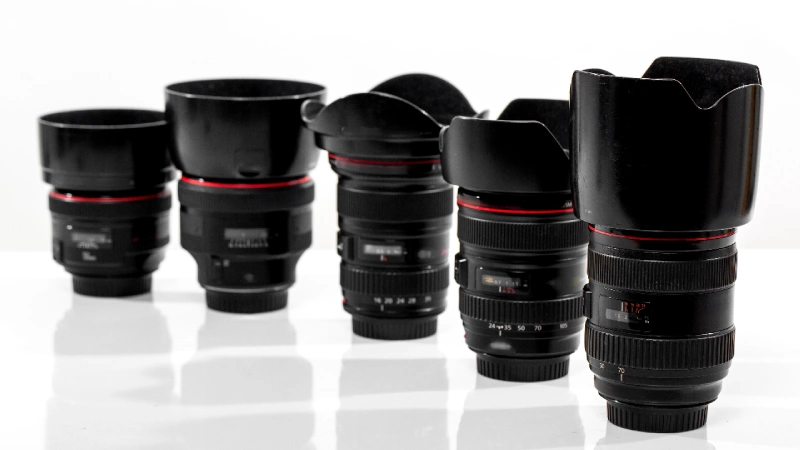
Mirrorless RF, Canon is also growing; Nikon Z is growing, and it’s also compatible with your previous lenses, keeping in mind that lenses aren’t optimized (and that won’t matter). Sony E-mount has an extensive network of third-party-supported lenses (Sigma, Tamron, etc.).
Investment & Availability in India
Always check Indian retail – Flipkart, Amazon India, and local stores – for pricing, availability, and warranty protections on the camera purchase. Some mirrorless cameras may be slightly more expensive due to import costs or because they are newer models.DSLRs might offer better value in used/kit lens bundles – but make sure to check the condition and warranty.
Buying Tips & What to Watch Out For
Hold the camera: The grip size, button layout, and comfort while shooting are all going to be much more critical when you are really shooting than the specs on paper.
Kit lens vs prime lens: Most kits you buy will include at least an “18-55 mm” lens. This is fine to start with, but be sure to studiously add a fast prime lens (like a 35 mm f/1.8 or 50 mm f/1.8) so you’ll have better low-light work and portraits.

Dust on the sensor & ease of cleaning: Entry-level cameras sometimes make it harder to clean dust on the sensor; check if you have a local service center.
Upgrade path for the future: Pick a system (brand + mount) that lets you grow – more lenses, more accessories, more secondhand options.
Firmware updates & support: Mirrorless systems are likely to receive firmware updates more often, potentially leading to faster autofocus/faster stabilization/performance upgrades.
Accessories: Don’t forget the essentials (memory cards [UHS-I/UHS-II], an extra battery, a lens hood, UV filters, and a bag).
Expert Insights & Market Trends
DPReview and TechRadar reviews repeatedly state that mirrorless systems’ modern autofocus systems often perform better than DSLRs in the real-world hybrid use case.
The International Imaging Industry Association (I3A) notes that mirrorless camera shipments are exceeding DSLR shipments in many markets, so those companies are obviously allocating their R&D resources here.
Indian photography circles (e.g., forums, social media groups) often report that mirrorless bodies (e.g., Canon R10, Nikon Z 30, Fujifilm X-S10) are becoming more affordable over time, making them more viable for serious but recreational photographers.
In other words, you may be making the decision this year, but you’re not only purchasing for now – you’re possibly purchasing into a world that may offer even more mirrorless options as the ecosystem evolves.

Conclusion
If you prioritize pure photography (i.e., still images) and it is primarily about budget, tried-and-true DSLR camera options – like a Nikon D3500 or a Canon T9 – most likely offer the best bargain, proven performance, and a breadth of lens options.
But suppose you want to experiment with video, social content, or live-streaming, or you want a future-state-capable system for photography. In that case, mirrorless options like the Canon EOS R50, Nikon Z 30, or Sony α6100 (or equivalents) are all fine.
The auto-focus systems are superior to DSLRs, and live-view functionality and physical size are considerable advances for creators! Think about this as you make your decision: It’s not the camera that makes the photographer – it is your vision, creativity, and commitment to learning.
