





Table of Contents
Highlights
- Smart glasses are gaining traction by focusing on design, audio, and everyday usability.
- Ray-Ban Meta glasses lead mainstream adoption by blending fashion with smart features.
- Xiaomi pushes affordability and AR experimentation, but with clear technical limits.
- Current smart glasses act as transitional wearables rather than phone replacements.
For a long time, more than ten years, smart glasses were in a very uncomfortable situation regarding their place in the consumer technology world. Initial efforts could not handle the burden of such expectations, and the majority could not get past being used only by a very few. Bad design, privacy concerns, battery life issues, and lack of clear use cases kept coming up again and again and undermined their attractiveness.
In the year 2025, the path of the development curve had changed. Smart glasses were no longer perceived merely as trial-and-error augmented reality devices but as lifestyle wearables that were able to integrate sound, visuals, and light-smart intelligence within the normal eyeglass design. The changeover that was mainly fueled by the collaborations between Meta, Xiaomi, and Ray-Ban, also foretold another phase in the development of wearable computers – this time focusing not on radical visual enhancement but on social acceptance and incremental functionality.
From failed visions to pragmatic design philosophy
Smart glasses‘ early history is very often tied to their revolutionary ambitions. The tech made the hard and bold move of trying to put very attractive and rich visuals not just on the screen but directly on the eye, and thus, there was a lot of technical and social friction created. Heavy and not-so-easy-to-wear glasses, very visible displays, and the taking of very private recordings made the early users uneasy and the public suspicious.
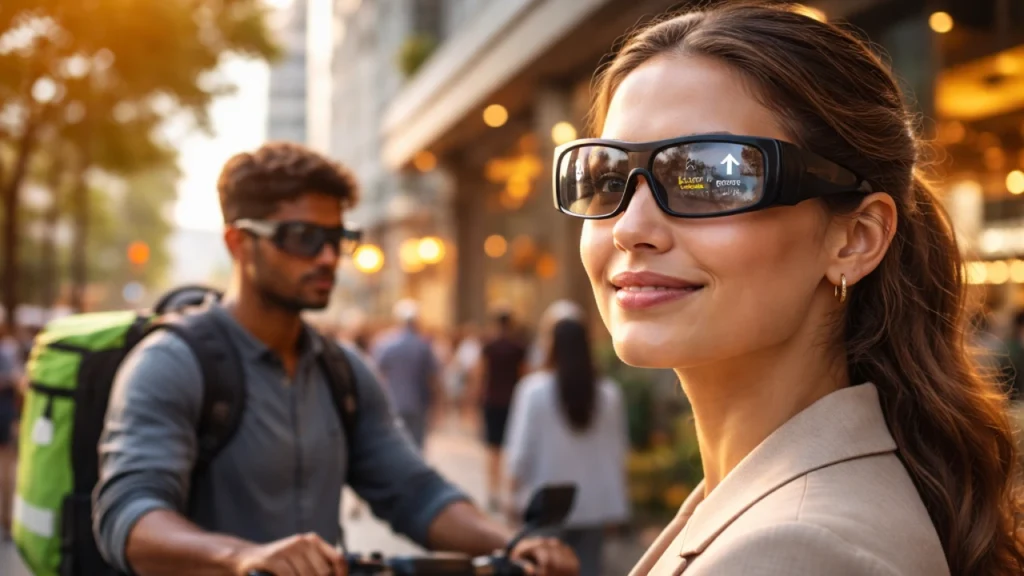
The current generation of smart glasses follows a completely different path. Instead of trying to drive away smartphones or human vision, they seek to be the aid to the smartphones, and they do this by focusing on sound, using regular cameras, and not so much awareness of the surrounding context.
This design change mirrors the larger move in consumer technology towards “ambient computing,” where the gadgets go underground and help without making the user always be aware of them. Smart glasses in 2025 will be more than tech devices that overlay reality in the virtual world; they will be the no-hassle and instant access to information.
Meta and Ray-Ban: mainstreaming through fashion and familiarity
The Ray-Ban Meta smart glasses are the most recognizable example of this evolution. They were created as a result of the partnership between the tech giant Meta and the universally recognised eyewear brand Ray-Ban. The glasses not only attracted numerous reviews but also marked the boundary of technological integration, with a fashionable pair of eyewear.
They are not similar to previous AR devices with their visual display, but they offer amazing open-ear audio, making and receiving calls hands-free, playing music, including voice assistant integration, and last but not least, discreetly taking pictures and recording videos.
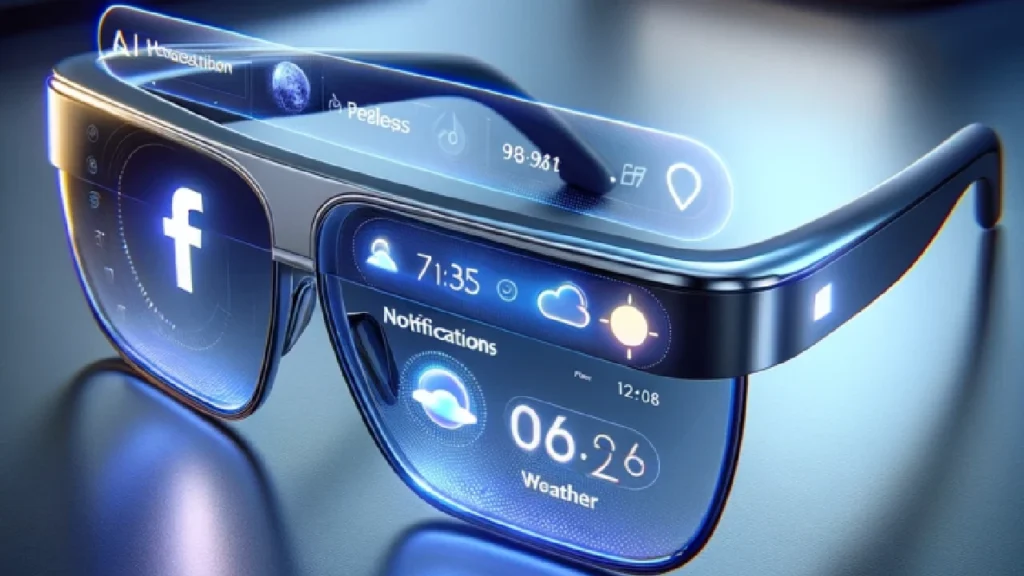
Every reviewer praises the Ray-Ban Meta glasses for their comfort, quality of materials used, and sound quality; they basically say that the glasses are quite convincing as regular or prescription sunglasses. The camera on the glasses is not as powerful as the one on a smartphone, but it is sufficient for social media posting, first-person documentation, and capturing spontaneous moments.
Some reviewers criticise the battery life as one of the main downsides of the device, along with the absence of a display, while the companies usually sell these limitations as their conscious choice to keep the product user-friendly and socially accepted.
From a political economy standpoint, Meta’s strategic move is remarkable as it focuses on data and platform integration rather than a hardware show-off. The smart glasses are accepted as one more way to enter Meta’s ecosystem, thus the company’s long-lasting aspiration to spatial computing is reinforced without the need of alienating the customers through the new interaction paradigm.

Xiaomi and affordability-driven experimentation
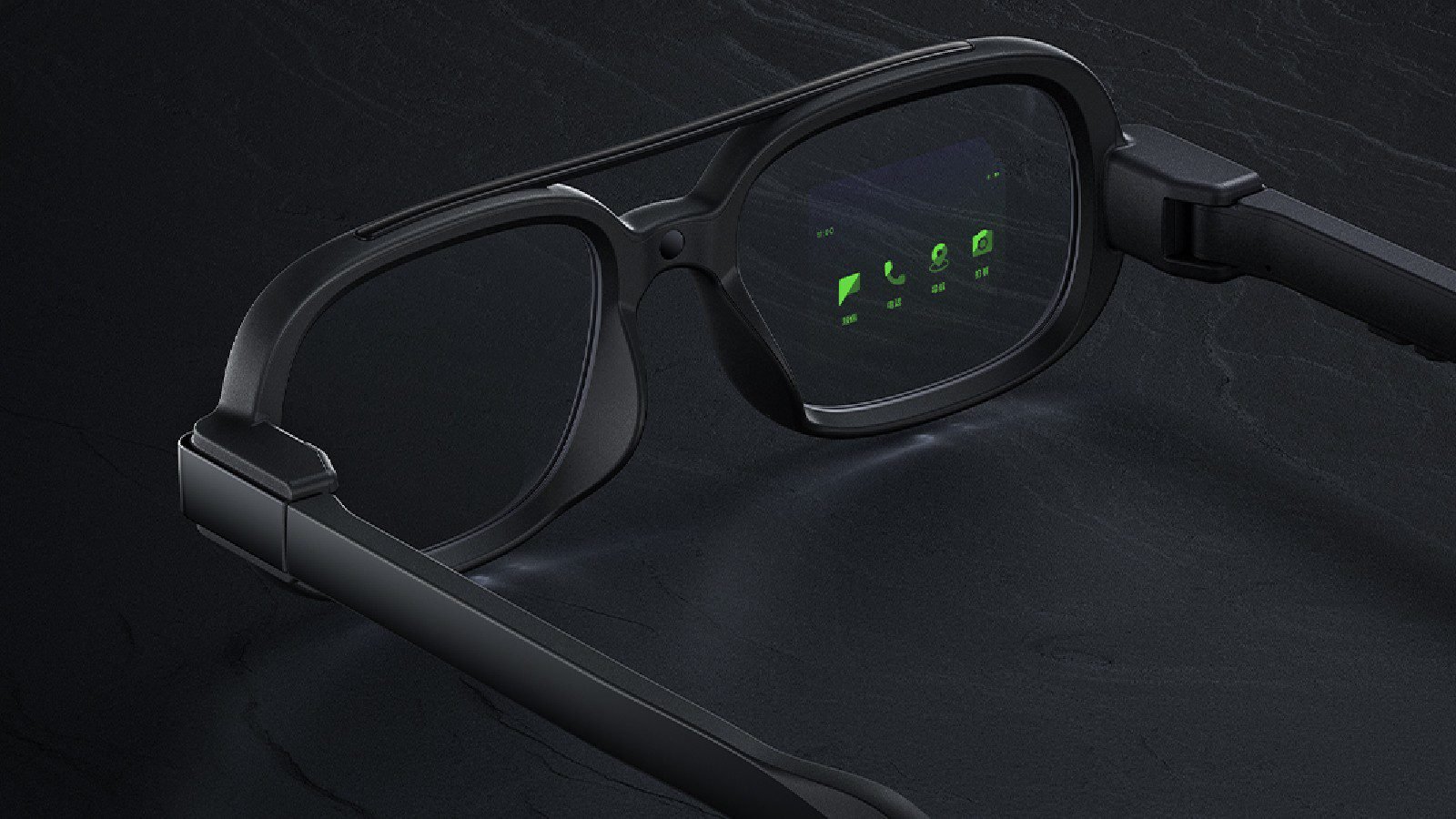
Despite being primarily positioned as a luxury lifestyle product, Meta and Ray-Ban have at least one rival in the smart glasses market in the form of Xiaomi. Xiaomi, through its experiments with smart glasses, including its AR-directed hypothesis, has shifted the narrative to quality of technology and competitive pricing. One of the features found in these devices is the head-up displays, which are made to display the navigation prompts, notifications, and basic AR elements, among others.
The assessments of Xiaomi’s smart glasses have revealed the product’s ambitiousness along with the value it is offering to the market, particularly in the regions where consumers are very agile and are actively trying out the new technology, that too, at a lower cost. However, these reviews also bring to light the issues that are yet to be addressed.
The limitations on battery life are the main problem, brightness is not strong enough for outdoor use, and the software used is not as developed as Meta’s, where they have together aligned and integrated platforms. So, the pricing of Xiaomi’s devices tends to cause them to be recommended to tech enthusiasts and early adopters, not to the regular consumers of the tech world.
Xiaomi has, nonetheless, a significant role to play in this whole scenario. The company, while pushing the AR features to become affordable, is speeding up the process of experimentation and acceptance of the idea that glasses are computer devices, although large-scale adoption may still be far away.

What smart glasses can realistically do in 2025
Smart glasses of the year 2025 will, in a rather practical manner, still be constrained to very particular and well-defined functionalities. Their main strong point is audio interaction. The open-ear speakers that come along with the smart glasses allow the users to talk on the phone, enjoy music, or have directions given to them while still keeping the connection with the outside world. The voice assistant present gives users the ability to operate the device without using their hands, which is a great plus for people taking the metro, cyclists, and staff who are always moving.
Contextual capture is another ability that people appreciate the most. With the smart glasses, users can take short videos or pictures from a first-person perspective without the social disruption that raising a phone causes. This is surely a great benefit to content creators, reporters, and ordinary users who are just capturing their travels or happenings.
Light information overlays, where they are present, are still very limited. It is true that, by and large, the best that can be said about the future of the AR applications of mainstream smart glasses is that they will eventually be able to do some 3-D simple objects or graphical interfaces, and maybe even productivity apps in a very limited way.

Privacy, regulation, and social acceptance
The privacy issue is still the most important factor that has a significant impact on the use of smart glasses. The presence of cameras, even if hidden, is one of the main reasons that people are concerned about consent and privacy.
Manufacturers have taken actions such as displaying recording signs, software limitations, and responsible use public relations as their way to deal with privacy concerns. Moreover, in many countries, the regulations that companies will have to comply with are becoming stricter, especially in Europe, where the governing rules regarding data privacy are very strict when it comes to recording and biometric data.
Public reception is better now than in the past, especially since the contemporary smart glasses look like ordinary glasses. The social acceptance of the design that one is using has been a factor that reduces the friction of social interaction, while the clearer communication of the functions of the device mitigates distrust. Nevertheless, acceptance is not universal, and cultural norms are the main factor that determines how such gadgets are treated in public areas.
Conclusion
Smart glasses have arrived at a stage where they have real and practical applications. By shifting their focus from the grandiose concept of complete augmented reality to design, audio interaction, and context support, Meta, Ray-Ban, and Xiaomi turned the once sci-fi product into something that could be both socially and commercially accepted.
This new generation of smart glasses is not groundbreaking, yet it’s still trustworthy. The smart glasses of the year 2025 are best seen as the role of transitional gadgets to culture and technology for advanced spatial computing to come. Their coming into existence is due not to the perfection of technology, but to the fact that people are becoming more and more open to what the technology offers and vice versa.
